
Last updated November 15, 2026
 Wrought iron
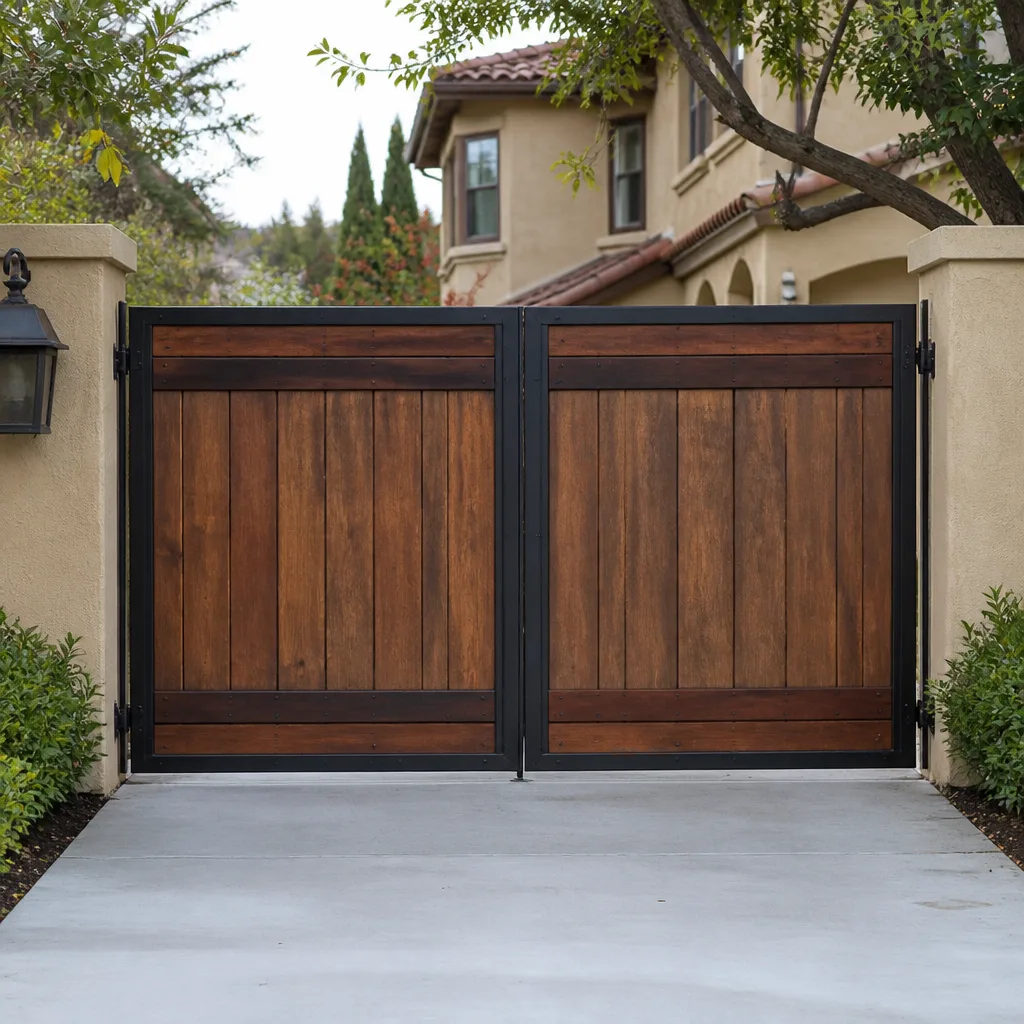 Wood & steel frame
 Farm & ranch
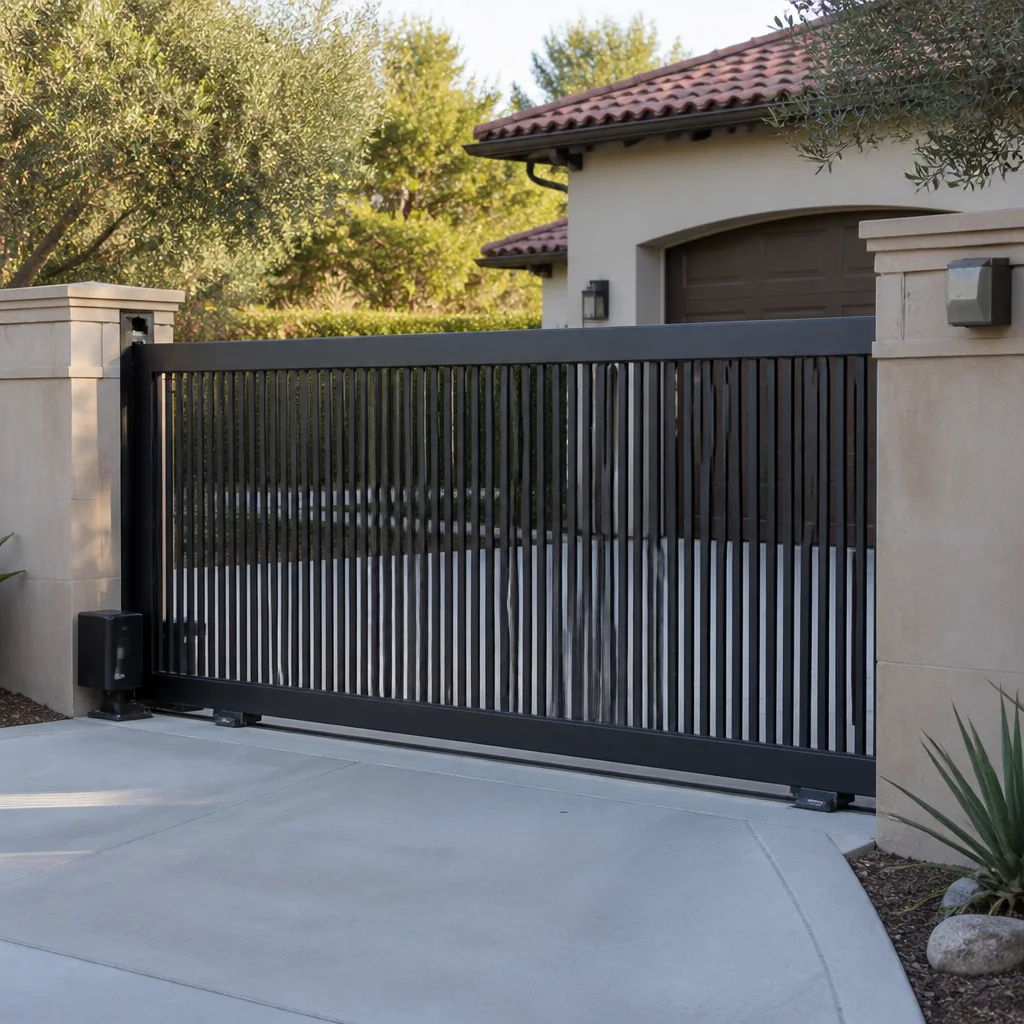 Sliding driveway gates
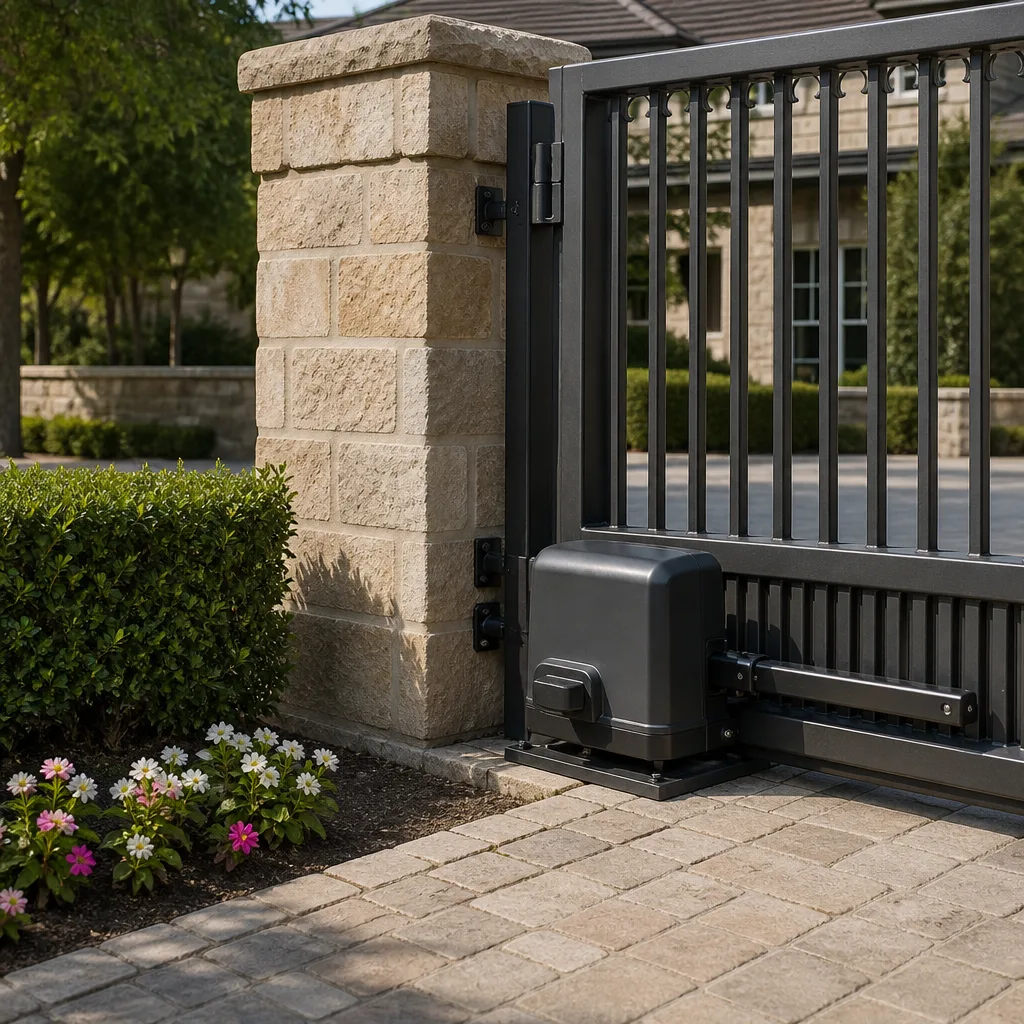 LiftMaster operators
Free on-site gate assessment - hinges, posts, and your LiftMaster or Nice gate operator checked before anything is quoted
The assessment is free and the quote is the invoice.
Get your free estimateGate Repair Emergency Preparedness Guide for Pompano Beach Homes
Most gate failures don’t become emergencies because of the part that broke. They become emergencies because nobody knows how to release the gate, where the power cut out, or who to call. In our experience, a driveway gate that stops working during a summer storm in Pompano Beach is a solvable problem within minutes if the household has done three things beforehand: located the manual release, checked the backup battery, and saved a repair contact. Skip those steps and the same failure can leave a car trapped, a property exposed, or an access route blocked for hours. This guide walks Pompano Beach homeowners through exactly what to prepare, test, and document before a gate ever fails, and how to act calmly when it does.
Quick Answer
Emergency gate preparedness in Pompano Beach comes down to three habits: know and physically test your gate’s manual release before you need it, keep the backup battery healthy and verify it under real load, and have a gate repair contact plus your system details ready to go. A homeowner who has done those three things can usually restore access on their own within minutes and hand a technician the information that shortens diagnosis. A homeowner who hasn’t may spend that time guessing in the dark. Gate Repair Pompano Beach can walk you through all three, and our technicians have up to 12 years of experience across residential and commercial systems.
Styles & brands we work with
- Wrought iron
- Wood & steel frame
- Farm & ranch
- Sliding driveway gates
- LiftMaster operators
Table of Contents
- Finding and Testing Your Manual Release Before You Need It
- What to Do When the Power Goes Out in Pompano Beach
- Testing Your Backup Battery Under Real Conditions
- What to Have Ready Before You Call a 24-Hour Gate Repair Service
- Securing Your Property When the Gate Is Stuck Open
- Documenting a Gate Emergency for Insurance
- Building a Simple Preparedness Routine
- Common Mistakes to Avoid
Finding and Testing Your Manual Release Before You Need It
The manual release is the single most important safety feature on any automated gate, and it’s the one homeowners know least about. On every residential and commercial system we work on, there’s a mechanical override that lets you disengage the motor and move the gate by hand. When the power fails or the operator locks up, that release is what restores access. The problem is that most people discover where theirs is located at midnight, in the rain, with no light and a car idling behind them. Pompano Beach’s storm season gives that scenario plenty of chances to happen.
Different operators place the release in different spots. With LiftMaster and FAAC residential operators, the release is typically a key or lever on the motor housing that disengages the drive. On BFT and Mighty Mule systems, it’s usually a manual release key or a lever near the operator arm. Slide gates often have a release near the motor that frees the pinion from the rack. Swing gates vary: arm-style operators release at the arm, and underground or articulated operators release at the housing.
Here’s the routine we recommend doing this week, not during the next storm:
- Locate the operator housing and identify the release mechanism. Read the sticker or label on the unit if you’re not sure.
- Find the release key or tool. Many operators need a specific key that came with the system. If it’s missing, order a replacement now.
- Attach the key, turn or pull the release, and physically push the gate open and closed by hand. It should move with reasonable effort and no grinding.
- Re-engage the release and cycle the gate with the remote to confirm it locks back into automatic operation.
- Write down the release location and keep the key on a hook near the gate, not buried in a junk drawer.
If your gate doesn’t move freely by hand even with the release engaged, that’s a mechanical problem, not a power problem, and it needs a technician. We see this often enough on older Pompano Beach properties that it’s worth checking the release during any service visit. For a broader overview of what our team handles, our Gate Repair Pompano Beach page covers the full service arc.
What to Do When the Power Goes Out in Pompano Beach
Pompano Beach’s summer thunderstorms and hurricane season mean power interruptions happen. When the electricity cuts out, your gate operator loses its main power source. If the backup battery is healthy and connected, the gate may keep working for a while, then slow down or stop. If the battery is failing or absent, the gate simply won’t move on its own. In either case, the manual release is your path forward.
Walk through the sequence calmly:
- Confirm it’s a power issue, not a gate issue. Check whether interior lights or other circuits are out.
- Engage the manual release and push the gate open so vehicles can pass. If the gate is a lift or slide, make sure the release has disengaged the motor fully before pushing.
- Once the gate is open, secure it physically so it can’t swing or slide shut on its own. A sturdy block, a tie, or a manual lock at the latch post works.
- When power returns, re-engage the release and cycle the gate with the remote. If it works, note what happened in case it recurs.
If power is restored and the gate still doesn’t respond, you likely have a board fault, a battery failure, or a motor issue. That’s when you call. Our electric gate repair team handles this kind of diagnostic work routinely, and it’s the category of failure where knowing your brand matters most. We work on LiftMaster, FAAC, BFT, Linear, Viking, Ghost Controls, DoorKing, Elite, and Mighty Mule systems, so whoever shows up is looking at a familiar unit, not a puzzle. Call (888) 399-8022. We answer 24/7. Fast dispatch from 7am to 7pm, Sunday through Friday.
Testing Your Backup Battery Under Real Conditions
A backup battery that tests fine on a meter can still fail the moment your gate actually needs it. That’s the gap most homeowners don’t catch. The battery’s job is to carry the gate through a grid outage, and the only way to know it can is to test it under the load the gate puts on it, which is far heavier than a quick beep test reveals.
What a backup battery in a residential gate operator should handle:
- The full weight of the gate leaf or panel through the entire travel distance, not just a few inches.
- Several open-and-close cycles on a single charge, enough to get cars in and out during a typical outage.
- The operator’s control board and safety sensors, which draw current throughout operation.
- The accessory load on your system, such as keypads, intercoms, or exit loops if you have them.
To test it for real: cut the main power at the breaker (not the wall switch, which may be easy to nudge back on) and let the gate run on battery alone. Watch for sluggish movement, a gate that moves slowly or hesitates, or a gate that stops partway. Any of those signs means the battery is on its way out. Then restore power and observe whether the system recharged normally.
Battery replacement timing varies with age, load, and how often your area loses power. In our experience, a battery that takes longer to run a cycle, gets warm under load, or fails a real load test needs replacing before it strands you. Don’t wait for the next storm to find out. If you’re unsure whether your system is due, a diagnostic visit is the fastest answer. Our gate repair team can check the battery, the charging circuit, and the board in one visit and tell you exactly what’s healthy and what isn’t.
What to Have Ready Before You Call a 24-Hour Gate Repair Service
The fastest path from a dead gate to a working one is a homeowner who has the right details ready before the call. When you can hand a technician your brand, your model, your symptoms, and your access setup, the technician can often bring the right parts and skip the exploratory trip. That’s a real difference in how quickly your gate is back to working order.
Before you dial, have these on hand:
- Gate brand and model. Look at the operator housing label. If it says LiftMaster, FAAC, BFT, Linear, Viking, Ghost Controls, DoorKing, Elite, or Mighty Mule, tell us which one. If the label is worn, a photo works.
- Gate type. Swing or slide? Single leaf or double? Residential or commercial access control?
- What’s happening. Is the gate stuck open, stuck closed, cycling but not moving, moving but not latching, making noise, or completely dead? Describe what you see and hear.
- Power status. Is the property out of power, or is the power fine and the gate still not working? Has the breaker tripped?
- Release status. Have you engaged the manual release, and does the gate move freely by hand?
- Access constraints. Where is the operator? Is it reachable? Is there a locked enclosure? Do you have a pet or car that needs access right now?
- Safety concerns. Is the gate blocking emergency access? Is it hanging or sagging?
Save this list somewhere you can get to it easily. The ten minutes you spend gathering it before the call typically saves far more than that on the back end. If you’re not sure what to look for on the housing, that’s fine too; tell us what you can and we’ll walk you through the rest. Call (888) 399-8022. We answer 24/7. A call outside dispatch hours is booked into the next opening, Sunday through Friday, 7am to 7pm.
Securing Your Property When the Gate Is Stuck Open
A gate stuck open is a security problem until it’s fixed, and the window between the failure and the repair is when a property is most exposed. The goal during that window is to keep the opening physically blocked without damaging the gate, the operator, or the track. Pompano Beach properties with a gate on a driveway or side yard need a plan that works whether the repair happens the same day or a day later.
Interim measures that maintain security:
- Physically block the opening. A parked vehicle across the gate line, a heavy planter, or a temporary barrier at the gap keeps the opening closed to foot and vehicle traffic.
- Lock the gate in place. If the gate is a swing and the leaf is closed manually, a latch lock or a chain through the frame keeps it from being pushed open.
- Disable automatic operation. If the operator might suddenly wake up and move the gate, disengage the release so it stays manual until the technician arrives.
- Notify anyone with access. Neighbors, family, delivery drivers, and any service calls should know the gate is on manual.
- Note the time and cause. You’ll want this for insurance and for the technician report.
What we don’t recommend: wiring the operator to a different circuit, taping the release in a position it doesn’t belong, or leaving the gate balanced open on a slope. Those choices can cause the gate to move unexpectedly or damage the motor. If the gate is on a hill or includes a lift mechanism, keep people well clear until a technician has looked at it.
If the stuck-open gate blocks emergency access to the property, that’s a same-day priority. Call (888) 399-8022. We answer 24/7. Fast dispatch from 7am to 7pm, Sunday through Friday.
Documenting a Gate Emergency for Insurance
If a gate failure led to property damage, a security incident, or a significant repair bill, documentation is the difference between a smooth claim and a disputed one. Insurers don’t pay for what they can’t verify. That’s not a reason to panic before you have anything to claim; it’s a reason to spend two minutes with your phone the moment something goes wrong.
What to capture, and when:
- Photos of the gate in its failed state, from several angles, before anyone touches it. Close-ups of the operator, the hinge or track, and the stopping point.
- A short video of the gate trying to operate if it moves at all, which shows the symptom better than words.
- Timestamps. Note when the gate failed, when you noticed, when you called, and when the technician arrived and finished.
- Weather and power context. If a storm or outage caused the failure, note it. If a vehicle struck the gate, get the driver’s information and a photo of the vehicle.
- The technician’s written report. Ask for it. A report that identifies the failed component and the cause is the strongest document in your file.
- Receipts and estimates. Keep the written estimate and the final invoice together.
If the damage is to property beyond the gate itself, such as a damaged vehicle, a security incident, or a damaged structure, tell your insurer early and share the technician report. We’re happy to provide the documentation our customers need to support a claim. For property managers in Pompano Beach who handle multiple gates, keeping this record for each system makes claims faster and pinpoints recurring problems. If you need a repair documented thoroughly, that’s what we do; call (888) 399-8022 for a free estimate.
Building a Simple Preparedness Routine
The best defense against a gate emergency is a routine you actually do. Not a jar of parts, not a saved link to a video; a short list of checks that takes twenty minutes and catches the failures before they happen on their own. Our technicians have up to 12 years of experience, and the systems that fail least are the ones their owners spend a little time on.
A simple quarterly routine:
- Test the manual release and push the gate by hand. Confirm it moves freely.
- Run a battery load test by cutting main power and cycling the gate at least twice.
- Check the hinges, rollers, and track for wear, debris, and looseness. Lubricate as the manufacturer recommends.
- Test the safety sensors. Walk through the beam or block the sensor path and confirm the gate reverses or stops.
- Clear the gate path. Vegetation growth, yard debris, and storm litter can block the swing or slide.
- Confirm your remote and keypad still work. A dead remote is a hint; a dead keypad and remote together is likely the board.
- Update your contact list. Make sure every household member knows who to call and where the release key is.
If any single check fails, get it looked at before the next storm. A gate that hesitates on the manual release or drags on the battery is a gate that will fail on the day you need it. If you’d like a technician to run through this list with you the first time, that’s a good use of a visit. Call (888) 399-8022. We answer 24/7. Fast dispatch from 7am to 7pm, Sunday through Friday.
Common Mistakes to Avoid
- Not testing the manual release until a failure. The middle of a Pompano Beach thunderstorm is the worst time to learn where the release is and that the key is missing. Test it once now and keep the key accessible.
- Assuming the battery is fine because the gate works on grid power. A gate on main power runs fine on a dead battery until the power fails, so the battery is invisible right up to the moment it isn’t. Load-test it.
- Leaving the gate stuck open with no physical block. A gate that’s open is an open door. Block the opening the moment the gate fails, before anything else.
- Forcing the gate by hand with the motor engaged. Pushing or dragging a gate while the operator is still coupled can damage the drive and the board. Disengage the release first.
- Calling a general handyman for an automated gate. A generalist who is unfamiliar with LiftMaster, FAAC, BFT, or your specific system will usually swap parts by trial and error. A gate specialist diagnoses the actual fault.
- Skipping photos and timestamps. Once the technician has repaired the gate, the failure state is gone. Photograph first, repair second.
- Ignoring a small symptom. A sluggish gate, a jammed hinge, or a slow reverse is a warning, not a quirk. Address it before it becomes the reason you call in the middle of the night.
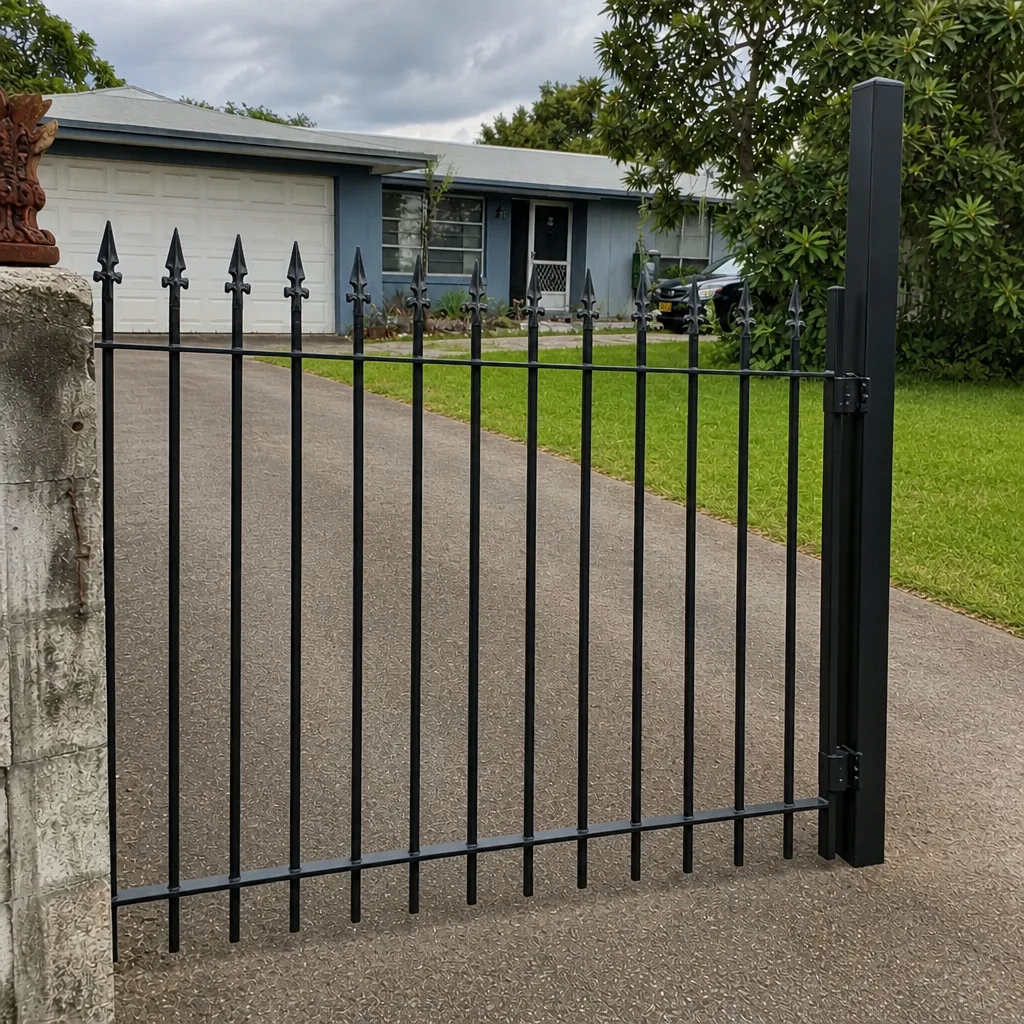
See the difference
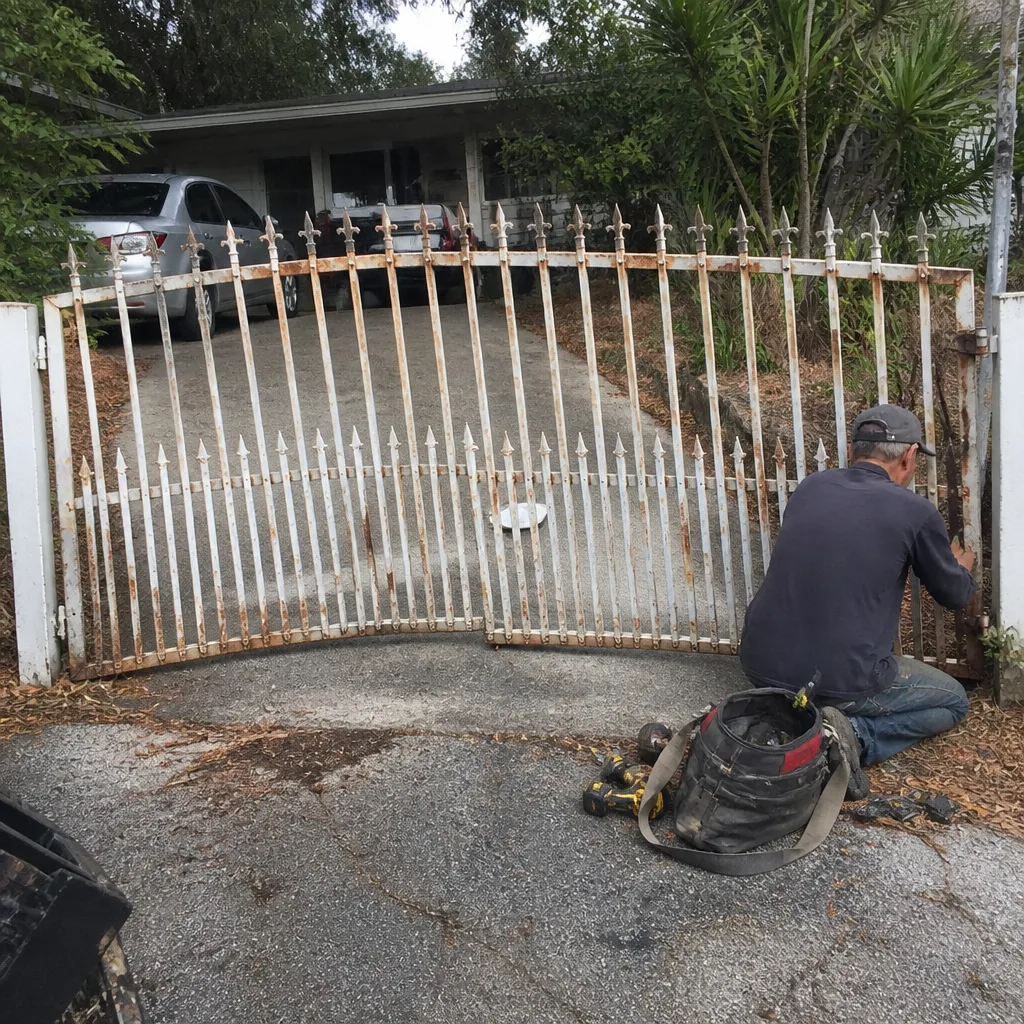
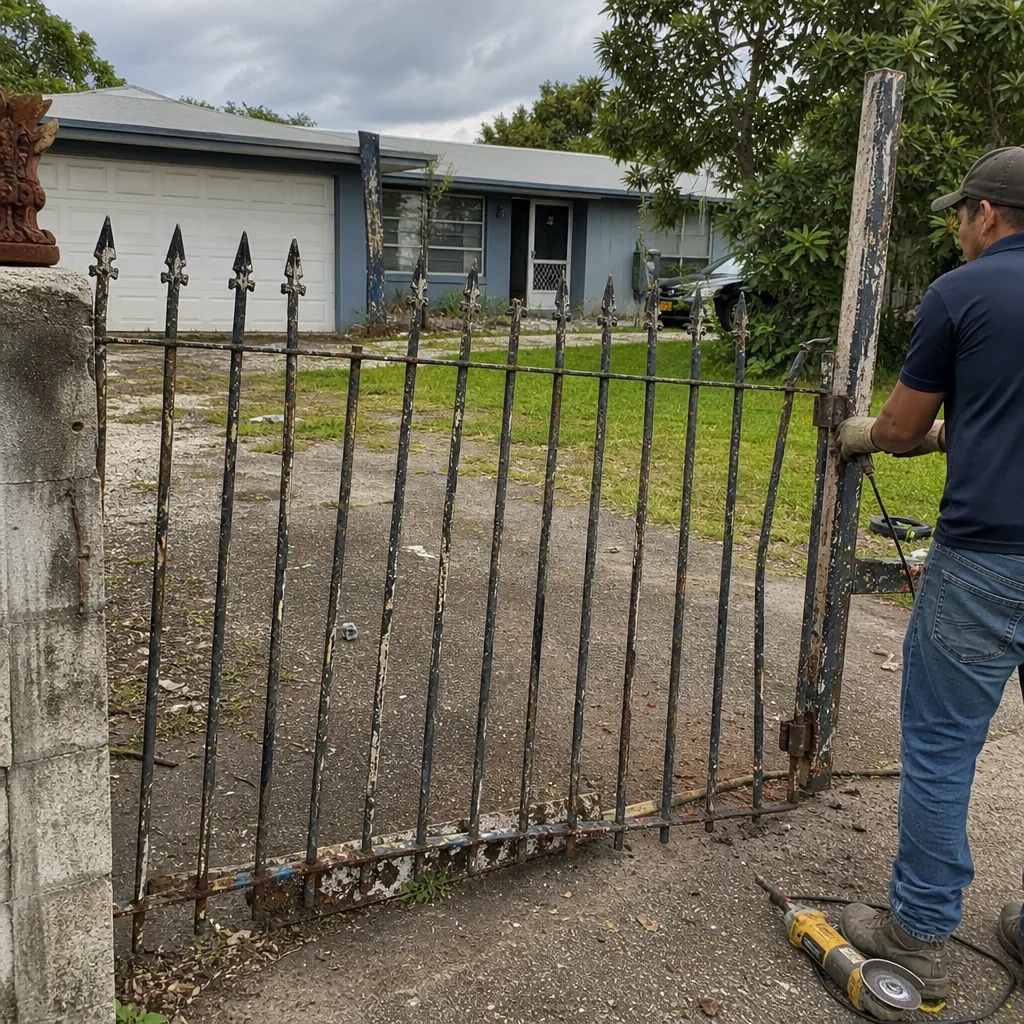 Before
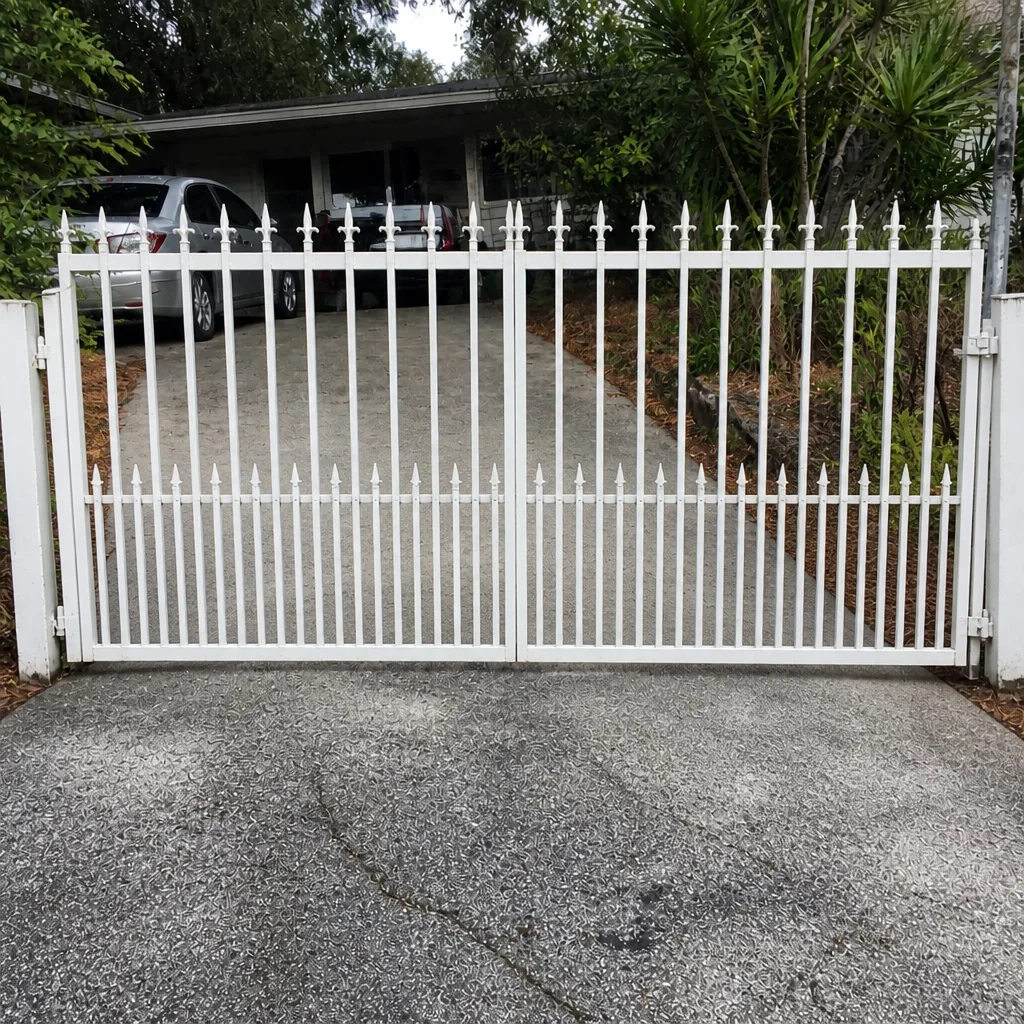
 After
 Before
 After
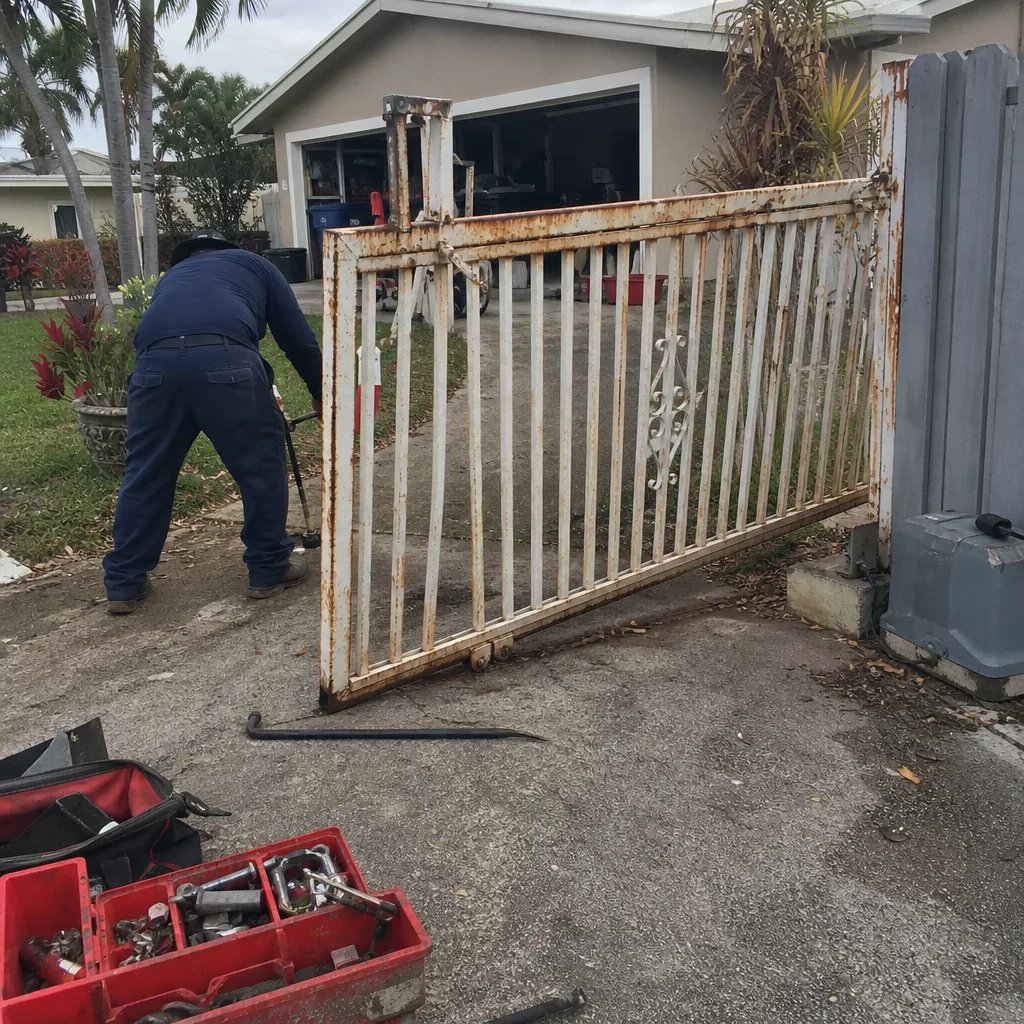 Before
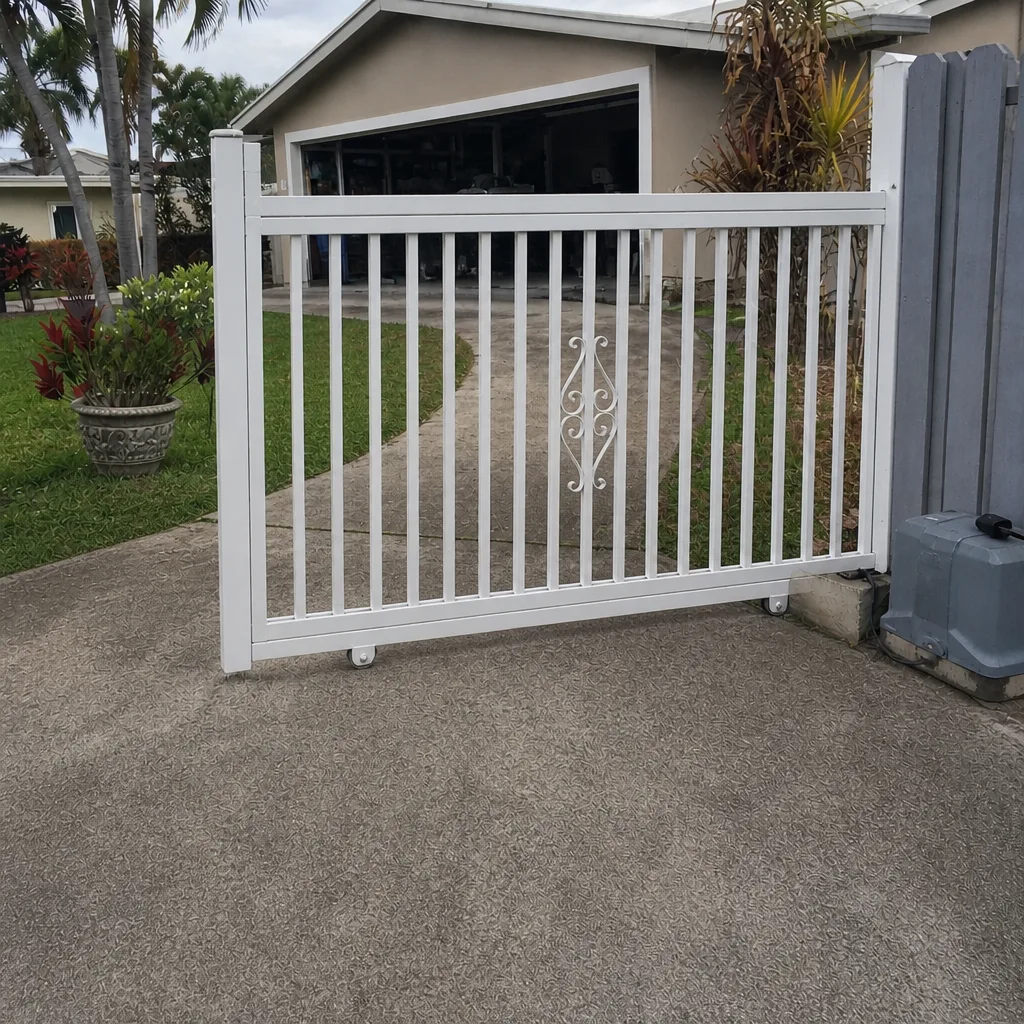 After
When to Call a Professional
Some gate problems are safe to look at, and some are not. Call a professional when the manual release won’t free the gate, when the gate moves but won’t latch or reverses for no reason, when the operator is dead after power is restored, when the gate is hanging, sagging, or off its track, when a vehicle has struck the gate, or when you can hear grinding, clicking, or arcing inside the operator housing. Those symptoms point to motor, board, or structural faults that need a trained eye and proper tools.
If a gate blocks emergency access, that’s the highest priority of all; don’t wait until morning. Gate Repair Pompano Beach offers free estimates in Pompano Beach and works on the brand you already have: LiftMaster, FAAC, BFT, Linear, Viking, Ghost Controls, DoorKing, Elite, and Mighty Mule. Call (888) 399-8022. We answer 24/7. Fast dispatch from 7am to 7pm, Sunday through Friday.
Frequently Asked Questions
Look for a key slot, lever, or pull handle on the operator housing, usually labeled with an arrow or “release” decal. On LiftMaster and FAAC residential units it’s typically on the housing; on BFT and Mighty Mule systems you’ll often find a release key near the operator arm or motor. If you’re not sure, photograph the housing and we’ll identify it for you when you call (888) 399-8022. Our estimates are free.
Cut main power at the breaker and let the gate run on battery alone for several open-and-close cycles. Watch for a gate that moves slowly, hesitates, or stops partway; those signs mean the battery is failing and needs replacement before the next outage. A meter check alone won’t catch it because a battery can read full and still fail under load. If you’d like us to test it properly, call (888) 399-8022 for a free estimate.
In many cases, yes; a gate stuck open is a same-day priority because of the security risk. We answer 24/7, and a call outside dispatch hours is booked into the next opening, Sunday through Friday, 7am to 7pm. Call (888) 399-8022 as soon as you notice the failure so we can schedule it in.
First, confirm the gate is on manual release and freely moveable, then check whether the operator’s control board reset after power returned. If the gate moves by hand but won’t operate automatically, the board or the battery is the likely fault. That’s a same-day repair call. Reach us at (888) 399-8022; estimates are free.
Yes. We handle residential and commercial swing and slide gates, including commercial access-control openers from brands such as DoorKing, Linear, and Elite. The same preparedness steps apply: know your release, check your battery, and document the failure. Call (888) 399-8022 for a free estimate on a commercial or residential repair.
Photograph the gate in its failed state from several angles, take a short video of the symptom, note when the failure happened, and ask the technician for a written report identifying the failed component and the cause. Keep the written estimate and the invoice together. If you need help with the documentation, say so when you call (888) 399-8022; we’ll provide the report your insurer will want.
The Bottom Line
A gate emergency in Pompano Beach is manageable when you’ve done the groundwork first. Test the manual release and keep the key accessible. Load-test the backup battery so it can carry the gate through an outage. Block the opening the moment a gate fails. Photograph the failure and get a written technician report if a claim may follow. Have your gate brand, model, symptoms, and access details ready before you call. Do these things and a failure becomes a repair appointment, not a crisis. Gate Repair Pompano Beach is a dedicated gate specialist, and we work on the brand you already have. Reach us on Pompano Beach-area gate repair; call (888) 399-8022. We answer 24/7. Fast dispatch from 7am to 7pm, Sunday through Friday.
Call (888) 399-8022 today for a free estimate. We answer 24/7. Fast dispatch from 7am to 7pm, Sunday through Friday. Whether it’s the motor, the board, or the hardware, we’ll diagnose it accurately and get your gate back to working order.
Written by the team at Gate Repair Pompano Beach.