
Last updated November 15, 2026
 Wrought iron
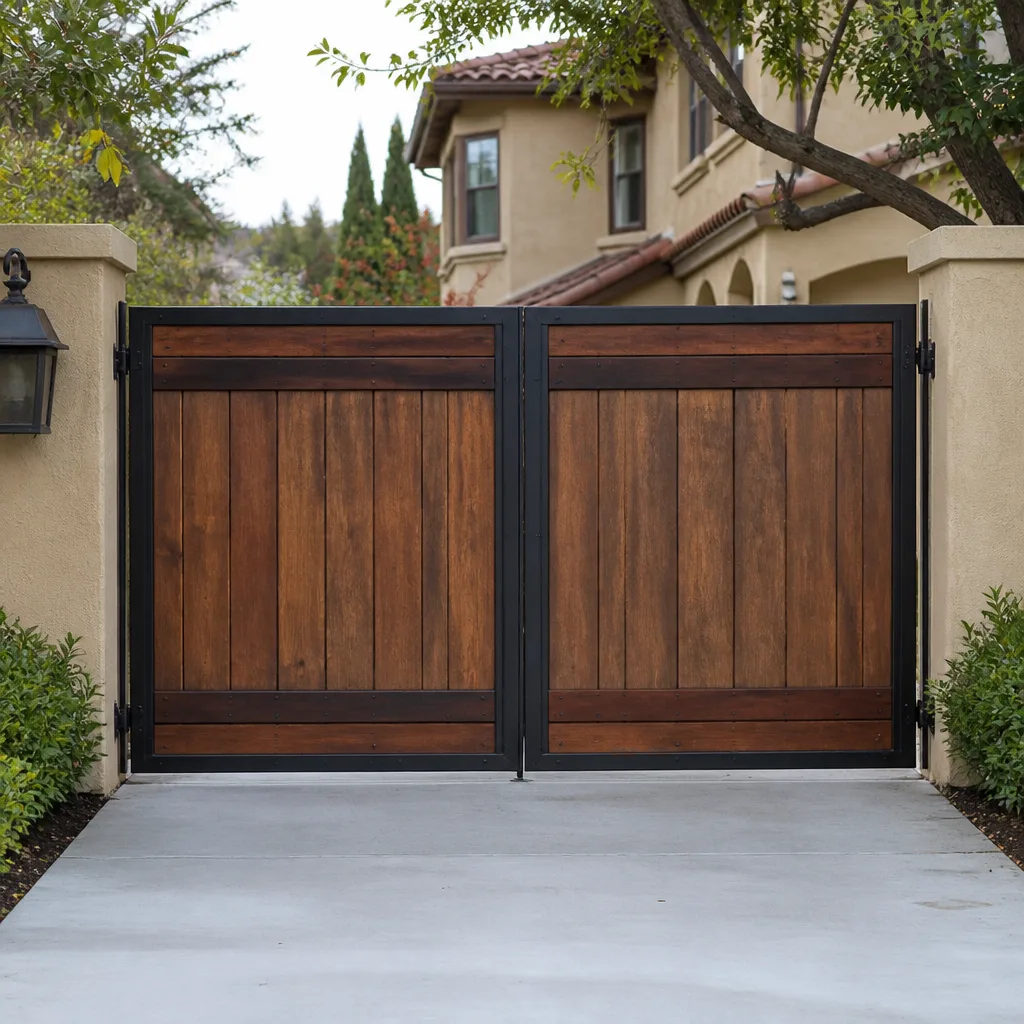 Wood & steel frame
 Farm & ranch
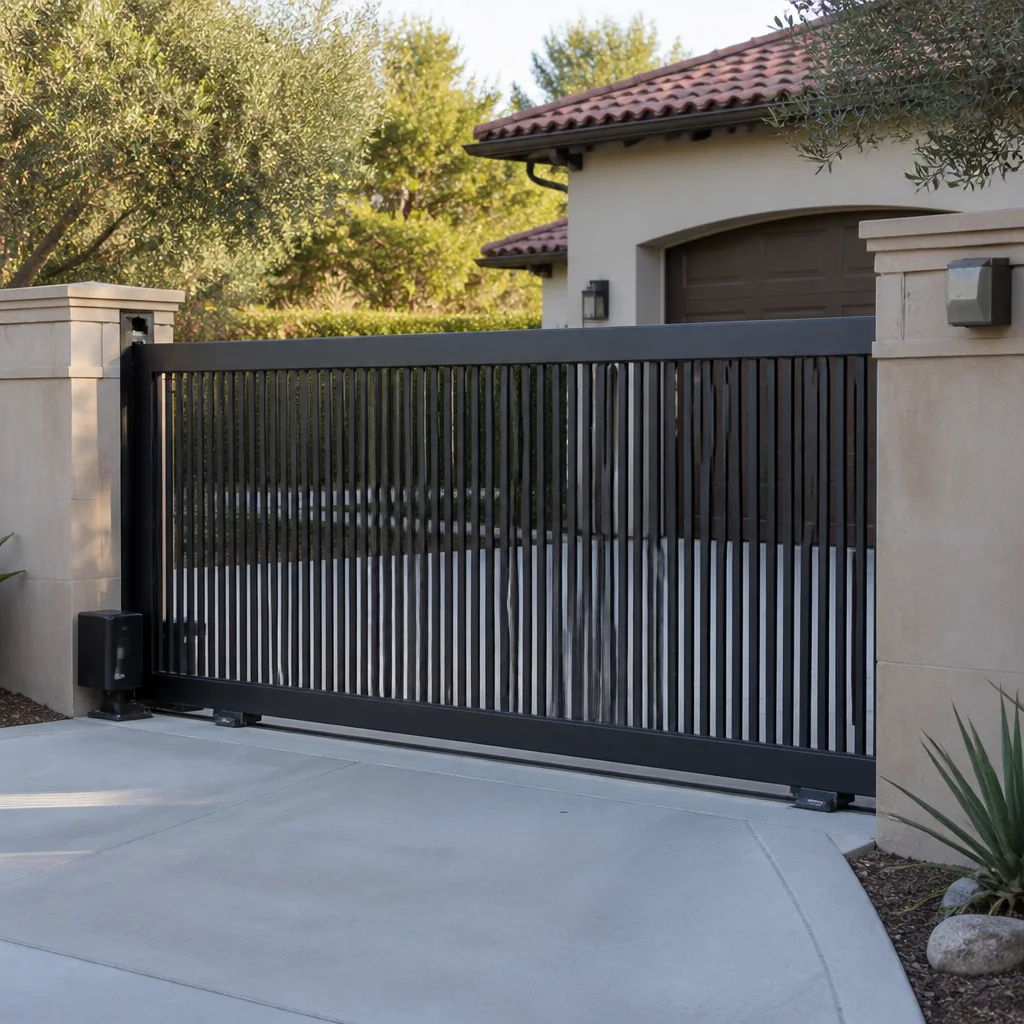 Sliding driveway gates
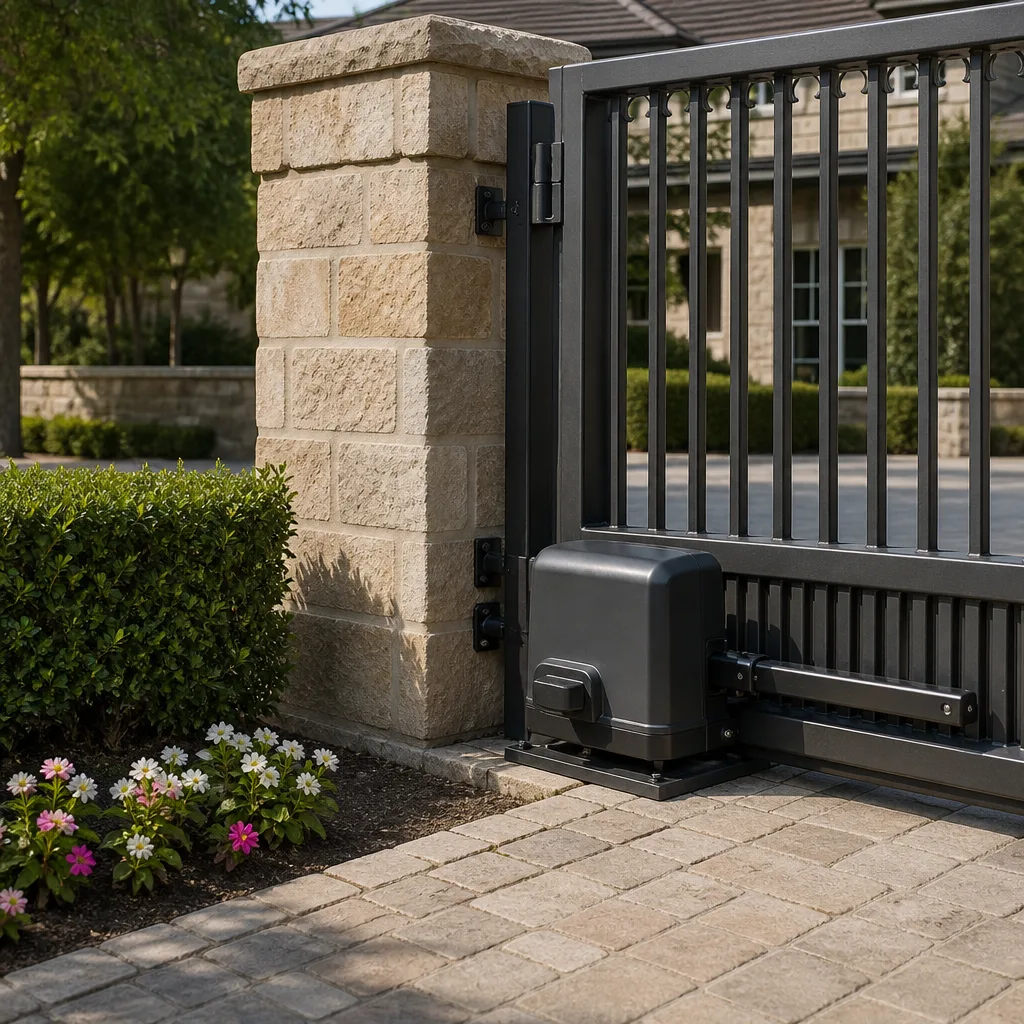 LiftMaster operators
Free on-site gate assessment - hinges, posts, and your LiftMaster or Nice gate operator checked before anything is quoted
The assessment is free and the quote is the invoice.
Get your free estimateGate Repair Maintenance Checklist for Pompano Beach Homeowners
Most gate maintenance advice floating around online was written for a climate with four seasons, and applying it here does real damage. The biggest trap is lubrication. In Pompano Beach’s humidity, a wet or greasy lubricant sprayed onto a gate’s moving parts doesn’t protect the metal – it holds moisture against it and speeds up the exact corrosion you were trying to prevent. Down here the inspection sequence, the products, and the timing all change. What follows is a checklist built from South Florida conditions up: what to look at, what to avoid, and how to log it all so a technician can pick up where you left off.
Styles & brands we work with
- Wrought iron
- Wood & steel frame
- Farm & ranch
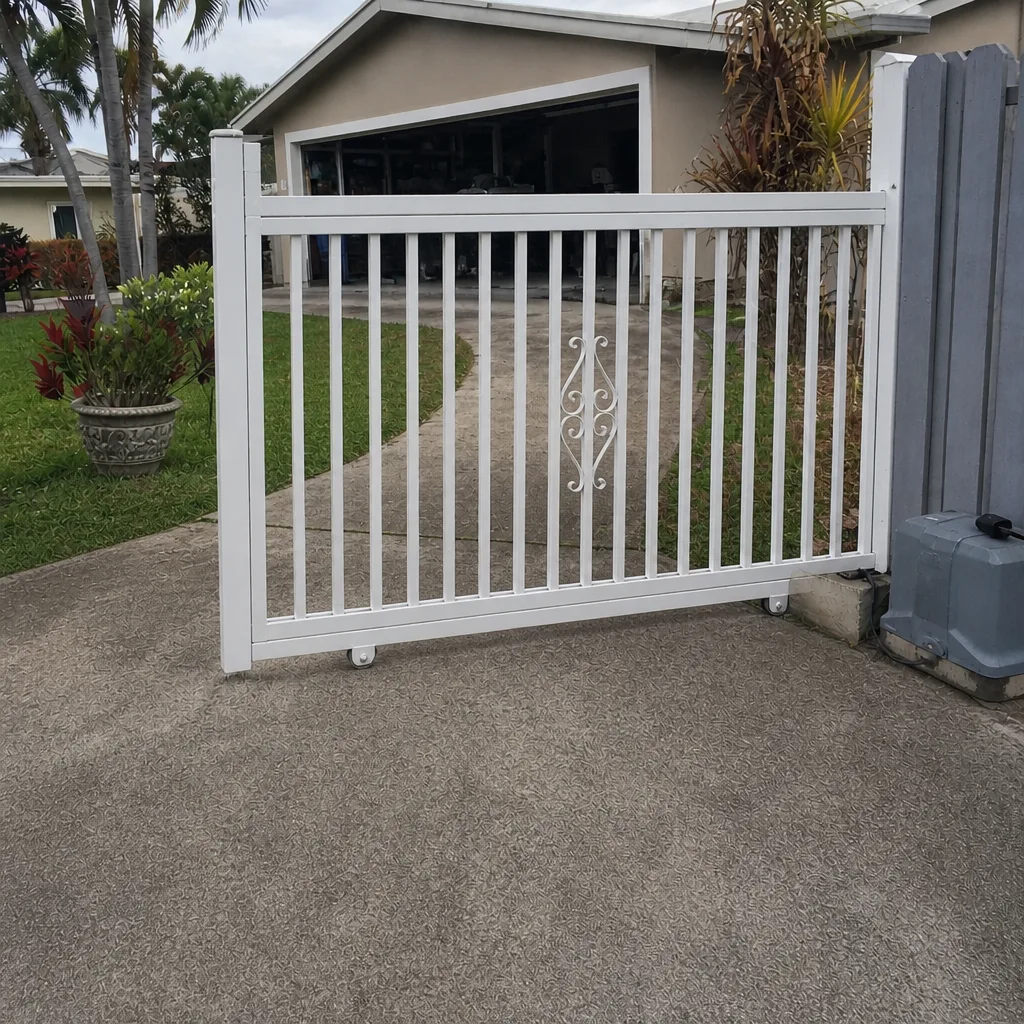
- Sliding driveway gates
- LiftMaster operators
Quick Answer
A working gate maintenance routine in Pompano Beach means checking hardware monthly, testing safety devices monthly, and doing a deeper mechanical and lubrication pass quarterly using dry-film or PTFE-based products – never wet grease. High UV fades sensor lenses and dries out seals faster than in cooler climates, so photo eyes and limit switches need regular testing. After any tropical storm, inspect before you resume normal operation.
Table of Contents
- Why Pompano Beach Climate Rewrites the Standard Checklist
- Which Lubricants Work in South Florida Humidity (and Which Backfire)
- The Monthly Checklist by Gate Type
- The Quarterly Checklist: Motor, Board, and Hardware
- Testing Safety Loops, Photo Eyes, and Limit Switches in High UV
- Post-Storm Inspection: The First 24 Hours
- Documentation: What to Log After Every Inspection
- Common Mistakes to Avoid
- When to Call a Professional
- Frequently Asked Questions
- The Bottom Line
Why Pompano Beach Climate Rewrites the Standard Checklist
The maintenance manual that shipped with your operator assumes a temperate climate. Pompano Beach doesn’t deliver one. Year-round warmth, heavy humidity, intense sun, and the salt that hangs in the air near the water change how fast every component on your gate ages – and what “maintenance” actually means.
Here’s what that looks like in practice:
- Humidity drives corrosion. Metal hardware, hinges, chains, and guide rollers oxidize faster when the air stays damp. Any lubricant that traps moisture under it makes this worse, not better.
- UV breaks down rubber and plastic. Gate seals, bushings, wire insulation, and safety sensor lenses degrade in strong sun. A photo eye lens that clouds or yellows over time can start missing obstacles or throwing false triggers.
- Salt exposure accelerates everything. Gates within reach of the coastal air see corrosion on fasteners, chains, and unpainted metal far sooner than inland installations. Stainless fasteners and intact paint matter more here than they do elsewhere.
- Storm season resets the schedule. Wind, rain, and debris can knock a gate out of alignment or jam a track in a single event. Post-storm inspections aren’t optional in this part of Florida.
None of this means gates here are doomed. It means the routine has to be local. A generic checklist applied blindly can lubricate the wrong parts with the wrong product, skip the sensors that fail fastest in UV, and leave a gate that looks maintained but isn’t. If a component fails despite your best effort, gate repair in Pompano Beach starts with an accurate diagnosis, not a guess.
Which Lubricants Work in South Florida Humidity (and Which Backfire)
This is the section most homeowners get wrong, and it’s the one that matters most. Lubricant choice in a humid climate is not a minor detail – it determines whether your gate’s moving parts stay protected or corrode faster than if you’d left them alone.
Products that work
- Dry-film PTFE lubricants. These leave a thin, non-sticky layer that protects moving surfaces without holding moisture or grit. Ideal for chains, hinges, and pivot points.
- Silicone spray (dry-set). Good for rubber seals, bushings, and plastic wear points. Doesn’t attract dust and dries rather than staying wet.
- Graphite (sparingly). Works on locks and metal-to-metal contact where you want dry lubrication and can tolerate a bit of mess.
Products that backfire here
- Heavy grease and wet lubricants. They trap moisture against metal and collect grit, forming an abrasive paste that wears parts faster. The very climate they’re applied in accelerates the damage.
- WD-40 as a long-term lubricant. It works as a water displacer, but it isn’t a lasting lubricant and its wet film attracts dust. Don’t rely on it for ongoing protection.
- Motor oil on chains. In a dry climate it’s a cheap standby. In Pompano Beach humidity, oil holds grit and moisture both.
Whatever you use, apply it sparingly and wipe off any excess. A little dry-film product on a clean surface beats a heavy coat every time. If you’re unsure what’s already on the gate, clean the parts thoroughly before switching products rather than layering one on top of another.
The Monthly Checklist by Gate Type
Once a month, walk the gate through a full cycle and look at the parts that move. This takes about fifteen minutes and catches most problems while they’re small. The specifics vary by gate type.
Sliding gates
- Check the track for debris, leaves, and grit, and clear it. A blocked track strains the motor and can throw the gate off its line.
- Inspect the guide rollers for flat spots or wobble.
- Look at the chain (if the gate uses one) for slack, rust, and missing links.
- Confirm the gate stops cleanly at both limits with no overrun or bounce.
Swing gates
- Check hinge bolts and pins for tightness.
- Lift the gate slightly at the open edge to feel for hinge wear or sag.
- Inspect the operator arm and its mounting brackets for play.
- Verify the gate opens and closes to the same position each time.
Bi-fold gates
- Check each folding joint for smooth action.
- Inspect the top and bottom tracks or guide rails for wear and debris.
- Look at the pivot points for loose hardware.
- Make sure the panels meet squarely when closed.
On any type, note anything that looks different from last month. A small change in how the gate sounds or moves is the earliest signal of wear, and catching it early is the whole game.
The Quarterly Checklist: Motor, Board, and Hardware
Every three months, go deeper. This is where you catch the wear that a visual walkaround misses, from the motor and control board to the structural hardware holding everything together.
- Power down the operator before touching the motor area or removing covers. Follow the manufacturer’s shutdown procedure.
- Inspect the control board for corrosion, insect nests, or moisture. In Pompano Beach, small debris and critters find their way into enclosures more often than you’d expect.
- Check all wiring connections at the motor, control board, and safety devices for looseness or corrosion.
- Clean and lubricate chains, hinges, and pivots with dry-film products as described above.
- Check mounting hardware – bolts, brackets, and anchors – for tightness and corrosion. Replace rusted fasteners rather than just tightening them.
- Inspect the gate structure itself for loose panels, rust spots, and paint failure. Bare metal exposed to humid air corrodes quickly, so touch up paint when you see it failing.
- Test the manual release to be sure you can open the gate by hand if power fails.
- Run a full open-close cycle and listen for changes in sound, speed, or hesitation.
If the gate runs on a system like a Ghost Controls, Mighty Mule, or DoorKing operator, the control board and safety connections are where most intermittent faults show up. Knowing your specific brand helps, and we work on the brand you already have – from budget residential openers to commercial-grade access systems.
Testing Safety Loops, Photo Eyes, and Limit Switches in High UV
Safety devices are the parts that protect people, vehicles, and the gate itself, so they deserve a dedicated monthly test. In Pompano Beach, strong UV adds a wrinkle: sensor lenses cloud, crack, or yellow over time, degrading the beam before the electronics ever fail.
Photo eyes (safety beams)
- With the gate stationary and closed, wave an object through the beam path while commanding it to open or close.
- The gate should reverse or stop immediately. If it doesn’t, the safety circuit is compromised – stop using the gate until it’s fixed.
- Inspect each lens for clouding, cracks, or dirt. Clean with a soft cloth and mild cleaner. If the plastic is degraded, plan to replace the sensor.
- Check that the lenses are aligned and the mounting brackets are secure.
Safety loops
- Drive a vehicle or place a metal object over the loop and confirm the gate responds as designed.
- Watch for false triggers – a gate that opens unprompted may have a failing loop or a cracked loop seal.
- Inspect the loop sealant and wiring at the edges for damage.
Limit switches
- Run the gate fully open and fully closed and confirm it stops at the correct point each time.
- Listen for the switch clicking and watch for overtravel or short travel.
- Check the switch and its wiring for corrosion or looseness.
Never disable a safety device to make a gate “work.” If a photo eye or loop fails its test, that’s a repair, not an inconvenience. Electric gate wiring and the safety circuit carry real risk, so if you’re not comfortable testing at the control board, a dedicated electric gate repair visit is the right call.
Post-Storm Inspection: The First 24 Hours
After a tropical storm or heavy weather event, don’t just hit the remote and assume things are fine. A gate can look intact and still have damage that turns into a bigger failure under load. Check these within the first 24 hours, before resuming normal operation:
- Clear debris from tracks, hinges, and the gate’s path. Branches, palm fronds, and grit jam mechanisms and strain motors.
- Check the gate’s alignment. Wind and water can shift posts or bend hinges so the gate no longer tracks true.
- Inspect the structure for bent panels, loose brackets, or cracked welds.
- Look at the operator and enclosure for water intrusion, loose covers, or shifted mounting.
- Test the safety devices using the same routine as your monthly test – photo eyes and loops especially.
- Dry and clean any wet components and check for new corrosion on fasteners and chains.
- Run a slow full cycle and watch and listen for anything unusual before you return the gate to daily use.
If anything is off – the gate drags, the motor strains, or a safety device doesn’t respond – stop using it and get it looked at. A small post-storm issue handled quickly is a cheap fix; ignored, it can lead to motor or structural damage.
Documentation: What to Log After Every Inspection
This is the step almost nobody does, and it’s the one that saves the most time and money. A written log lets a technician immediately tell the difference between a maintenance gap (something that was skipped) and a component reaching end-of-life (something that needs replacing). Without it, every visit starts from zero.
For each inspection, log:
- Date and what you did – which tasks you completed and which you skipped.
- Products used – the lubricant name and where you applied it. This prevents incompatible products being layered later.
- Condition notes – corrosion, wear, looseness, or anything that changed since last time.
- Safety device test results – pass or fail for photo eyes, loops, and limit switches.
- Anything you noticed but didn’t fix – a small noise, a slow response, a rusty fastener.
- Repairs or replacements made since the last entry, with the brand and part where you know it.
Keep the log with the gate’s manual and any repair records. When you call for service, that history tells the technician what’s been done and what hasn’t – which is exactly the information that turns a diagnostic guess into an accurate diagnosis. We’ve seen gates where a full year of “maintenance” was actually just repeated greasing that accelerated wear. A log would have made that obvious in a minute.
Common Mistakes to Avoid
- Greasing everything. Heavy grease in Pompano Beach humidity traps moisture and grit against metal. Use dry-film products on moving parts instead.
- Skipping the safety device test. A photo eye or loop that fails silently is a serious safety hazard. Test them monthly, not once in a while.
- Ignoring UV damage on sensors. Clouded or cracked lenses are easy to miss and cause false triggers and missed obstacles. Inspect them in good light.
- Disabling safety features to make the gate work. If it won’t run with the safety devices active, it needs a repair – not a bypass.
- Forcing the gate after a storm. Running a gate that’s misaligned or jammed strains the motor and can bend hardware. Clear it and check it first.
- Replacing parts before diagnosing. A dead motor and a dead control board can look the same from the outside. Accurate diagnosis first saves money.
- Stopping the log after one entry. A one-time note tells nobody anything. The value is in the pattern over time.
When to Call a Professional
Some work is routine maintenance. Some is a repair that’s risky to DIY. Call a professional when the issue involves the operator’s power wiring or control board, when a safety device fails its test and can’t be fixed with a clean lens or a loose wire, when the gate is misaligned or dragging, when a heavy panel is off its track, when the manual release won’t disengage, or when a component needs replacing and you’re not certain which one. Electric gate work carries real electrical risk and heavy panels can cause serious injury, so a trained technician should handle anything beyond cleaning, inspecting, and dry-film lubrication. Gate Repair Pompano Beach offers free estimates in Pompano Beach – call (888) 399-8022. Our technicians have up to 12 years of experience across brands including Ghost Controls, DoorKing, Elite, and Mighty Mule, and we diagnose the actual problem rather than defaulting to a replacement.
Frequently Asked Questions
Use a dry-film PTFE lubricant or dry-set silicone spray on moving parts. Avoid heavy grease, WD-40 as a long-term lubricant, and motor oil, because in high humidity they trap moisture and grit and accelerate corrosion. Apply sparingly and wipe off any excess.
Walk the gate monthly and do a deeper motor and hardware check every three months. In Pompano Beach, high UV and humidity wear components faster than in cooler climates, so don’t stretch the schedule. Inspect after any storm before resuming use.
A gate that opens on its own usually has a false trigger from a safety loop, a failing photo eye, or a control board fault. Inspect the loop area for cracks and the lenses for clouding, then have the circuit tested. Call (888) 399-8022 for an exact quote – estimates are free.
Gate repair is priced per job after a written estimate, so the final number depends on the actual fault and part. That’s the reason we diagnose first instead of quoting a replacement sight unseen. Call (888) 399-8022 for an exact quote – estimates are free.
Within 24 hours, clear the tracks and path, check alignment and structure for bends or loose hardware, inspect the operator for water intrusion, and test every safety device. Run a slow full cycle and watch before returning the gate to daily use.
Yes – you can and should test photo eyes, loops, and limit switches using the routine in this guide. What you shouldn’t do is disable them or work on the control board wiring if a test fails. That’s when it’s time to call a dedicated gate technician.
The Bottom Line
A gate in Pompano Beach needs a maintenance routine built for heat, humidity, UV, and storms – not one copied from a colder climate. The core habits are simple: check hardware monthly, test safety devices every time you inspect, lubricate with dry-film products instead of grease, run a post-storm check before resuming use, and write down what you did. That log is what lets a technician tell a skipped task from a worn-out part. For everything beyond cleaning, inspection, and lubrication, a dedicated gate specialist in Pompano Beach is the right call. We handle gate repair, electric gate repair, and new gate installation, so you never have to find a second company as your needs change. Call (888) 399-8022 for a free estimate. We answer 24/7, with fast dispatch from 7am to 7pm, Sunday through Friday.
Written by the team at Gate Repair Pompano Beach.
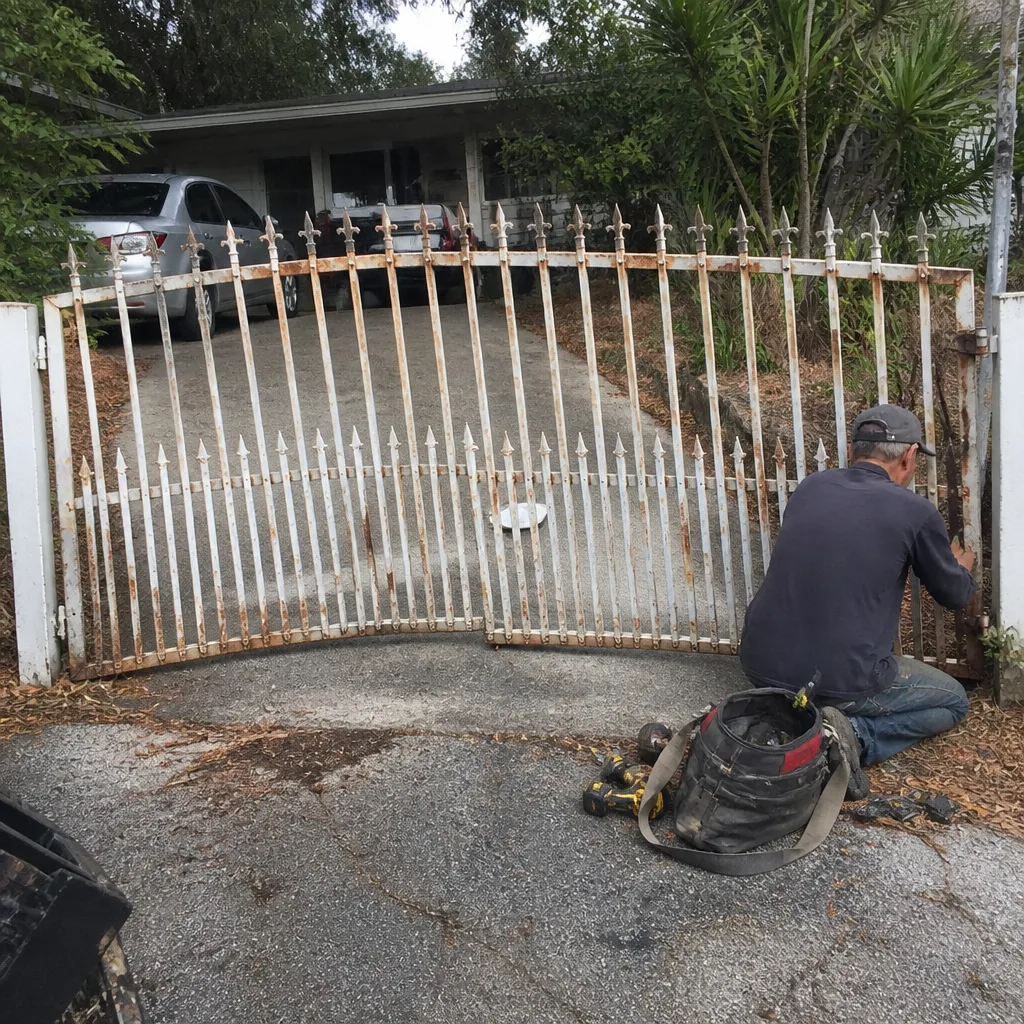
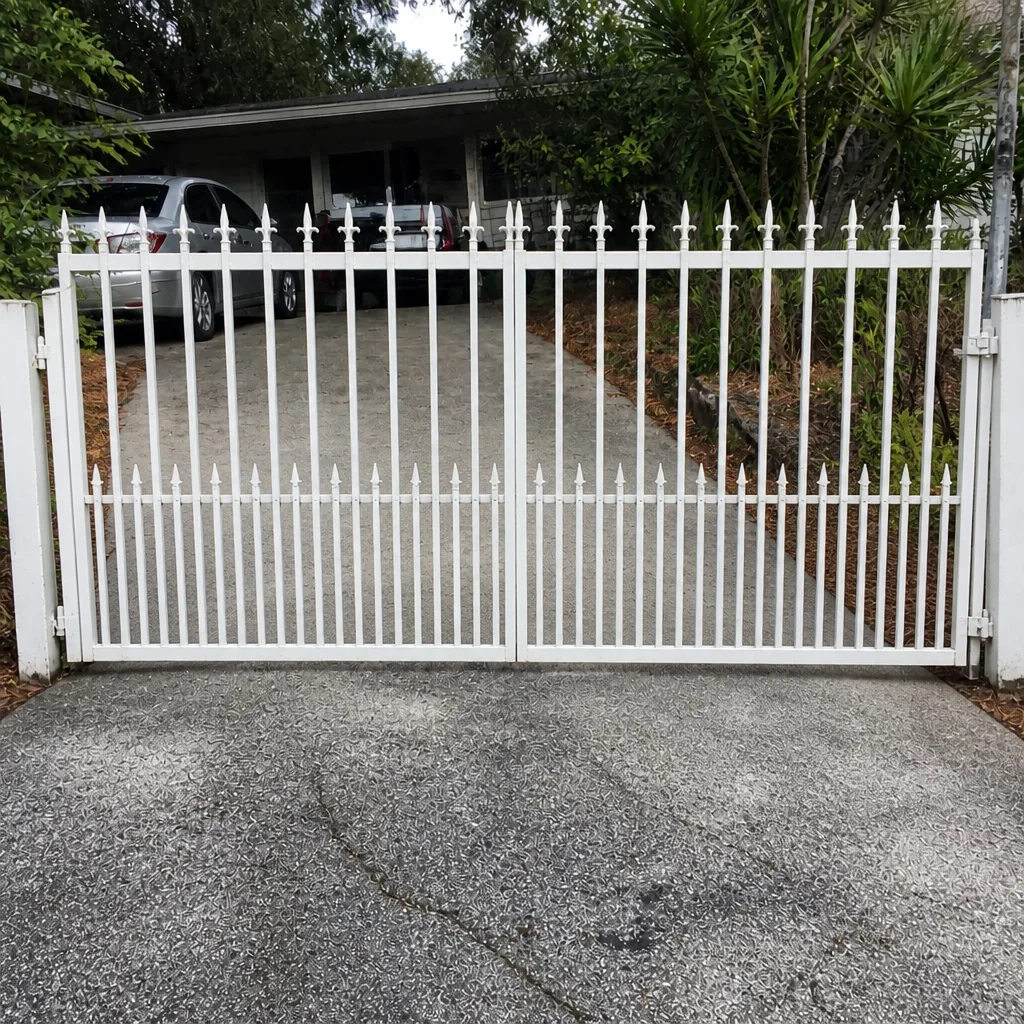
See the difference
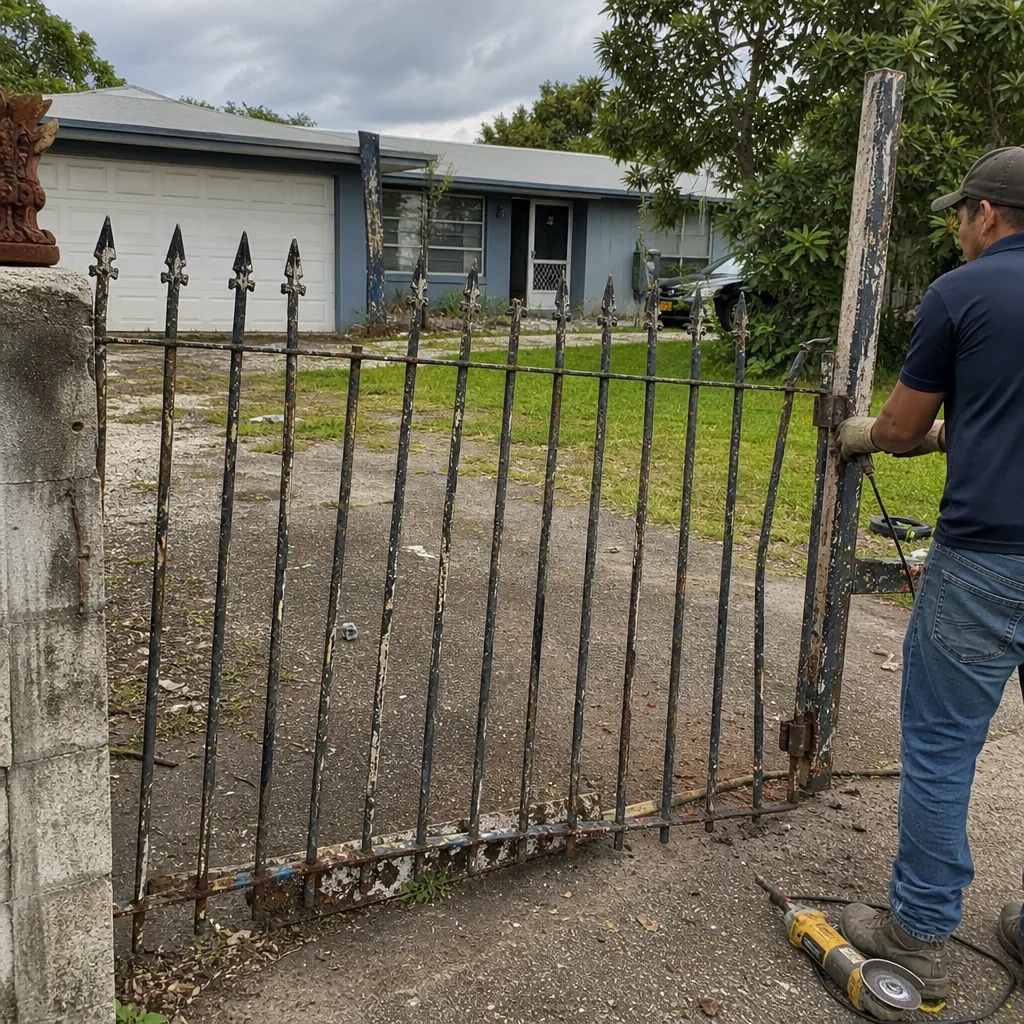 Before
 After
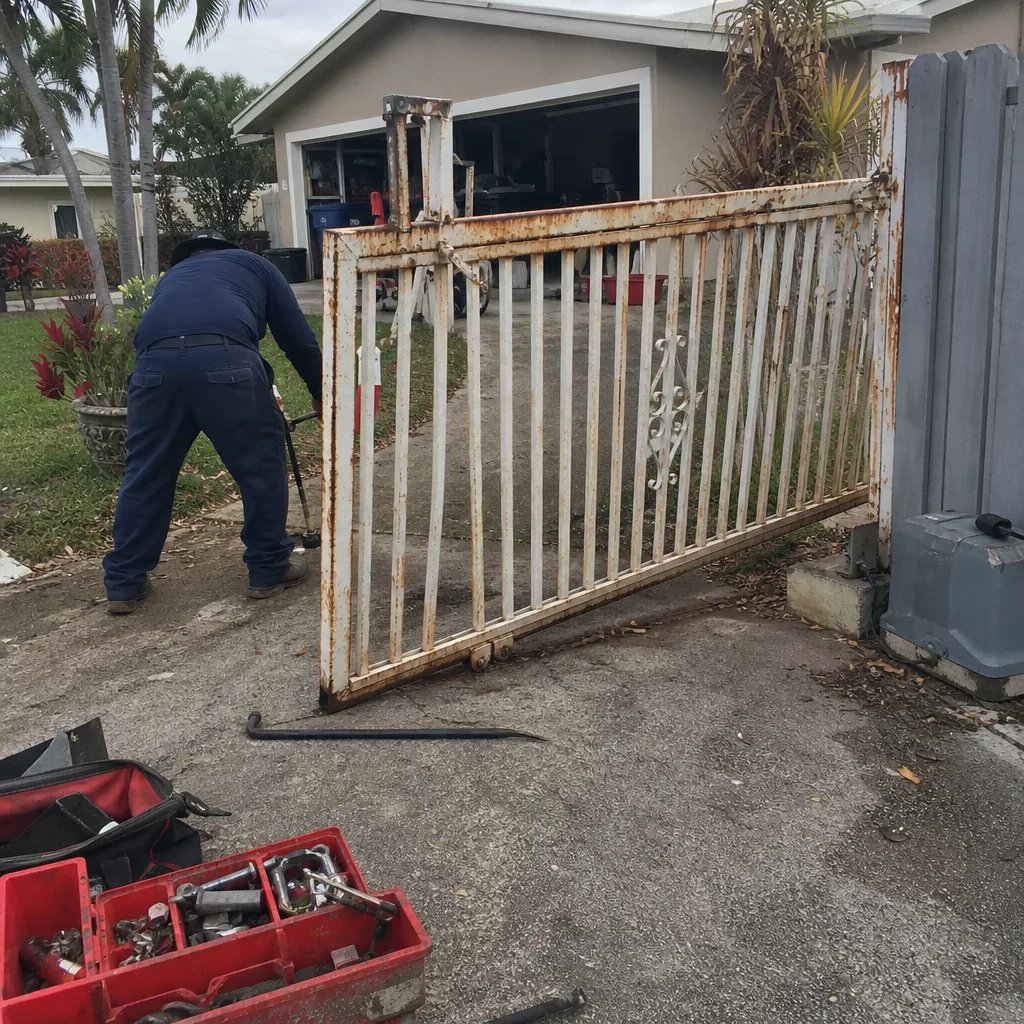
 Before
 After
 Before
 After