
Last updated November 15, 2026
 Wrought iron
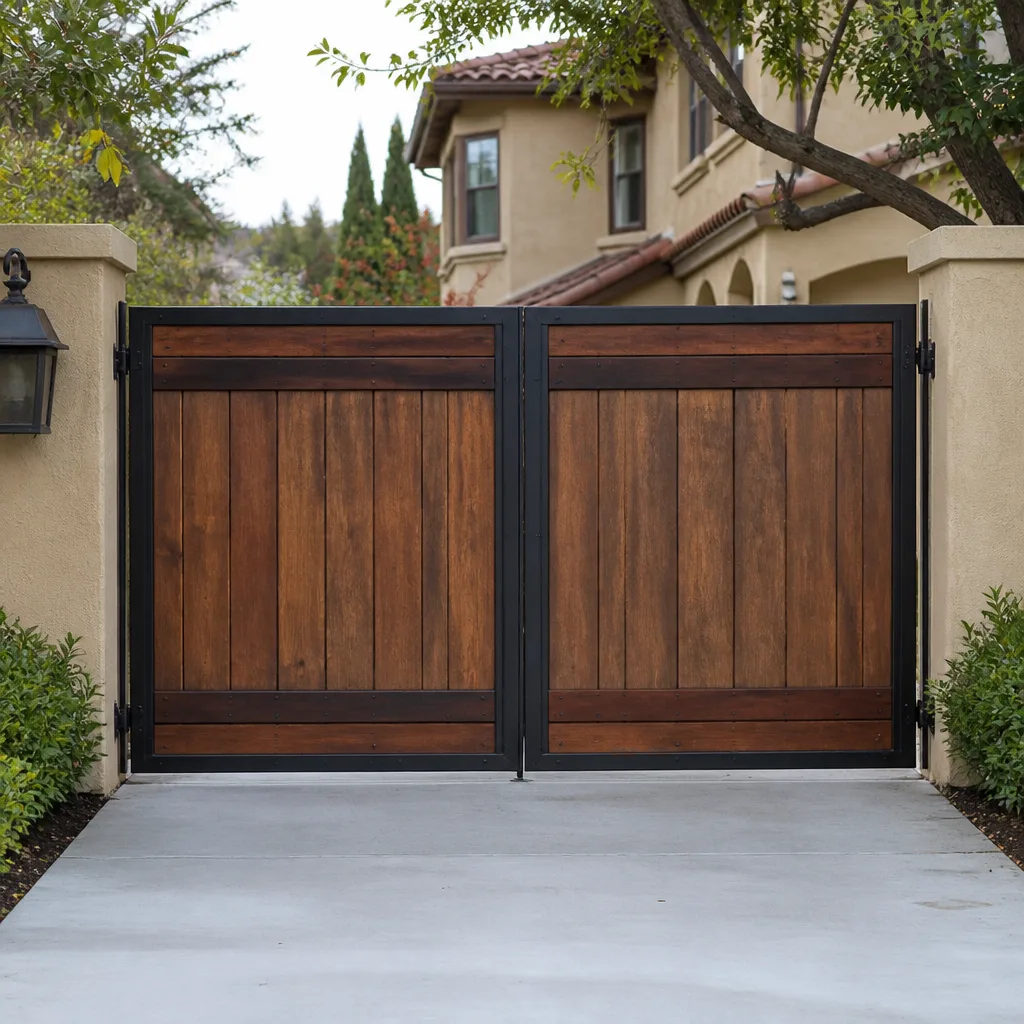 Wood & steel frame
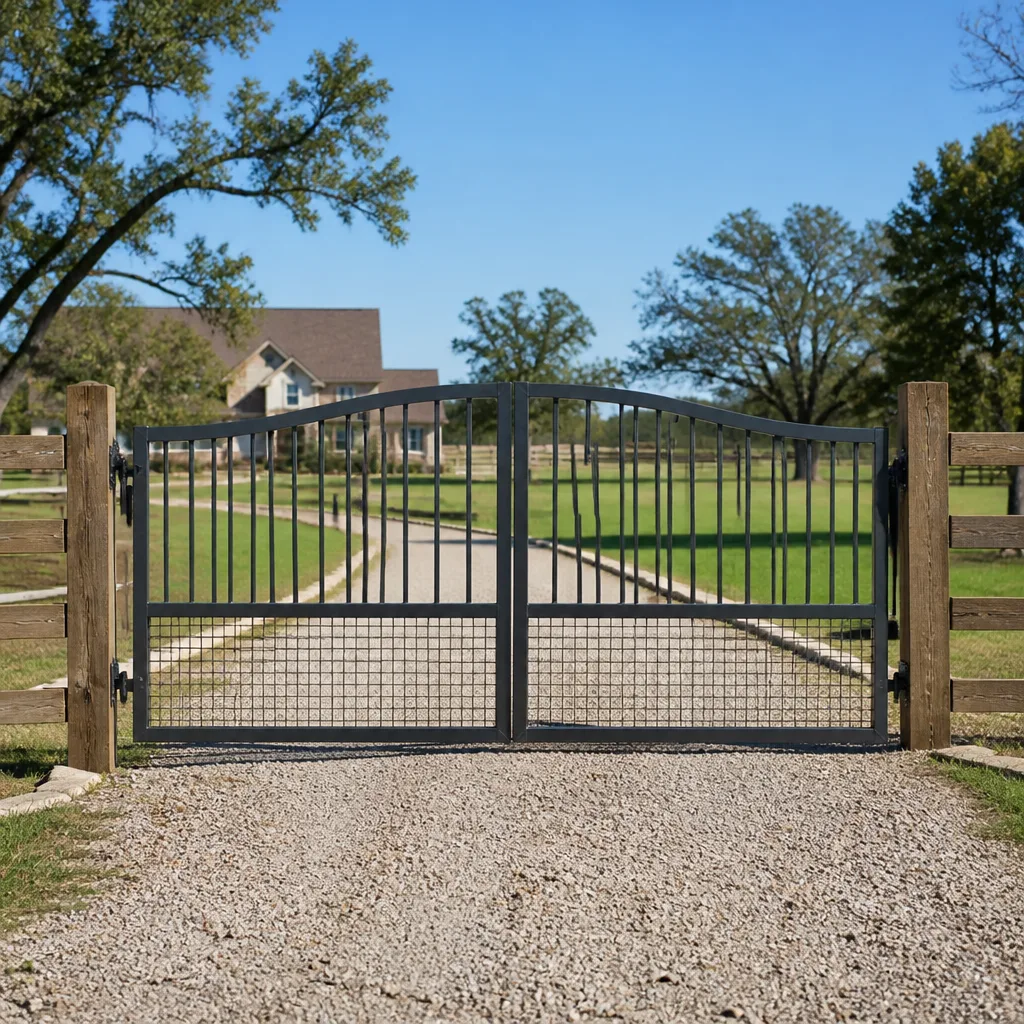 Farm & ranch
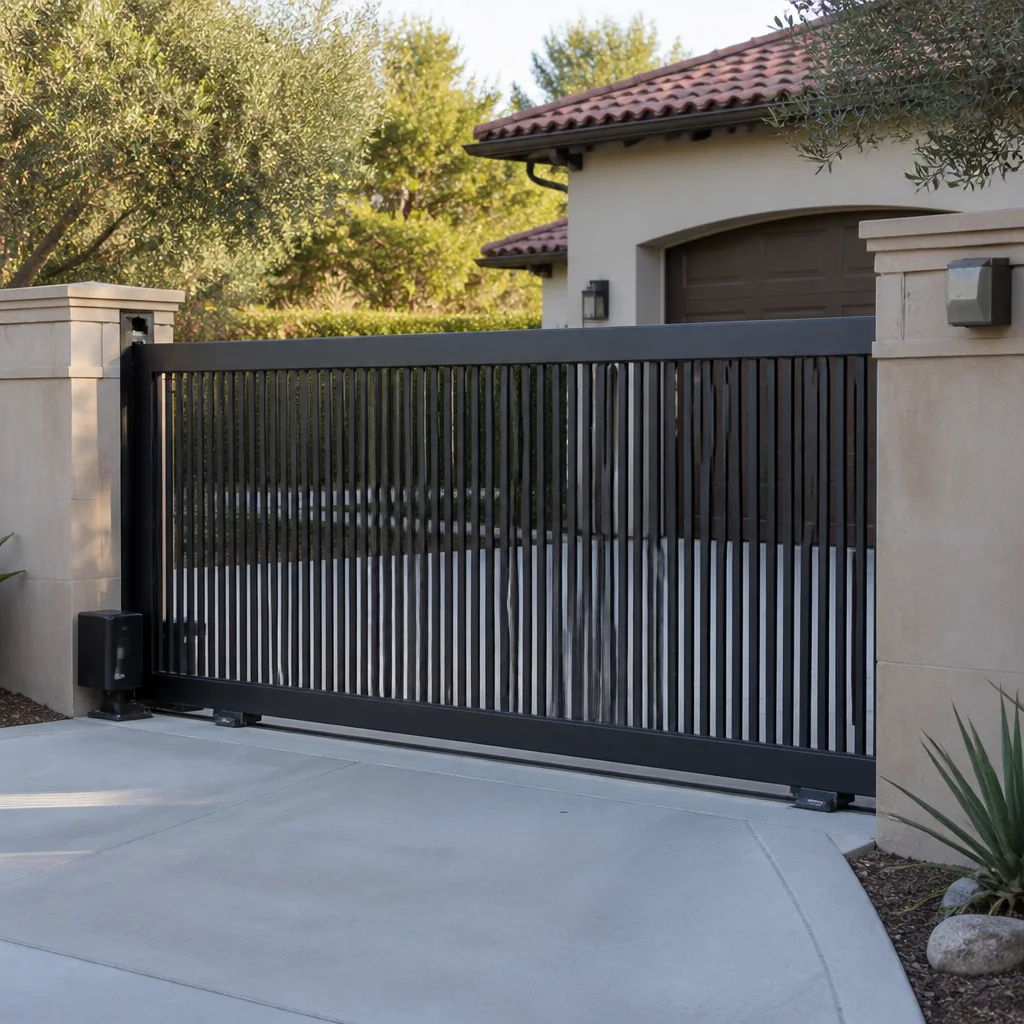 Sliding driveway gates
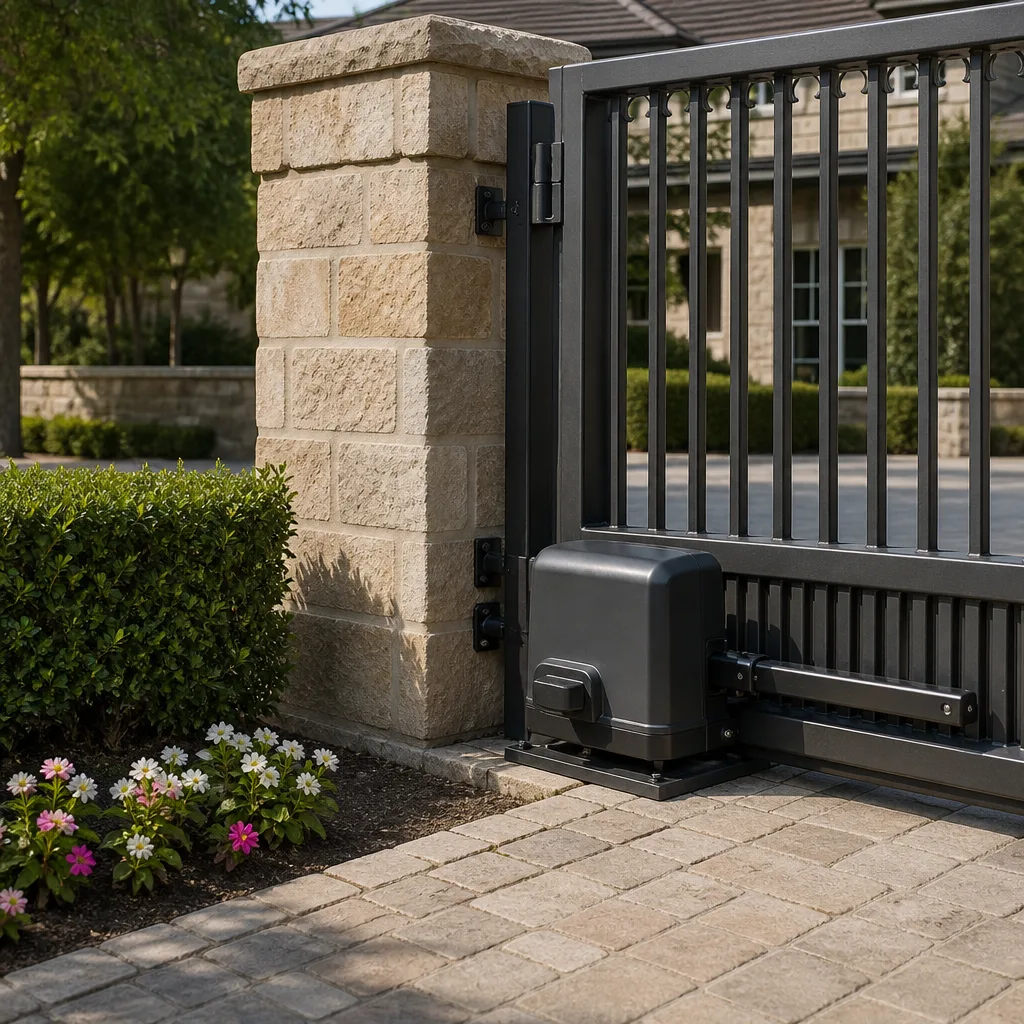 LiftMaster operators
Free on-site gate assessment - hinges, posts, and your LiftMaster or Nice gate operator checked before anything is quoted
The assessment is free and the quote is the invoice.
Get your free estimateDIY vs Professional Gate Repair: The Pompano Beach Homeowner’s Decision Guide
Most homeowners assume the DIY line falls where the skill runs out. It doesn’t. The real dividing line on an automated gate isn’t how handy you are. It’s voltage, proprietary control boards, and what happens to your warranty and your liability when someone unlicensed touches a 120V circuit or a factory-sealed board. Resetting limit switches looks like a five-minute job until one rotation off sends the gate driving into its own stop post, shears the drive shaft, and turns a software tweak into a mechanical repair. In this guide we’ll draw that line precisely for Pompano Beach homeowners, task by task, so you know what’s safe to handle and what needs a dedicated gate technician.
Quick Answer
On an automated gate in Pompano Beach, homeowners can safely handle routine care: lubricating moving parts, clearing sensors, cleaning tracks, and reprogramming remotes. Anything involving the control board, limit switches, 120V line voltage, operator wiring, or the physical structure of the gate itself should go to a licensed gate specialist. Those are the jobs where a small mistake damages expensive components, voids a warranty, or creates a real safety and legal exposure.
Styles & brands we work with
- Wrought iron
- Wood & steel frame
- Farm & ranch
- Sliding driveway gates
- LiftMaster operators
Table of Contents
- Why Gate Repair DIY Is Different From Other Home DIY
- What You Can Safely Do Yourself on an Automated Gate
- What Requires a Licensed Contractor in Florida
- 24V vs 120V: Why Low-Voltage Mistakes Cost More
- The Warranty Voiding Problem
- The Middle Ground: You Diagnosed It, You Need Someone to Fix It
- Gate Repair in the Pompano Beach Market
- Common Mistakes to Avoid
Why Gate Repair DIY Is Different From Other Home DIY
A stuck cabinet door or a loose fence board forgives mistakes. An automated gate does not. Three factors make gate work a different category of DIY, and all three are the reason a “do it yourself” mindset that works beautifully on other house repairs can turn a two-hundred-dollar repair into a control board replacement.
The first is system voltage. Most automated gates combine a 120V feed to a dedicated circuit with a 24V or lower control section. The line voltage carries real shock risk. The low-voltage section is harmless to touch but unforgiving to wrong: a single mis-swapped wire on a control board can dead-short the board itself.
The second is proprietary electronics. Gate operators from brands like DoorKing, LiftMaster, Elite, and Mighty Mule run sealed control boards programmed for that brand and model. There is no universal board you can drop in, and there’s rarely any way to reset one that’s been damaged by a wiring fault.
The third is liability. A gate is a heavy moving machine. If a repair you did yourself later causes an injury or fails an inspection, the paper trail leads back to the person who did the work. Florida homeowners who can’t show a licensed contractor performed electrical work on the operator can face real consequences.
Those three facts together create a clean line: care is safe, wiring and control work is not. Everything in this guide sits on one side of that line or the other.
What You Can Safely Do Yourself on an Automated Gate
Routine care is genuinely within reach, and doing it well is the best thing you can do to extend the life of any gate. These are the tasks we’re happy to see homeowners take on. None of them require opening an electrical panel or touching the control board.
- Lubricate moving parts. Apply a quality gate-rated lubricant to hinges, rollers, and slide-track contact points. Wipe excess. A dry gate that squeals and drags is telling you it hasn’t been lubricated recently.
- Clear the sensor path. Safety sensors (the photoelectric beams near the gate) need a clean lens and an unobstructed line of sight. A leaf, a cobweb, or a knocked-aside bracket causes more “won’t close” calls than any motor fault.
- Clean the slide track or swing hardware. Sweep grit and debris off the track. Grit accelerates wear on rollers and causes the operator to work harder than it should.
- Reprogram remotes and keypads. Adding or removing a remote fob, or reprogramming a keypad entry code, is a menu-level task on most modern operators. The manual is your friend here.
- Check the manual release. Confirm the manual release key and lever operate smoothly. Do this with the gate stopped and the operator disengaged, per the manual.
- Visual inspection. Look for cracked welds, sagging hinges, loose brackets, and frayed wires (a visual check only – don’t touch the wiring itself).
Do these every few months and you’ll notice problems earlier, when they’re cheap. When you spot something mechanical or electrical that needs more than a clean or a lube, that’s where we come in – whether it’s the motor, the board, or the hardware, we diagnose the actual failure before anything gets replaced.
What Requires a Licensed Contractor in Florida
Florida’s electrical code draws a firm boundary around what a homeowner can legally do. Anything on the 120V supply side of a gate operator, and anything new requiring a permit, needs a licensed contractor. Working on the line voltage yourself is not just risky – it’s outside the scope of what you can pull a permit for as a homeowner in most cases, and it can void the operator’s warranty.
Here’s the practical breakdown of what needs a licensed professional:
- New circuit wiring to the operator. Running a dedicated 120V circuit from the panel to the gate operator location requires a permit and a licensed electrician. The pull, the conduit, and the termination are all covered work.
- Replacing or repairing the operator itself. Swapping a failed operator motor, control board, or power supply involves disconnecting and reconnecting line voltage – licensed territory.
- Anything requiring a permit. Most cities require a permit for new gate installations and for major electrical changes to an existing operator. Your city’s building department confirms the exact requirement for your property.
- Safety edge and sensor wiring. Connecting safety reversing edges and photoelectric sensors involves low voltage but must be done to the operator’s spec. A sensor that fails to reverse the gate is a genuine crush hazard.
- Structural repairs. A post that’s shifted, a slide track that’s out of plumb, or a bent gate frame is structural work. It also has to be right for the operator to function.
When in doubt about a permit or a code requirement, call the city. It takes five minutes and it keeps you covered.
24V vs 120V: Why Low-Voltage Mistakes Cost More
This surprises most homeowners. You’d expect the dangerous voltage to be the expensive one to fix. Instead, the opposite is often true. A 120V wiring mistake usually trips a breaker – loud, obvious, and relatively cheap to correct. A 24V mistake on a control board is quiet. The board receives a wrong signal, a short, or reversed polarity, and one or more of its controlling components fails. The only fix is a new board.
Here’s why that’s more expensive:
- Boards are proprietary. A control board for a DoorKing or LiftMaster operator costs substantially more than a breaker or a length of wiring, and it usually has to be ordered for your exact model.
- Damage is silent. A reversed wire or a mis-seated terminal can look fine and work fine for days before the board fails. By the time it does, the connection that caused it may have been fully forgotten.
- The board is the brain. Once the board fails, the gate doesn’t open, close, or respond to anything – including the manual remote. You’ve lost the whole system, not one component.
We see this often enough in our work on low-voltage systems that we always ask what was touched before the failure started. An accurate diagnosis first saves the customer from buying a board that isn’t the real problem – and from re-damaging it on the next repair.
The Warranty Voiding Problem
Here’s a piece of fine print most homeowners never see until they need it. Gate operator manufacturers typically tie their control board warranty to installation and service by a licensed contractor. When a board fails and the manufacturer’s service record shows the control board was serviced by someone unlicensed or by a homeowner, the warranty claim is denied. The coverage isn’t based on the age of the system. It’s based on who touched it.
That matters in three practical ways:
- You lose the board replacement. If your operator is still within its coverage window and the board was damaged by DIY tampering, you’re paying for the new board out of pocket.
- The technician can’t warrant the repair. A licensed gate specialist can’t stand behind a repair on a board that’s already been compromised by someone else’s work. You get the fix, but without a warranty on that specific component until it’s replaced.
- You inherit the problem. If you ever sell the property, an undocumented DIY repair on the operator can surface during a home inspection and complicate the sale.
The safe pattern is simple: if the operator is under warranty, leave the control board and the wiring to a licensed gate specialist. If the system is out of warranty and the operator has failed, that’s a repair conversation, not a DIY one – the board is not a user-serviceable part on any of the brands we work on.
The Middle Ground: You Diagnosed It, You Need Someone to Fix It
Some homeowners do the diagnosis correctly and then discover the repair needs a licensed contractor. Maybe you’ve narrowed the failure to the control board by checking the manual, testing the remote, and ruling out the sensors. Maybe you’ve found a broken limit switch or a failed safety edge. You know what’s wrong. You just can’t legally or safely execute the fix.
That’s a good position to be in, and the right way to present it saves you a diagnostic charge:
- Write down what you observed, not what you concluded. “The gate opens by remote but won’t close; the sensor LED on the operator flashes red” is more useful than “it’s the sensor.” Observation lets the technician confirm fast.
- Say what you’ve already tested. Which remotes work? Does the manual release work? Does the gate move by hand? List it clearly.
- Mention the diagnosis and ask for a confirmation, not a fresh start. Tell the technician what you’ve narrowed it to and ask them to verify. A good specialist will confirm or correct your reading in a minute or two, not start from scratch.
- Ask about the estimate up front. The estimate is free, and the price is set per job by the written estimate – so you know what you’re agreeing to before any work starts.
In our experience, a homeowner who comes to us with a clear observation and a specific question gets a faster and cheaper resolution than one who simply says “the gate doesn’t work.” We’re happy to confirm a diagnosis. We’d rather verify the board is bad than replace one that wasn’t the problem.
Gate Repair in the Pompano Beach Market
Pompano Beach homeowners deal with a specific set of gate conditions. Properties with security gates, automated driveway gates, and access-controlled entrances are common across the neighborhoods and commercial corridors here, and the gate is often the first line of protection for a property that’s empty during the workday. That raises the cost of downtime: a gate stuck open on a Pompano Beach property isn’t just inconvenient, it’s exposure.
The systems themselves are a mix. A large share of residential automated gates in Pompano Beach run budget-to-mid-range operators – Mighty Mule and Linear are common on residential swing and slide gates – while commercial properties and larger estates here tend to run heavier systems from DoorKing, LiftMaster, and Elite. The brand determines the control board, the failure modes you’ll see, and what replacement parts cost. It’s one reason we make it our business to know the brands you already have rather than steering you toward a brand we happen to stock.
Also relevant in the Pompano Beach area: gate hardware that sees daily duty in a warm, humid climate. Metal components rust faster when they’re not lubricated, safety sensors foul faster when vegetation grows unchecked, and slide tracks pick up grit more quickly than homeowners expect. Most of the failures we see here start as lubrication and debris problems that were left too long.
If you’re searching for Gate Repair Pompano Beach because your gate has stopped working, the fastest path is to know what you’re dealing with before we arrive. Have the brand and model number ready. Note what the operator does when you try to open or close. That’s most of the diagnosis done before we even pull up.
Common Mistakes to Avoid
- Opening the control box without killing power at the breaker. The line-voltage terminals inside the operator housing are live even when the gate is idle. Flip the dedicated breaker before you do anything near the housing, and ideally don’t open it at all. That section is a licensed technician’s territory.
- Assuming a “won’t close” gate is a motor problem. In Pompano Beach, a fouled safety sensor is the most common cause, and it’s the cheapest to fix. Check the sensor lens and the beam path before you spend money on anything else.
- Spraying WD-40 on everything that moves. General-purpose spray lubricants attract grit and hold it against the hinge and roller surfaces. Use a gate-rated lubricant designed for the application, and wipe the excess.
- Replacing the control board because the gate “behaves strangely.” Behavior problems more often trace to a limit switch, a safety edge, or a wiring terminal than to a failed board. A board swap on a misdiagnosed system is expensive and solves nothing.
- Ignoring a gate that’s started to drift or catch. A gate that catches on the track or drifts past its stop is usually telling you a hinge, roller, or limit switch needs attention. Left alone, the operator works harder, wears faster, and the eventual repair gets bigger.
- Doing electrical work on the operator then calling a technician without mentioning it. Tell your technician what you touched. A hidden wiring change can make a simple repair look like a mystery and cost you a second visit.
- Assuming any handyman can service an automated gate. General handymen and garage-door companies handle gates as a side job. When a DoorKing or FAAC board is involved, a generalist is guessing. That’s how a small fix becomes a large one.
See the difference
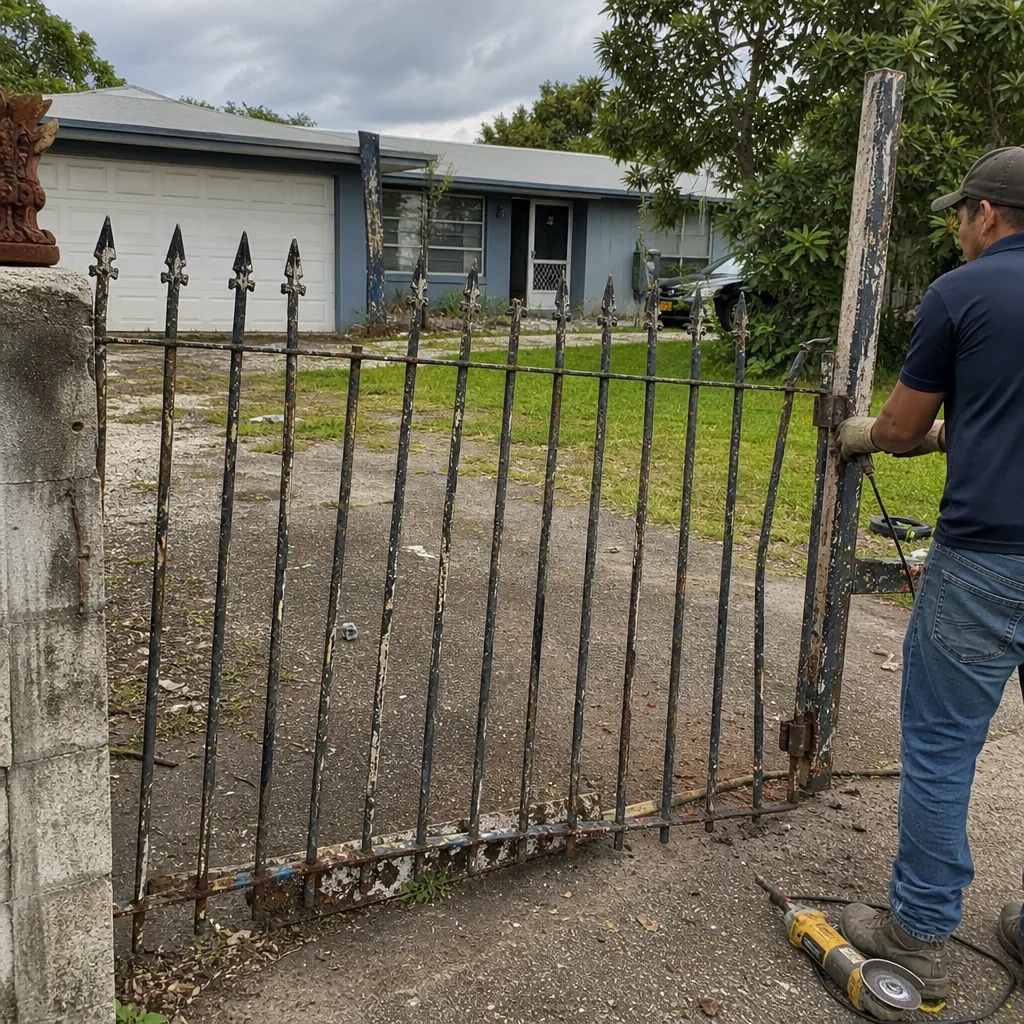 Before
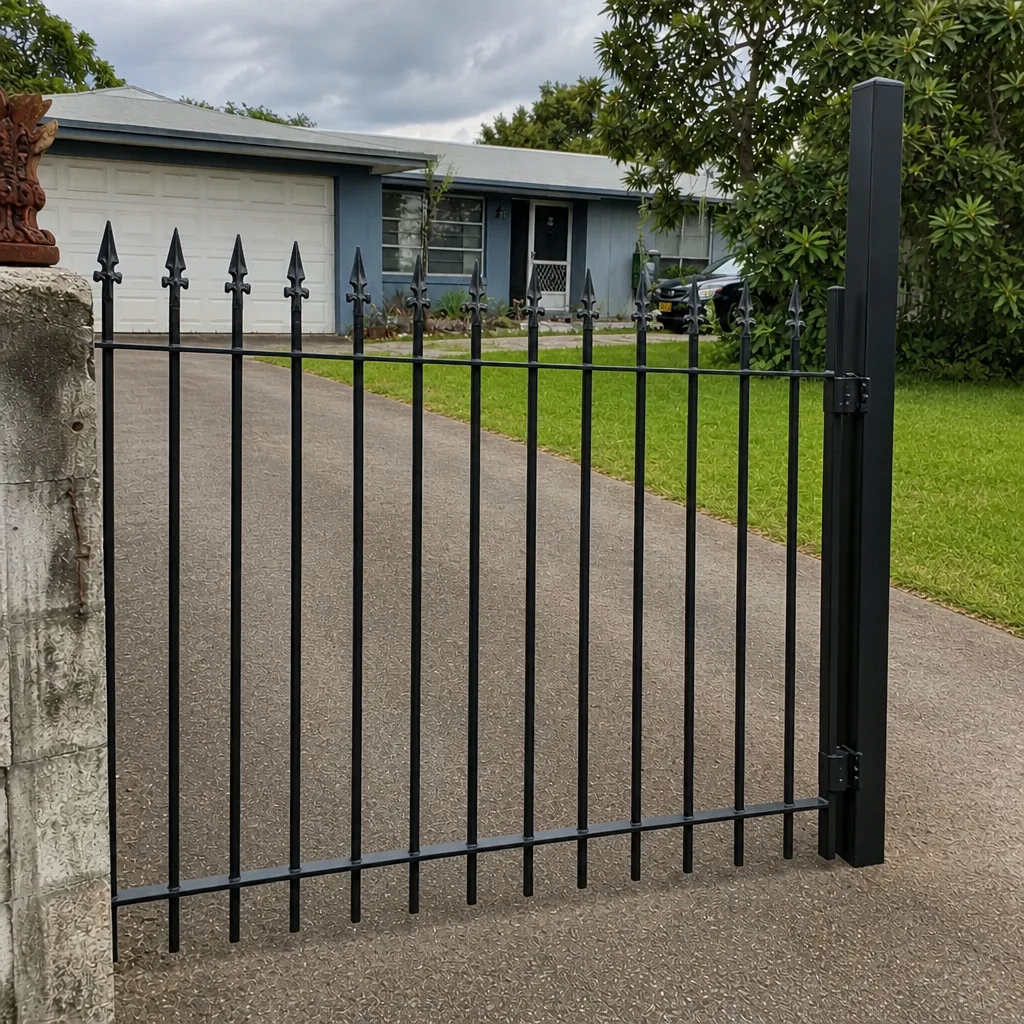 After
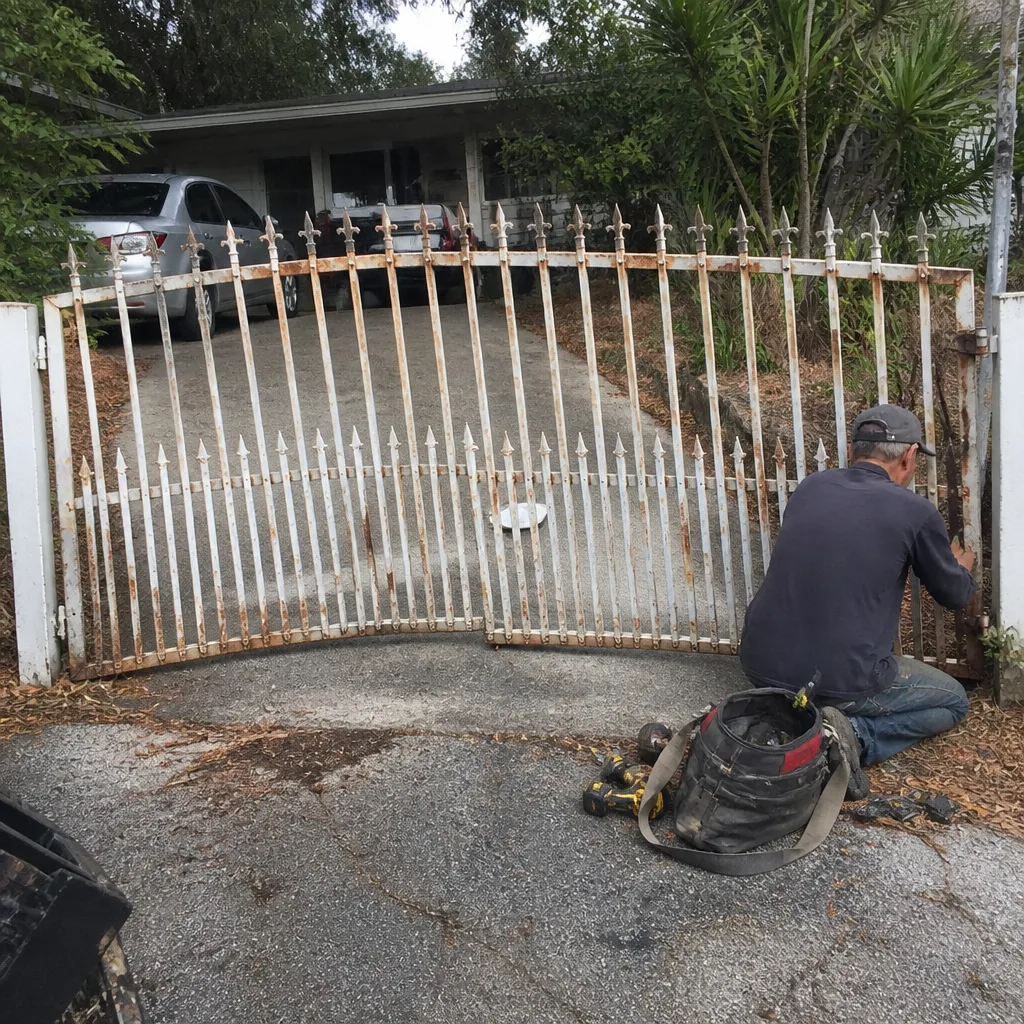 Before
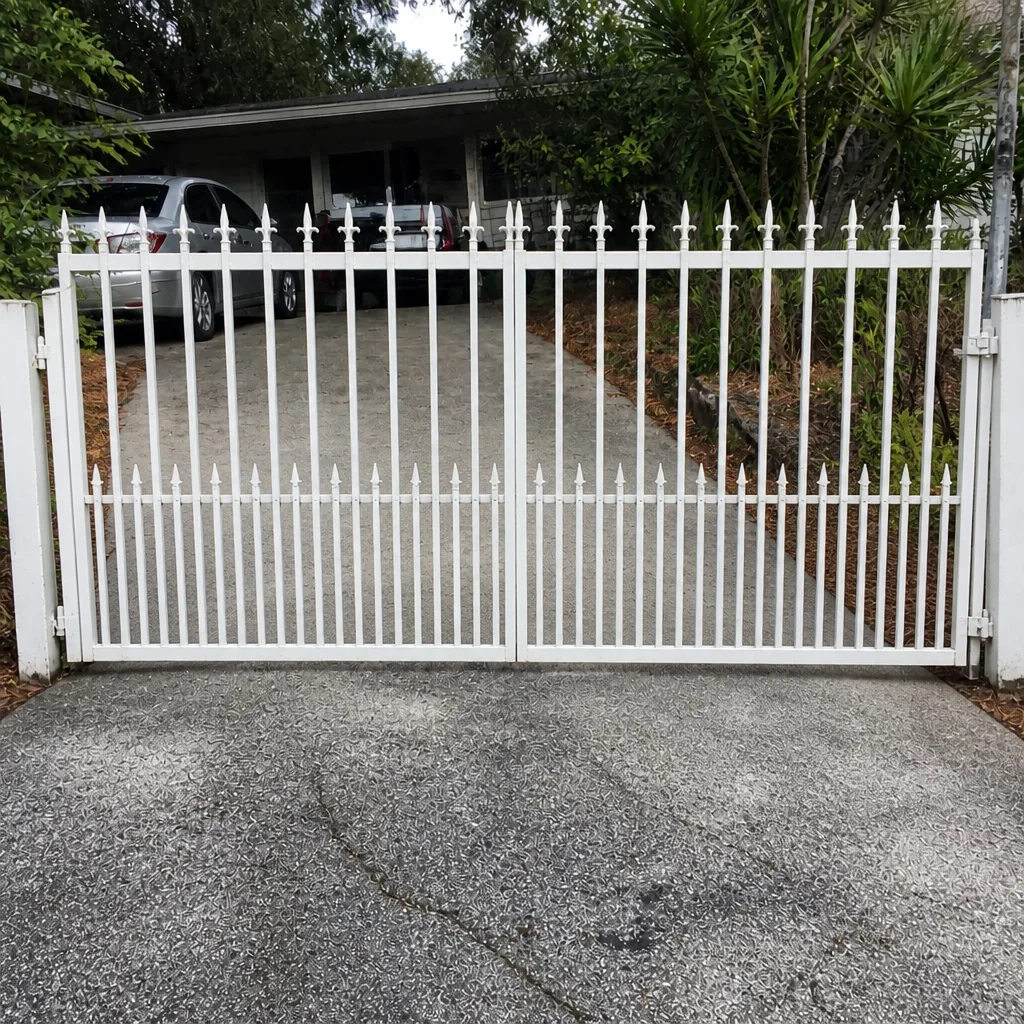 After
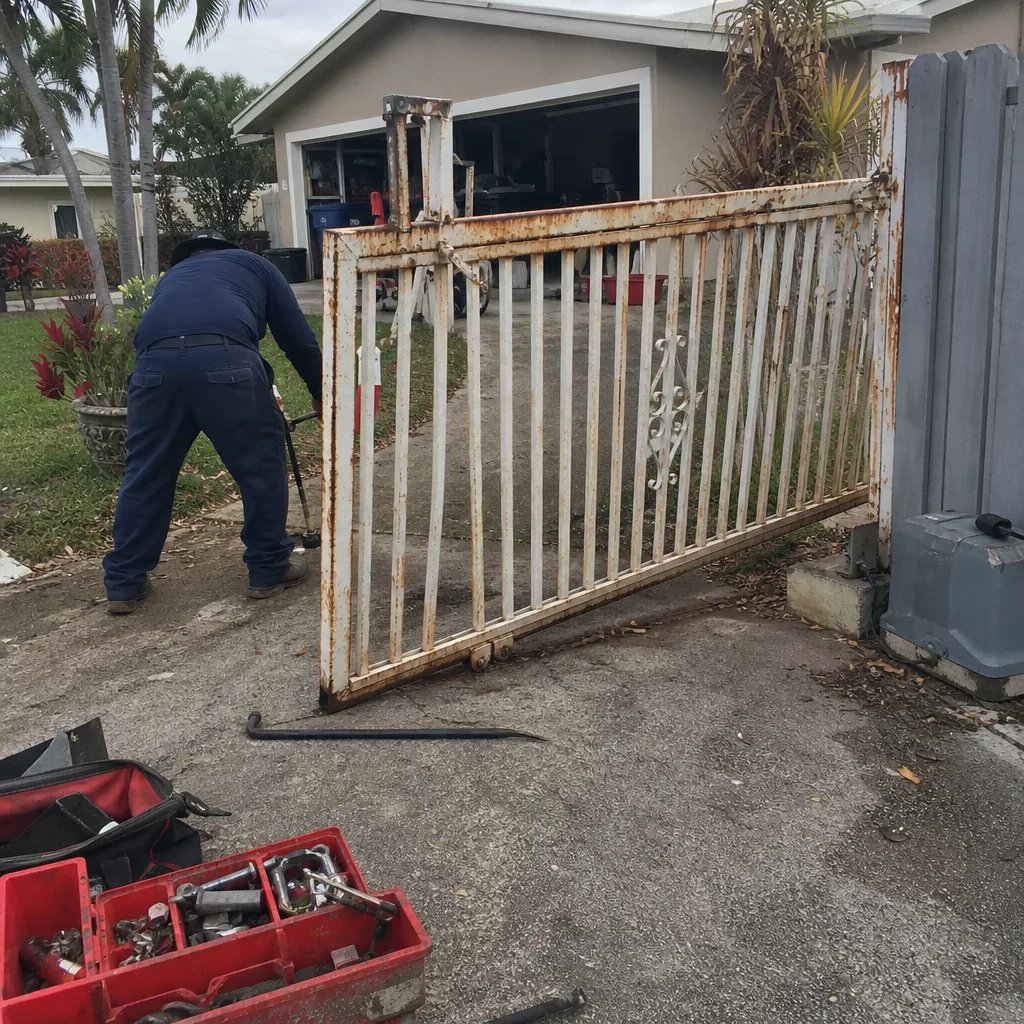 Before
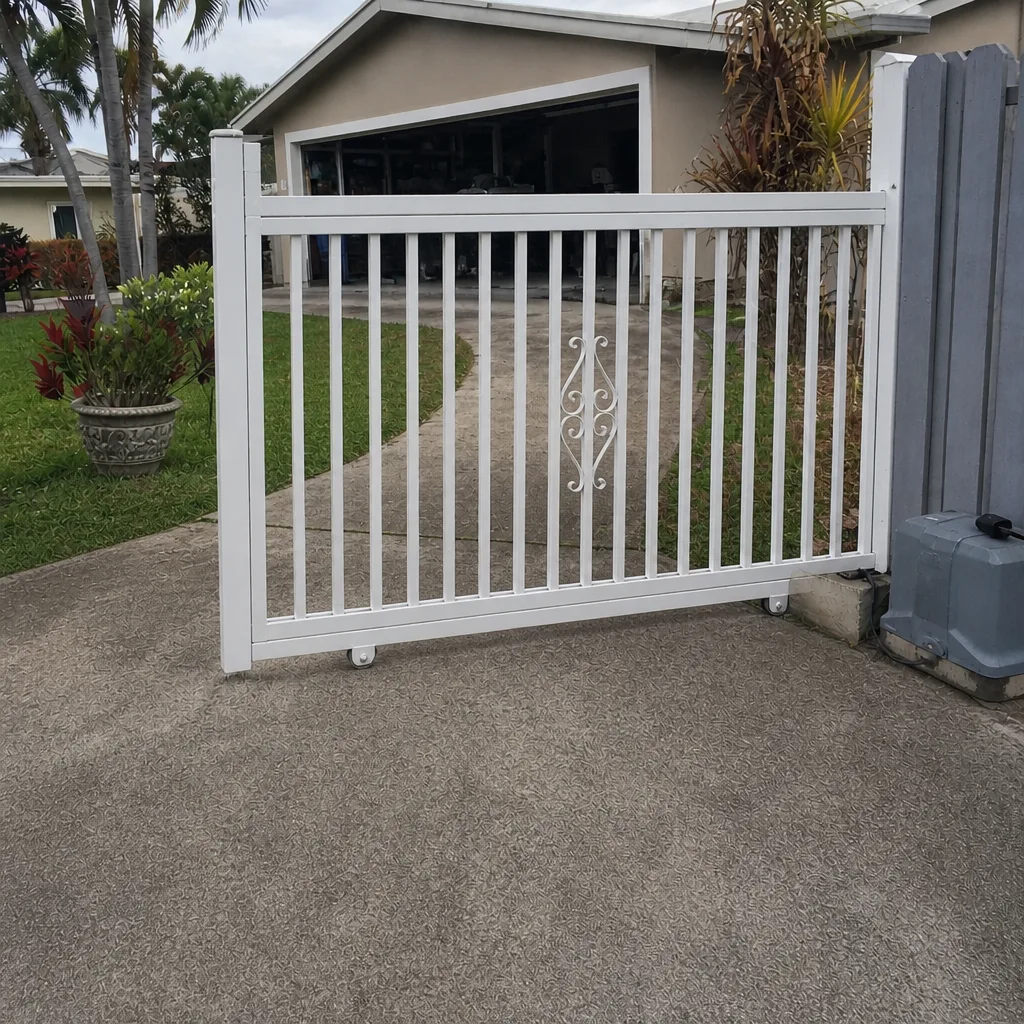 After
When to Call a Professional
Call a licensed gate specialist for anything on the control board, the operator wiring, the 120V supply, the limit switches, the safety edges, or the gate’s structural components. Call when the gate fails to reverse on the safety beam, when the operator opens but won’t close, when the board shows warning LEDs you can’t interpret, or when there’s been a power surge and the gate behaves unpredictably. Call before you touch a control board – especially if the operator is still under warranty. We’ve seen too many small problems become board replacements because someone tried one adjustment too many.
Gate Repair Pompano Beach offers free estimates in Pompano Beach and across the surrounding area. Our technicians have up to 12 years of experience across nine major gate brands. Call (888) 399-8022. We answer 24/7. Fast dispatch from 7am to 7pm, Sunday through Friday.
Frequently Asked Questions
Yes. Lubricating hinges, rollers, and slide track contact points, cleaning the sensor lenses, and sweeping grit off the track are all safe homeowner tasks that extend the life of any gate. Use a gate-rated lubricant rather than a general-purpose spray, keep the control box closed, and leave any wiring alone.
It can. Gate operator manufacturers typically tie their control board warranty to installation and service by a licensed contractor, and a warranty claim will be denied if the board was serviced unlicensed. If your operator is under coverage, leave the control board and the operator wiring to a licensed gate specialist.
You’re in a good spot. Present what you observed – what the gate does, what you tested, and what you’ve ruled out – and ask the technician to confirm your diagnosis rather than start fresh. A specialist can verify your reading in a minute or two. The estimate is free and the price is set per job by the written estimate, so you’ll know the cost before any work starts. Call (888) 399-8022 to get it on the books.
Not reliably for an automated system. General handymen and garage-door companies handle gates as a side service, and when a proprietary control board from DoorKing, Elite, or LiftMaster is involved, that means guesswork. A dedicated gate specialist troubleshoots the actual failure – motor, board, or hardware – and diagnoses before replacing. Call (888) 399-8022 to reach a specialist.
New gate installations and major electrical changes typically require a permit from the city, while routine repair work often doesn’t. The exact requirement depends on the scope of the work, so confirm with Pompano Beach’s building department before work begins. A licensed gate specialist will know when a permit applies and can help you sort it out.
The most likely cause is a fouled safety sensor or a misaligned photoelectric beam, which you can check yourself by cleaning the sensor lens and clearing the beam path. If the sensors are clean and aligned and the gate still reverses, the problem is more likely in the wiring or the board and needs a licensed technician. Call (888) 399-8022 and we’ll take a look.
The Bottom Line
The DIY line on an automated gate isn’t about skill. It’s about voltage, proprietary control boards, and legal exposure. Lubrication, sensor cleaning, track clearing, and remote reprogramming are yours to handle safely. Control board work, limit switch calibration, 120V wiring, scientific repairs to the gate structure, and anything under warranty needs a licensed gate specialist. The cheapest gate repair is the one you never need – and the second cheapest is the one diagnosed accurately the first time. If you’re trying to sort out a gate problem in Pompano Beach, call (888) 399-8022 for a free estimate. For more on our gate repair and electric gate repair services, or to learn more about our work in Pompano Beach, reach out any time. We answer 24/7, with fast dispatch from 7am to 7pm, Sunday through Friday.
Written by the team at Gate Repair Pompano Beach.