
Last updated November 15, 2026
 Wrought iron
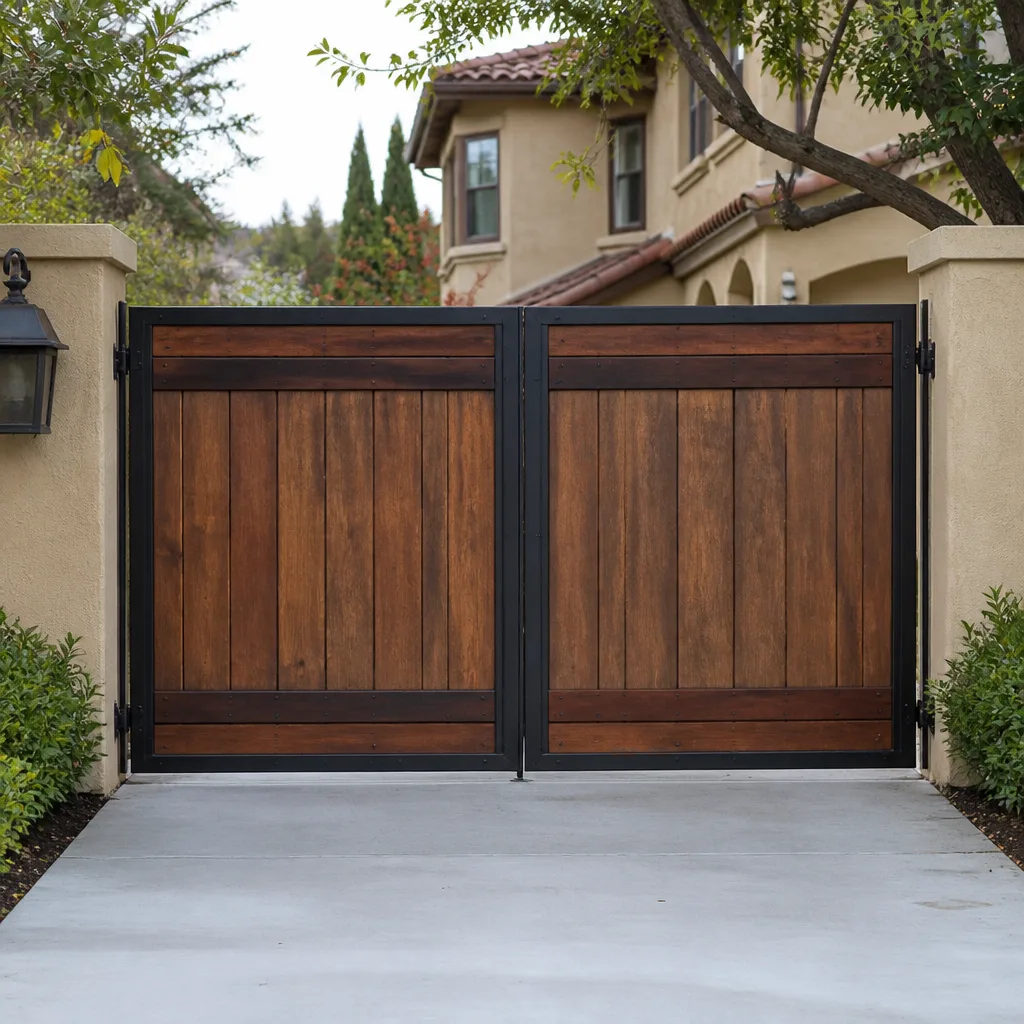 Wood & steel frame
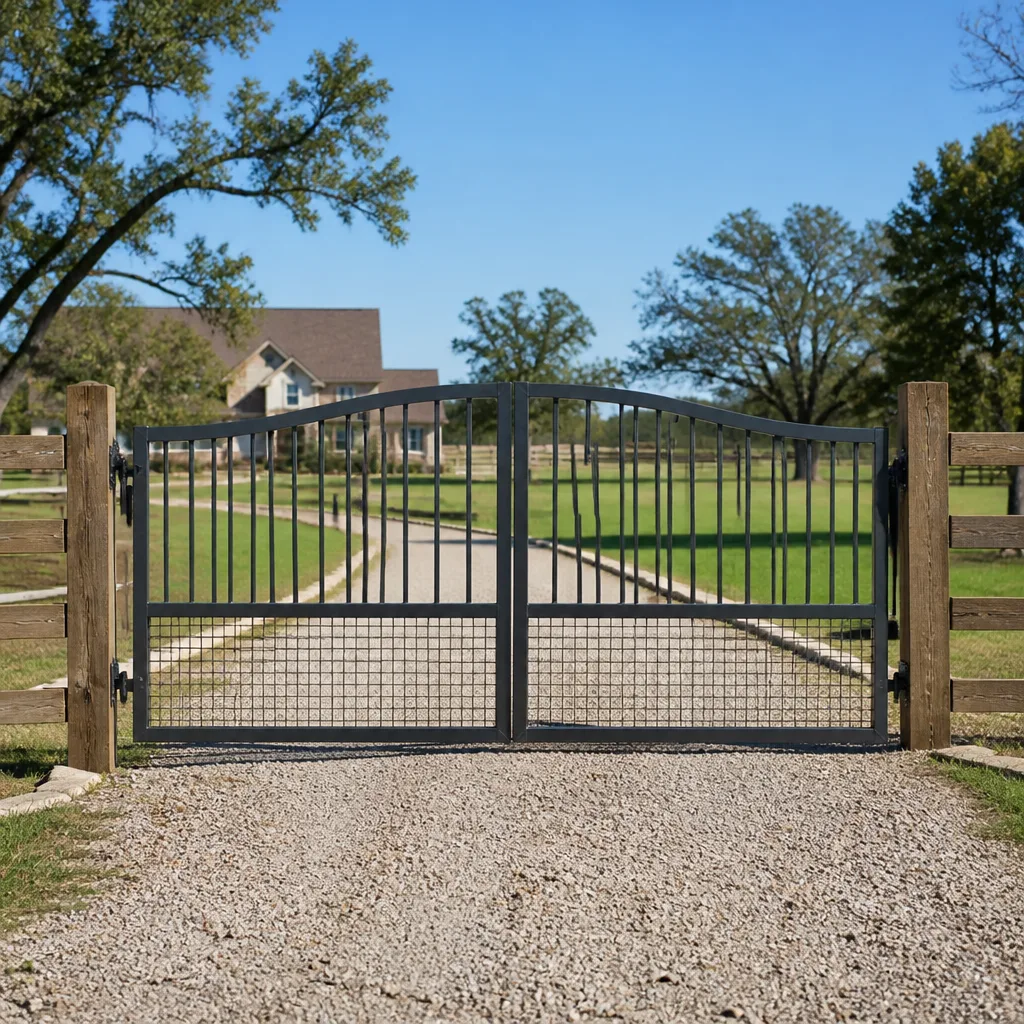 Farm & ranch
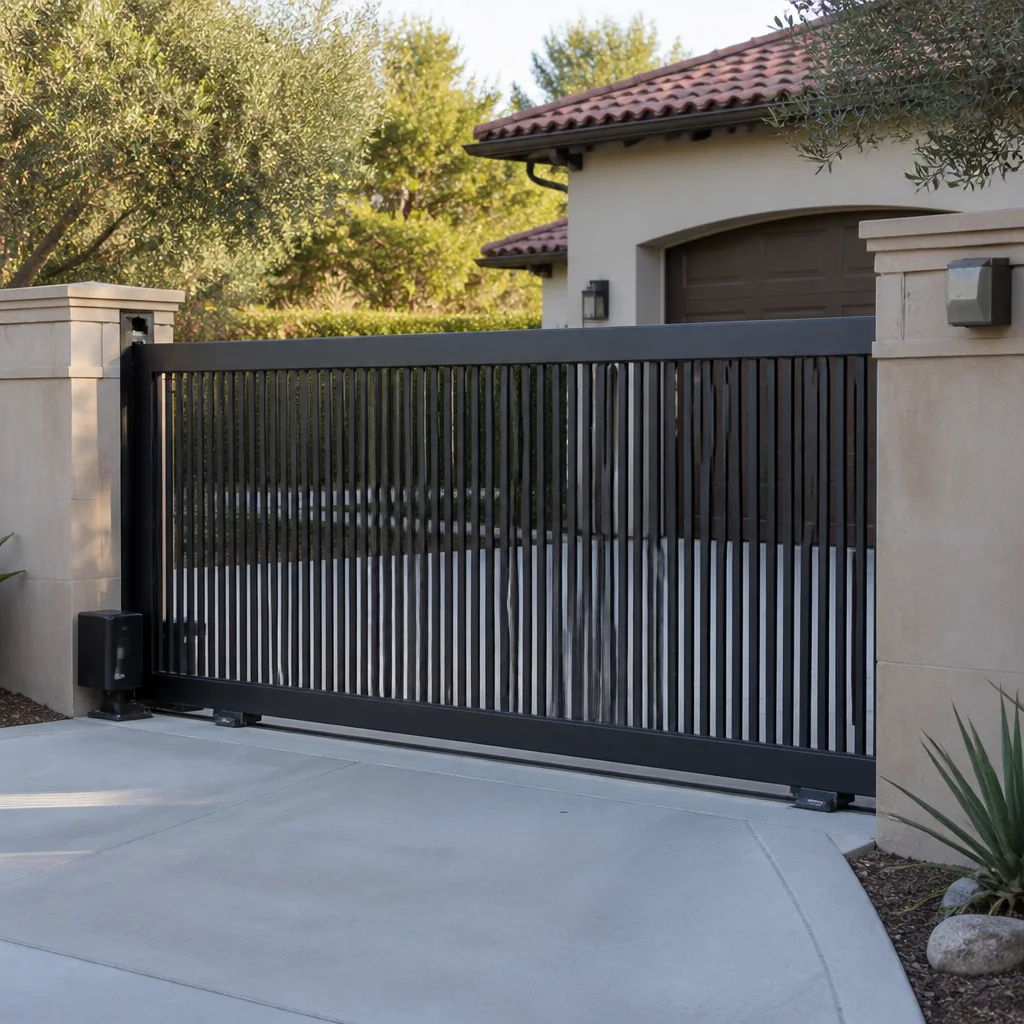 Sliding driveway gates
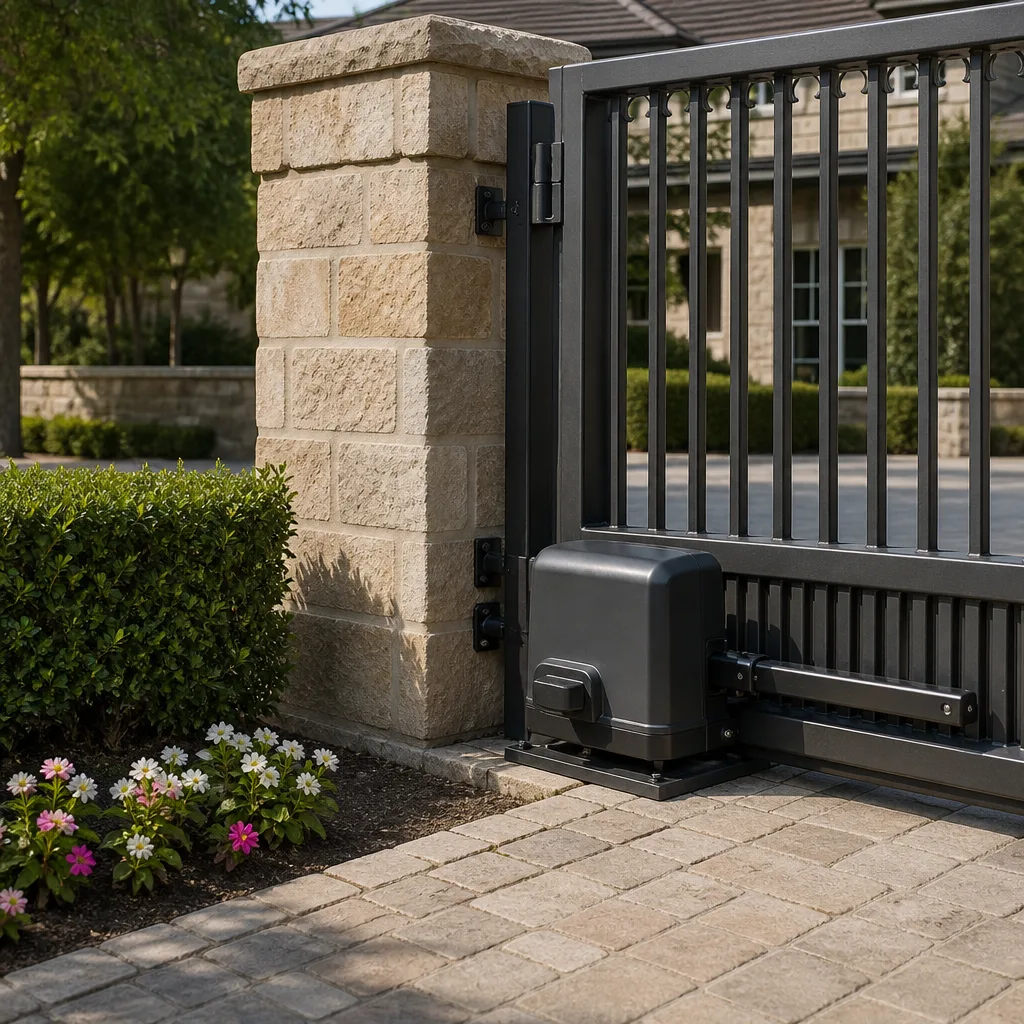 LiftMaster operators
Free on-site gate assessment - hinges, posts, and your LiftMaster or Nice gate operator checked before anything is quoted
The assessment is free and the quote is the invoice.
Get your free estimateThe Complete Guide to Gate Repair in Pompano Beach
Most gate repairs here get ordered twice. The first call fixes what the owner can see: the arm that stopped moving, the keypad that quit, the gate that drifted open at 2am. The second call comes six months later, when whatever caused the first failure finally finishes the job on a component nobody looked at. That pattern is so consistent in Pompano Beach that we’ve built our whole diagnostic approach around breaking it. Gates in this city fail in predictable ways, tied to the wet and dry season cycle, to how hard the equipment works in summer humidity, and to how these systems are installed on residential and commercial properties around here. This guide maps each failure mode to its real repair path so you stop paying for the same problem twice.
Quick Answer
Gate repair in Pompano Beach typically means diagnosing one of three separate systems: the operator (motor, control board, capacitors, wiring), the structure (posts, hinges, rollers, track, gate frame), or the access system (keypads, remotes, loop detectors, phone entry). The fix follows the category, not the symptom. A gate that “won’t open” can be any of the three, and treating it as a motor problem when it’s a structural bind is the most common reason repairs come back.
Styles & brands we work with
- Wrought iron
- Wood & steel frame
- Farm & ranch
- Sliding driveway gates
- LiftMaster operators
Table of Contents
- The Three Categories of Gate Failure
- How Pompano Beach Climate Drives Gate Failures
- Brand-Specific Failure Patterns We See Most
- The Wet and Dry Season Cycle and Your Gate
- Why “It Works Fine Now” Is a Warning Sign
- How a Proper Diagnostic Should Go
- Electric Gate Repair vs. Manual Hardware Repair
- Repair or Replace: How to Decide
- Common Mistakes to Avoid
- When to Call a Professional
The Three Categories of Gate Failure (and Why Mixing Them Up Costs You)
Every gate problem that shows up on a service call falls into one of three buckets: operator failure, structural failure, or access-system failure. The symptoms overlap heavily, and that’s the trap. A gate that reverses halfway through closing could be a binding hinge (structural), a failing capacitor in the motor (operator), or a misaligned safety photo-eye (access). Three different repairs, three different parts budgets.
Here’s how we separate them:
- Operator failure: The motor hums but the gate doesn’t move, moves erratically, or trips its breaker. The gate itself swings or slides freely by hand (with the operator disengaged). Control board LEDs may show fault codes.
- Structural failure: The gate binds, sags, drags, or scrapes even when you push it manually. Hinges are loose or frozen, rollers are worn flat, posts have shifted, or the frame has flexed out of square. The motor is working harder than it should and may eventually fail as a result.
- Access-system failure: The gate operates fine from one control but not another. Remotes work but the keypad doesn’t. The gate opens but won’t close. Loop detectors, photo-eyes, and entry panels live in this category.
Misdiagnosing the category is the single biggest driver of repeat service calls in Pompano Beach. Replacing a control board because the gate won’t close, when the real issue is a bent roller creating enough drag to trip the obstruction sensor, means the new board will fail the same way within months. Accurate diagnosis first, parts second. That order matters more than any brand preference.
How Pompano Beach Climate Drives Gate Failures
Gates in Pompano Beach live outdoors in conditions that stress electrical and mechanical components year-round. Summers bring sustained heat and heavy rain in short bursts. The dry season brings weeks of dust and pollen that work into every moving part. Over a few years, that cycle adds up in specific places:
- Hinges and pivot points accumulate grit and lose lubrication faster than in temperate climates. A frozen hinge puts drag on the operator that it wasn’t sized for.
- Control boards and wiring connections suffer from humidity cycling. Moisture finds its way into enclosures that weren’t sealed perfectly, and repeated condensation on the board eventually causes corrosion at the terminals.
- Motor housings and bolts show surface oxidation quickly, especially on older operators. This is cosmetic until it isn’t: rusted mounting bolts become a structural problem when the operator shifts.
- Gate frames and posts swell, shift, and settle with the soil moisture cycle. A post that was plumb at install can lean enough after a few wet seasons to bind a slide gate.
- Photo-eyes and loop detectors collect dirt, spider webs, and standing water, causing false obstruction trips that look like operator failures.
Manufacturers’ estimated service intervals rarely account for this pattern. In our experience, a gate in Pompano Beach needs hinge and hardware inspection more often than the manual suggests. That’s not a sales pitch; it’s the practical reality of outdoor equipment in a subtropical climate.
Brand-Specific Failure Patterns We See Most
We work on the brand you already have, and the failure patterns differ enough between systems that brand familiarity cuts diagnostic time substantially. Our technicians have up to 12 years of experience across the major gate systems installed in Pompano Beach, from budget residential openers to commercial-grade access control. A few examples of what we see commonly:
Ghost Controls and Mighty Mule (residential swing and slide)
These budget-friendly residential openers are common on driveway gates in Pompano Beach neighborhoods. The most frequent issues are battery and solar charging problems during the rainy season, worn drive gears after years of operation, and control board faults after lightning-adjacent storms. Gate hardware (hinges, stops) wearing out is often the root cause of premature operator strain.
DoorKing (commercial and multi-unit access)
DoorKing systems on commercial properties and gated communities tend to fail in the access layer first. Loop detectors, telephone entry panels, and keypad wiring take the brunt. When a commercial gate in Pompano Beach stops responding to entry codes, the operator is usually fine; the access control module is not.
Elite (residential and light commercial slide)
Elite slide operators show up on many residential properties. The slide rack, rollers, and track alignment matter more on these systems than the motor itself. A gate that drags on the track will eventually burn out a healthy operator, so we check the mechanical path first on every Elite call.
We also service LiftMaster, FAAC, BFT, Linear, and Viking systems, and the pattern holds: mechanical and access problems masquerade as motor failures far more often than the reverse.
The Wet and Dry Season Cycle and Your Gate
South Florida’s seasonal rhythm creates predictable gate stress points most owners never connect to the calendar. Understanding them lets you act before the failure, not after.
- Start of the wet season (late spring): Gates that ran fine all dry season start tripping obstruction sensors. Photo-eyes have dust and debris on the lenses, and the first heavy rain pushes water into low-mounted components. This is the season for cleaning and resealing photo-eyes and checking enclosure gaskets.
- Peak wet season: Control board moisture issues surface. Corroded terminals that were marginal in dry weather fail once humidity is constant. This is when we see the most “gate works intermittently” calls in Pompano Beach.
- Start of the dry season: Pollen and dust work into hinges and rollers. The gate starts to bind. Operators work harder, run hotter, and eventually trip thermal overload. This is when a hinge inspection prevents a motor replacement.
- Dry season storms and lightning: Power surges from nearby storms take out control boards and capacitors. If a gate fails right after a storm, suspect the electronics before the mechanics.
Owners who understand this cycle schedule hardware inspection before the dry season and electrical checkups before the wet season. That two-visit-a-year rhythm prevents most of the repeat service calls we see. It also means when something does fail, you know which category to suspect first.
Note that we don’t offer maintenance plans or service contracts. Each visit is priced per job after we assess the gate. But knowing when to call is worth more than any contract.
Why “It Works Fine Now” Is a Warning Sign
A gate that stops misbehaving after a reset, a power cycle, or a simple adjustment is not necessarily fixed. Three specific failures are notorious for going quiet before they finish the job:
- A failing capacitor in the operator can operate correctly in cool weather and fail under the summer heat load. A gate that runs fine in the morning and stalls in the afternoon has a capacitor problem more often than not.
- Worn drive gears in the operator (or in the gearbox) will skip teeth intermittently. The gate runs, stalls, runs again. The owner assumes it was a fluke; the gear continues to wear until the gate stops mid-travel.
- Corroded wiring connections at the control board or at a junction in the low-voltage run will drop signal occasionally. The connection looks fine until a wet season makes it worse. A gate that works from the keypad but not the remote, or vice versa, has a wiring story behind it.
This is why a basic fix that “gets it working” without a diagnostic scan is not the service you want. In our experience, a gate that returns to normal after a reset without an explanation is a gate that will call us back. We’d rather find the failing capacitor, worn gear, or corroded splice on the first visit.
How a Proper Diagnostic Should Go
If you’re comparing gate repair providers in Pompano Beach, ask how they diagnose. A technician who shows up and swaps parts is guessing. Here’s what a real diagnostic looks like:
- Disengage the operator and test the gate by hand. If the gate binds or drags, the problem is structural, and no amount of motor work will fix it.
- Inspect hinges, rollers, track, and posts. Look for wear, flat spots, loose fasteners, and frame binding. This is where hidden drag gets found.
- Test the operator’s electrical system: voltage at the motor, capacitor condition, control board diagnostics, and any fault codes stored or displayed.
- Check the access layer: keypads, remotes, photo-eyes, loop detectors, and entry panels. Verify each control independently.
- Inspect wiring and enclosures: look for corrosion at terminals, moisture inside boxes, and any splices that need attention.
- Confirm every safety device works: photo-eyes that reverse correctly, safety edges that trip on contact, and any obstruction sensing that matches the gate’s actual travel.
A technician should be able to tell you which category the failure belongs to and what part of the system is responsible before touching the wallet. If the answer is “it should work now” without an explanation, ask again. The price should also be written and agreed before any work starts: no surprises at the end of the visit.
Electric Gate Repair vs. Manual Hardware Repair
Not every gate problem is electric, and that distinction determines who to call and what to expect. If your gate is automated, the operator and the access system both fall under electric gate repair, while hinges, rollers, tracks, and framework fall under general gate repair. A single provider should handle both, because the failures are intertwined.
What falls under electric gate repair
- Motors, gearboxes, and drive arms
- Control boards, capacitors, and relays
- Batteries and chargers on solar or battery-backup systems
- Remotes, keypads, telephone entry modules, and loop detectors
- Photo-eyes, safety edges, and obstruction sensing
- Low-voltage wiring and enclosure sealing
What falls under manual hardware repair
- Hinges, pivot points, and post-mounted brackets
- Rollers and track alignment for slide gates
- Gate frame straightening, welding repair, and re-hanging
- Latches, stops, and structural adjustments
Here’s the safety caveat that matters on any electric gate: the operator’s wiring and power are live, and heavy gate panels can crush. Don’t open control enclosures or “test” wiring unless you’re trained to do so. Call a trained technician for anything electrical on an automated gate. The mechanical side can be inspected safely by hand, but a gate leaning on a failed hinge can come off its track with no warning; check structural failures at a distance.
Because we handle both categories, a structural failure and the operator strain it caused get addressed in one visit rather than two. That’s the whole point of the comprehensive diagnostic.
Repair or Replace: How to Decide
The repair-or-replace question comes up on every major service call. The honest answer isn’t a dollar threshold; it depends on the age of the operator, its brand, and whether the failure is isolated or part of a pattern. Here’s the framework we use:
- Isolated single-part failure on a well-maintained operator: Repair. A failed capacitor, a stuck keypad, a broken photo-eye. These are routine fixes.
- Multiple failures in a short window (board, then motor, then access module): Consider replacement. When an operator is failing in different ways, the underlying problem may be overall wear or chronic moisture intrusion. Replacement may be the better investment.
- Structural failure on the gate itself: Repair the structure first, always. Replacing a motor on a binding gate is money down the drain.
- Failed operator on a solid gate with a good mechanical path: Replace the operator, keep the gate. This is often the right call after absorbing repairs on an older unit; a new operator is usually cheaper than repeated service.
- No manufacturer support or discontinued parts: Check parts availability before deciding. If the board is discontinued, replacement may be the practical answer.
If the answer is replacement, we install new gate systems and handle the change from diagnosis through commissioning. A customer never needs to find a second company when the repair turns into an installation.
See the difference
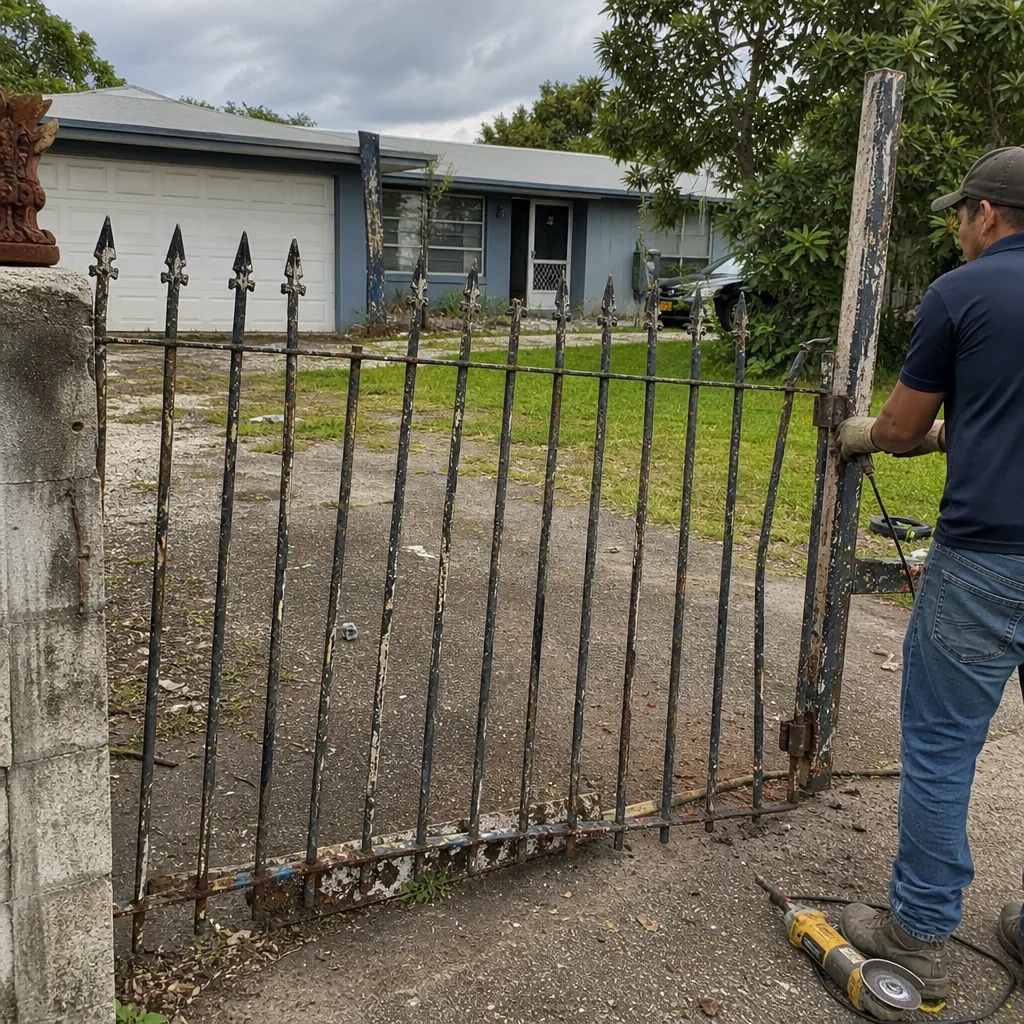 Before
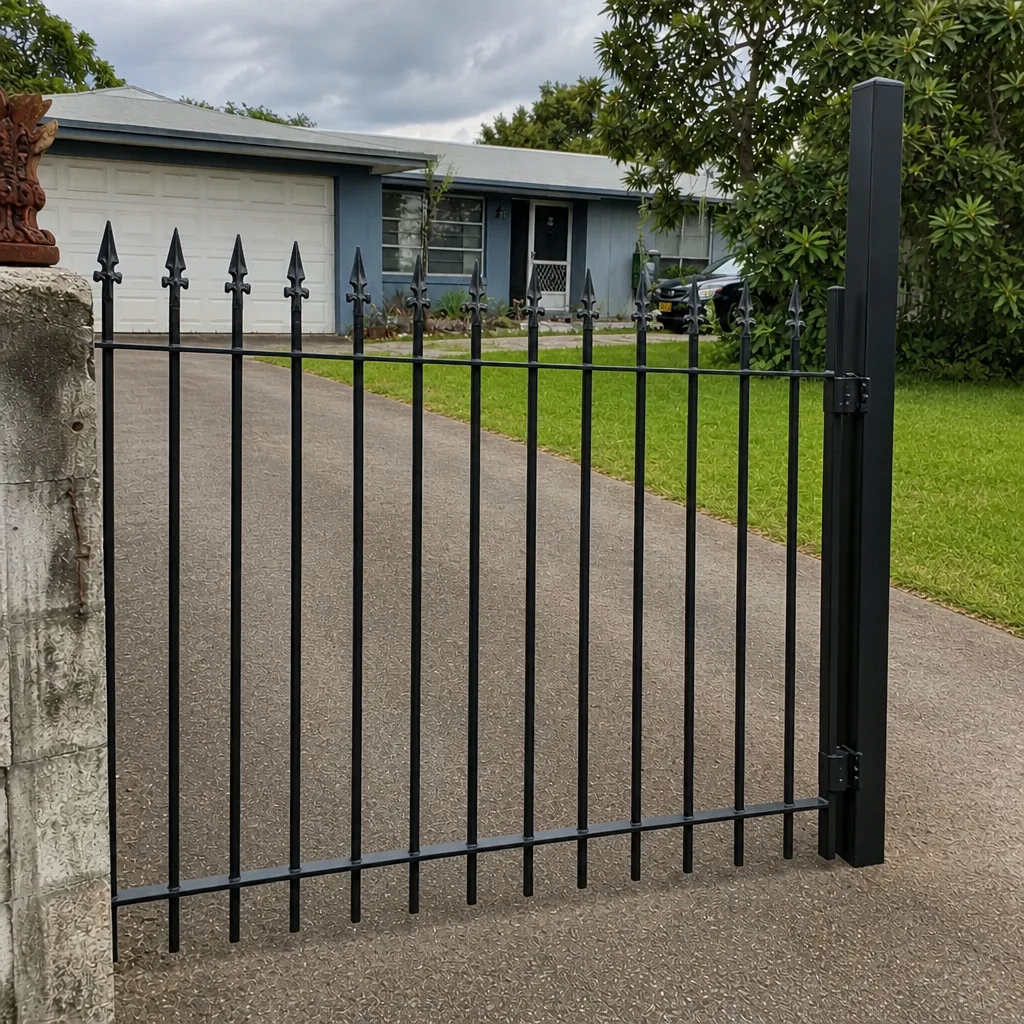 After
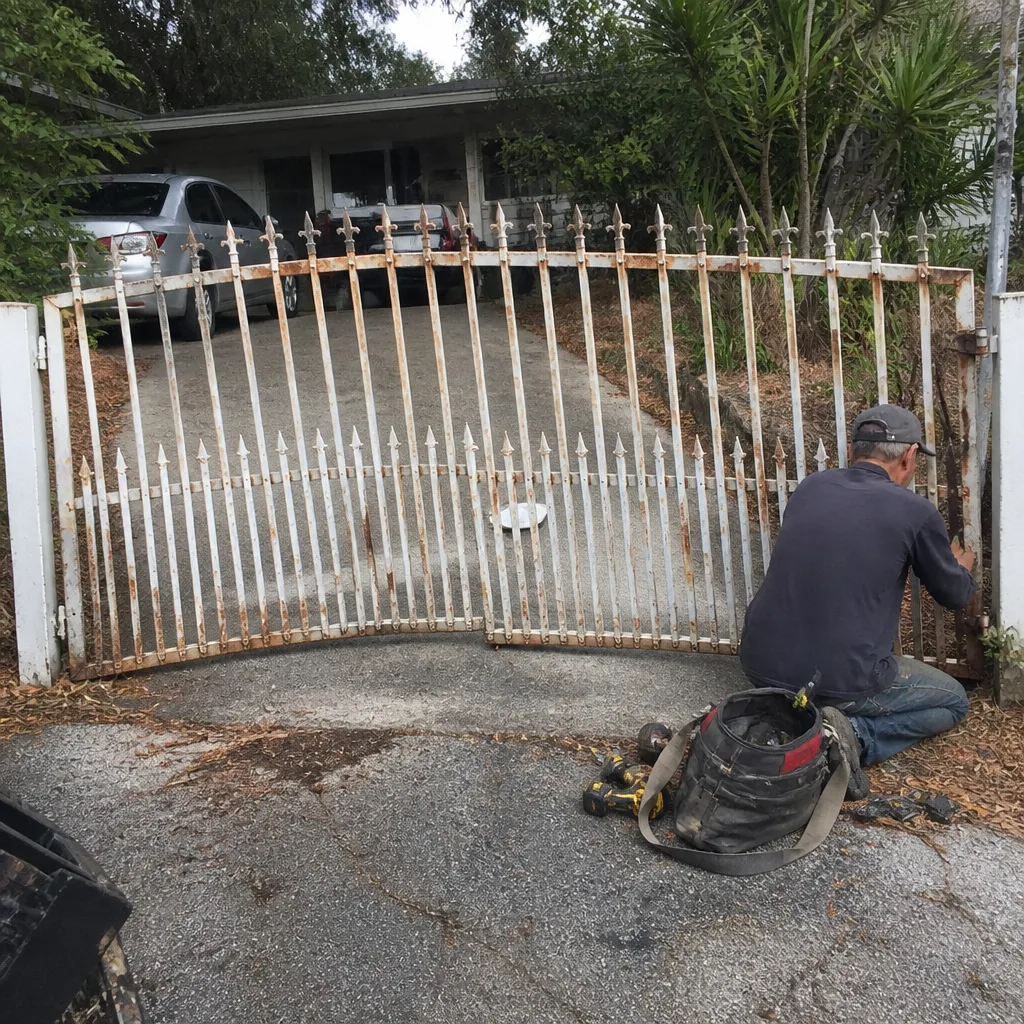 Before
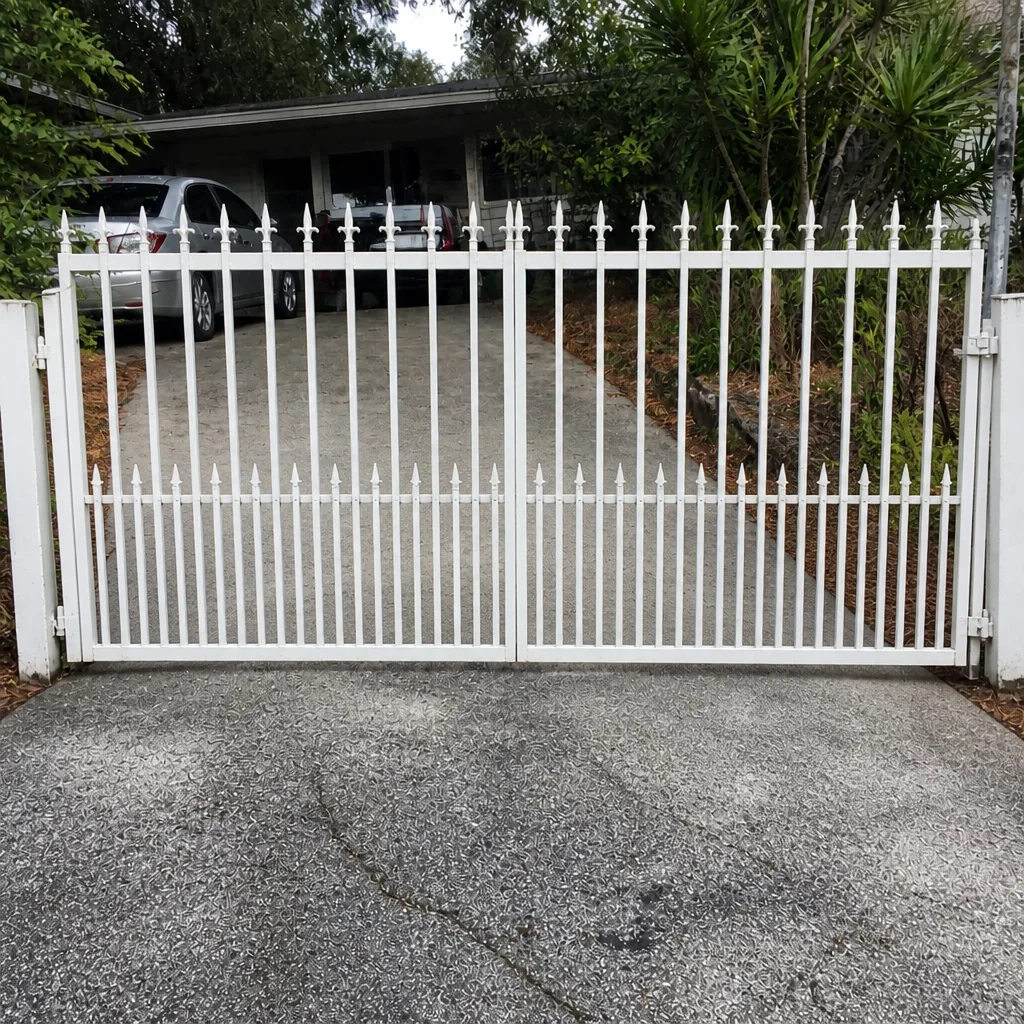 After
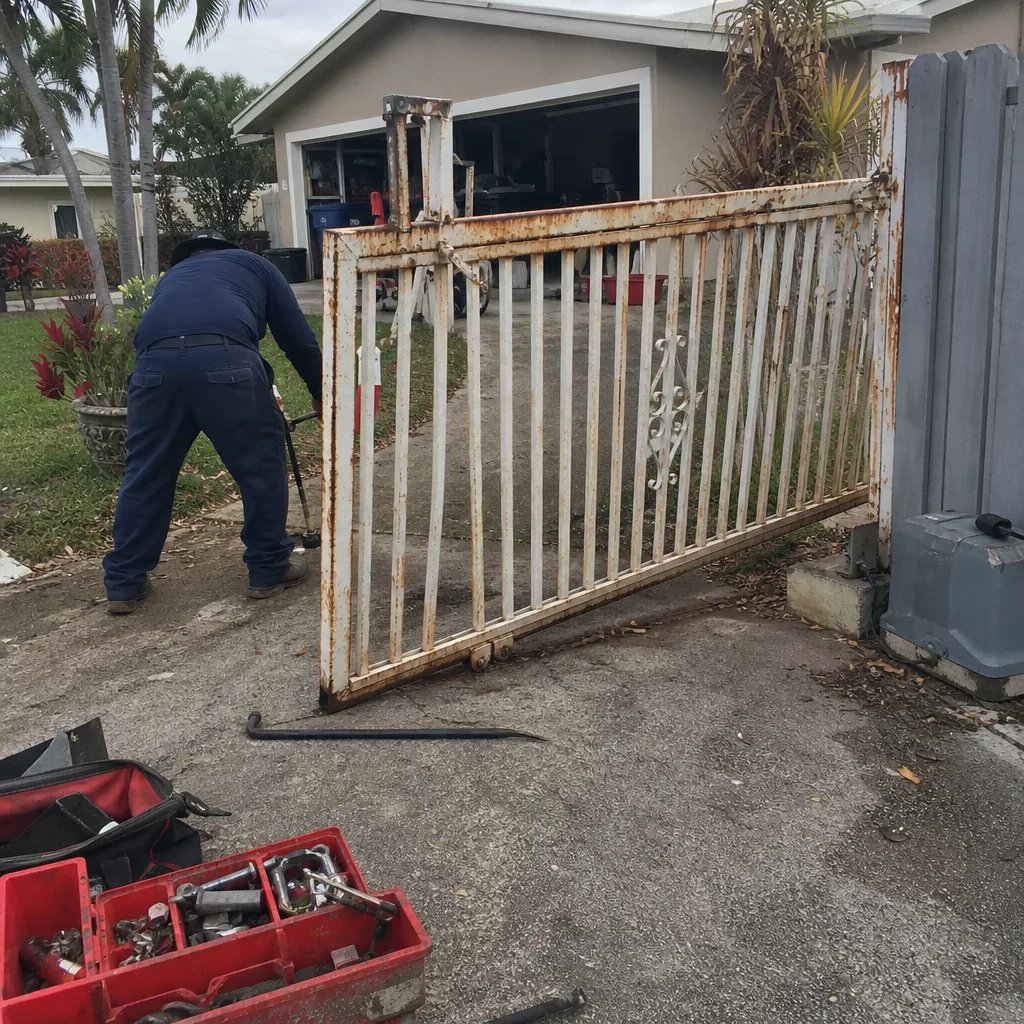 Before
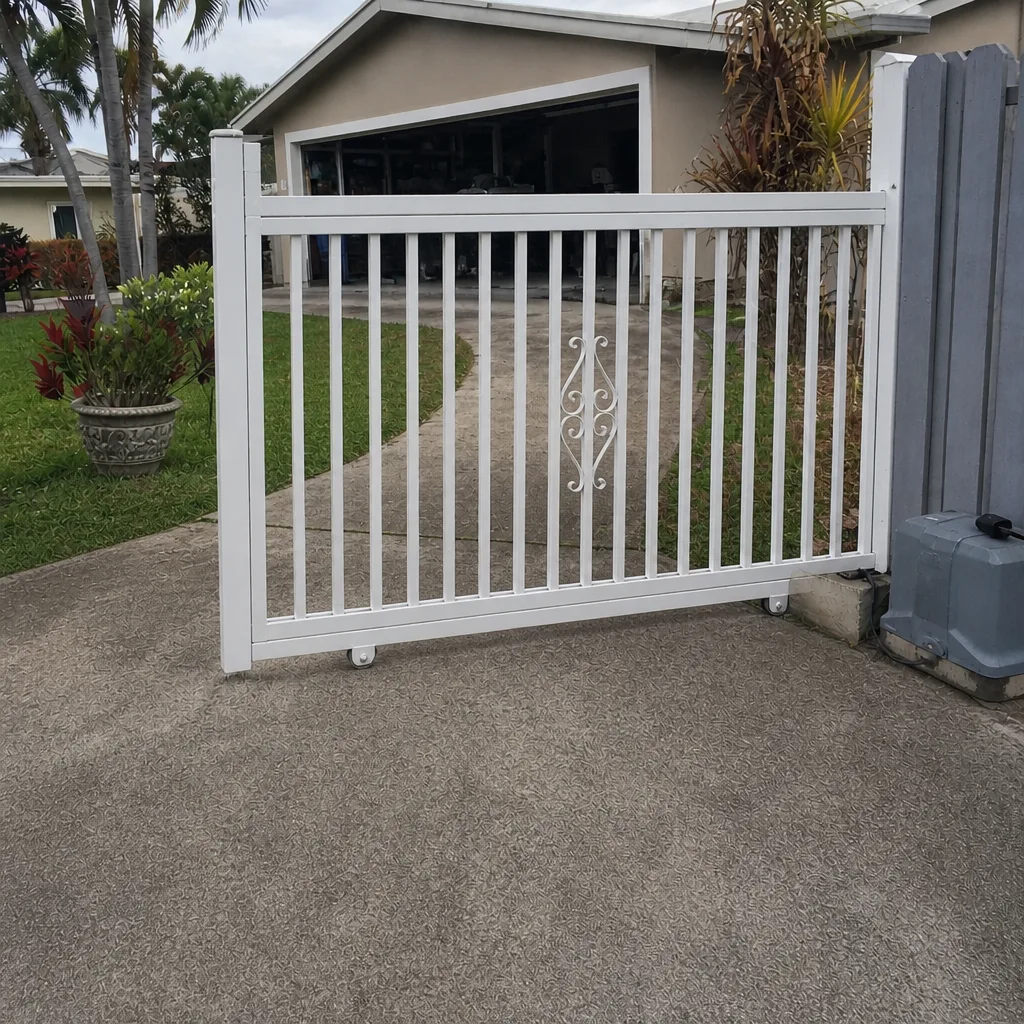 After
Common Mistakes to Avoid
- Replacing the motor before checking the gate’s mechanical path. A binding hinge or worn roller creates drag that kills operators. If the mechanical path isn’t checked, the new motor will fail the same way the old one did.
- Resetting the control board and calling it fixed. A reset clears the symptom, not the cause. If the gate was tripping on obstruction, the cause is still there, and it’ll trip again.
- Ignoring a gate that works “most of the time.” Intermittent failures in Pompano Beach usually trace to moisture, a failing capacitor, or a worn gear. Waiting guarantees a failure at the worst possible moment.
- Letting dust and pollen build up in hinges and rollers during the dry season. That grit wears pivots and puts strain on the operator. A simple cleaning and lubrication check before the dry season prevents most of the drag failures we see.
- Skipping safety device checks. Photo-eyes and safety edges exist for a reason: heavy gate panels can crush. A gate that operates while the safety devices are faulty is a hazard, not a convenience.
- Calling a general handyman for a specialized system. DoorKing and DoorKing-class commercial access systems, or a Ghost Controls or Mighty Mule operator, need someone who’s worked on them. A generalist guessing at a control board costs more than a specialist who knows the system.
- Not asking for the price before work starts. A written estimate agreed before any technician touches the gate protects you. If the final invoice surprises you, the process was wrong.
When to Call a Professional
Some gate problems are safe to note and watch: a squeaky hinge, a loose latch, a remote that needs a new battery. But call a technician when any of the following happens:
- The gate reverses, stops, or refuses to close without an obvious cause
- A photo-eye or safety device is misaligned or not working
- The operator hums but the gate doesn’t move
- The gate binds or drags when you move it by hand
- Any control board fault code or intermittent behavior after a storm
- Any visible damage to wiring, enclosures, or the operator’s power connections
Electrical and control-board issues on an automated gate should always go to a trained technician; don’t attempt to troubleshoot live wiring yourself. Gate Repair Pompano Beach offers free estimates in Pompano Beach. Call (888) 399-8022. We answer 24/7, with fast dispatch from 7am to 7pm, Sunday through Friday.
Frequently Asked Questions
Gate repair in Pompano Beach is priced per job based on the diagnosis, and we give a free written estimate before any work starts. The estimate covers the specific repair: hardware, electrical, or access control. There’s no fixed price list because no two gate failures are the same; the written estimate sets the final price. Call (888) 399-8022 for an exact quote.
Often, yes. Many repairs, including hinge and hardware fixes, capacitor replacement, and photo-eye adjustments, can be done the same day once we diagnose the problem. We dispatch Sunday through Friday, 7am to 7pm. Call (888) 399-8022 and we’ll book the next available visit for a free estimate.
We work on the brand you already have, including LiftMaster, FAAC, BFT, Linear, Viking, Ghost Controls, DoorKing, Elite, and Mighty Mule. That range covers residential swing and slide gates as well as commercial access-control systems. If you’re not sure which system you have, call (888) 399-8022 and we’ll help identify it.
An open-but-not-close gate is almost always an access-system or safety-device issue: a misaligned photo-eye, a bad loop detector, or a wiring fault that’s telling the board the path isn’t clear. Occasionally it’s a control board problem. A proper diagnostic separates these in minutes and saves you from replacing parts that aren’t faulty. Call (888) 399-8022 for a free estimate.
We answer 24/7. A call outside dispatch hours is booked into the next opening, Sunday through Friday, 7am to 7pm. Call (888) 399-8022.
Yes. We handle new gate installation along with repair and electric gate repair, so you don’t need a second company if a repair turns into a replacement. Installation is measured and scheduled: a free on-site measure and a written price come first, then the install. Call (888) 399-8022 to arrange an estimate.
The Bottom Line
Gates in Pompano Beach fail in patterns: climate-driven, seasonal, and tied to the specific system installed on your property. The fix that lasts is the one that treats the category correctly (operator, structural, or access) and addresses the root cause, not the visible symptom. Brand familiarity shortens diagnosis. A written price agreed before work starts keeps the bill predictable. If a gate “works fine” after a basic fix but you’re still seeing intermittent behavior, treat that as a warning sign and get a proper diagnostic. Fix it once, and it stops calling you back.
Ready to stop chasing the same gate problem? Call Gate Repair Pompano Beach at (888) 399-8022 for a free estimate. We answer 24/7, with fast dispatch from 7am to 7pm, Sunday through Friday. Whether it’s the motor, the board, or the hardware, we’ll diagnose the actual cause and quote the repair before you commit. You’ll also find more about our services across Pompano Beach, and if you’re weighing repair against replacement, our guide to repair versus replacement on that same page covers the decision framework in detail.
Written by the team at Gate Repair Pompano Beach.