
Last updated November 15, 2026
 Wrought iron
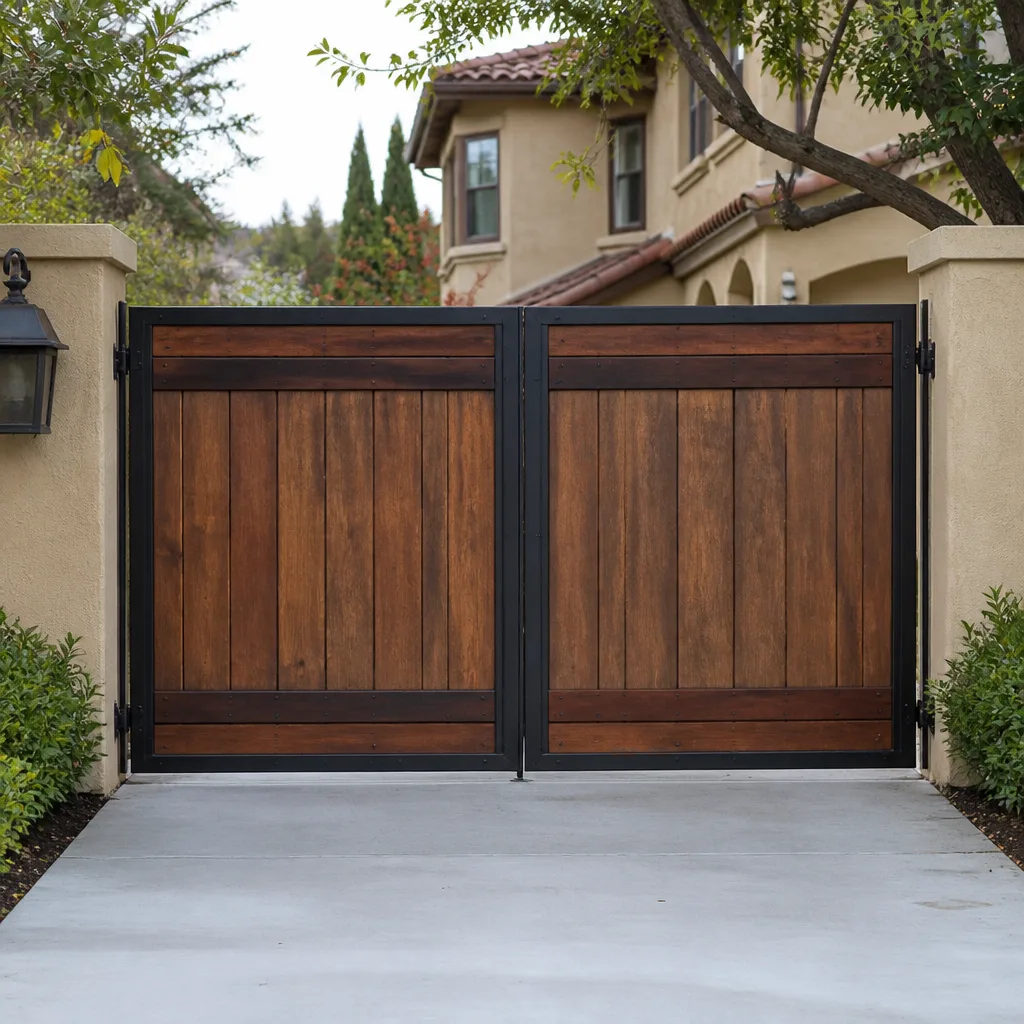 Wood & steel frame
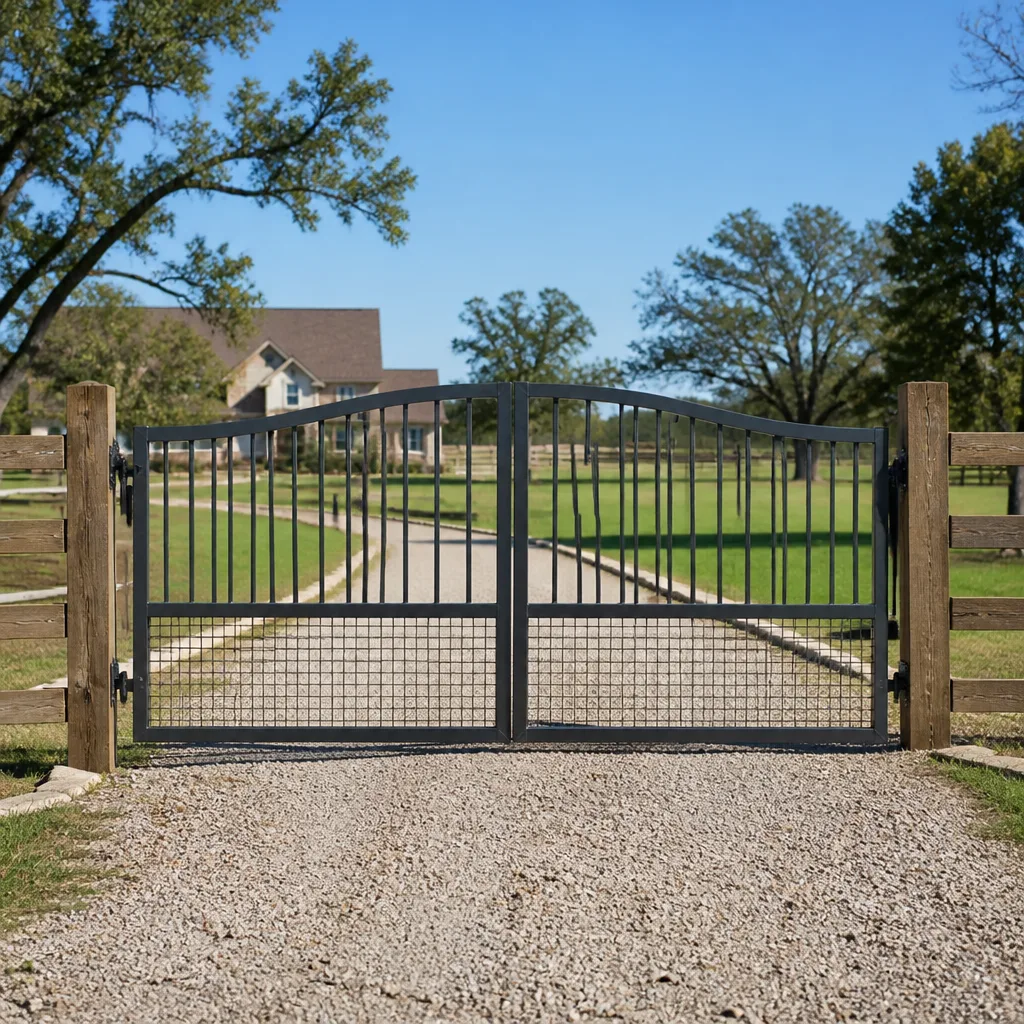 Farm & ranch
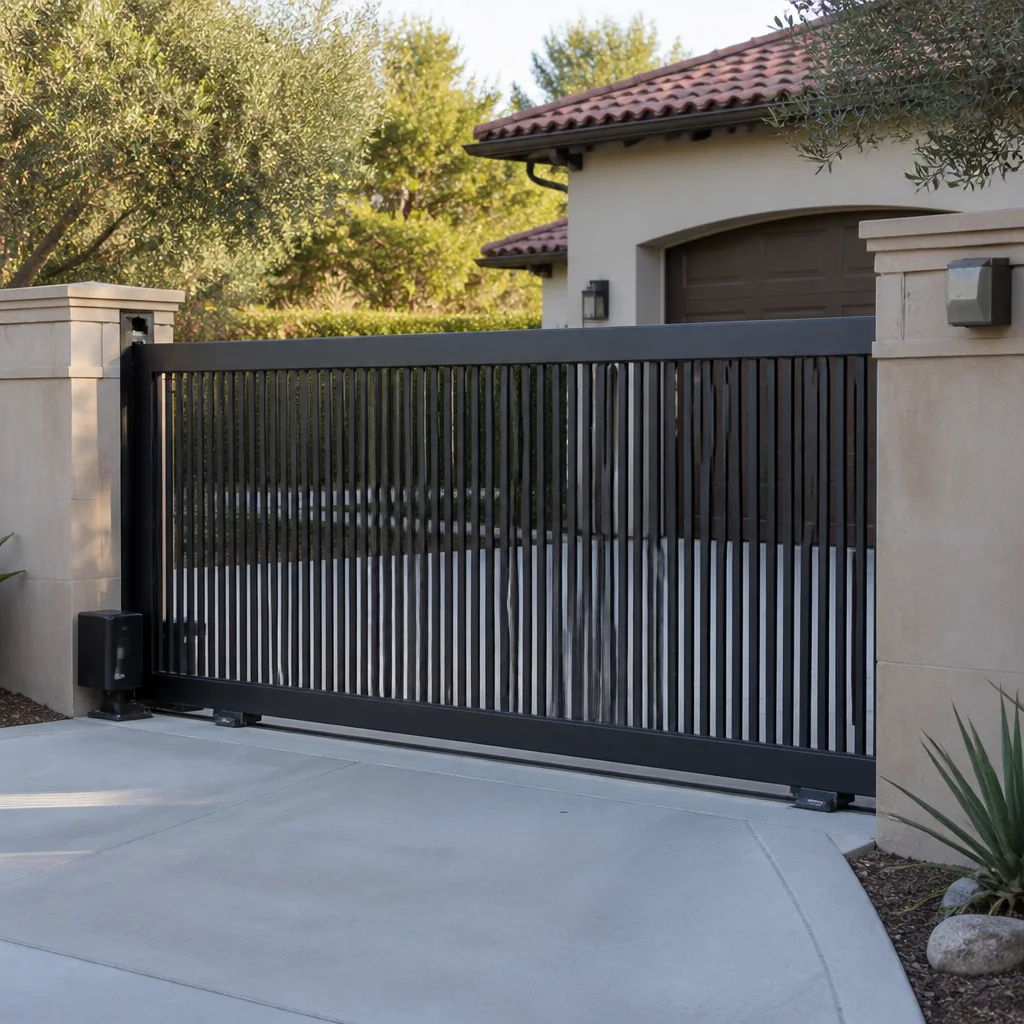 Sliding driveway gates
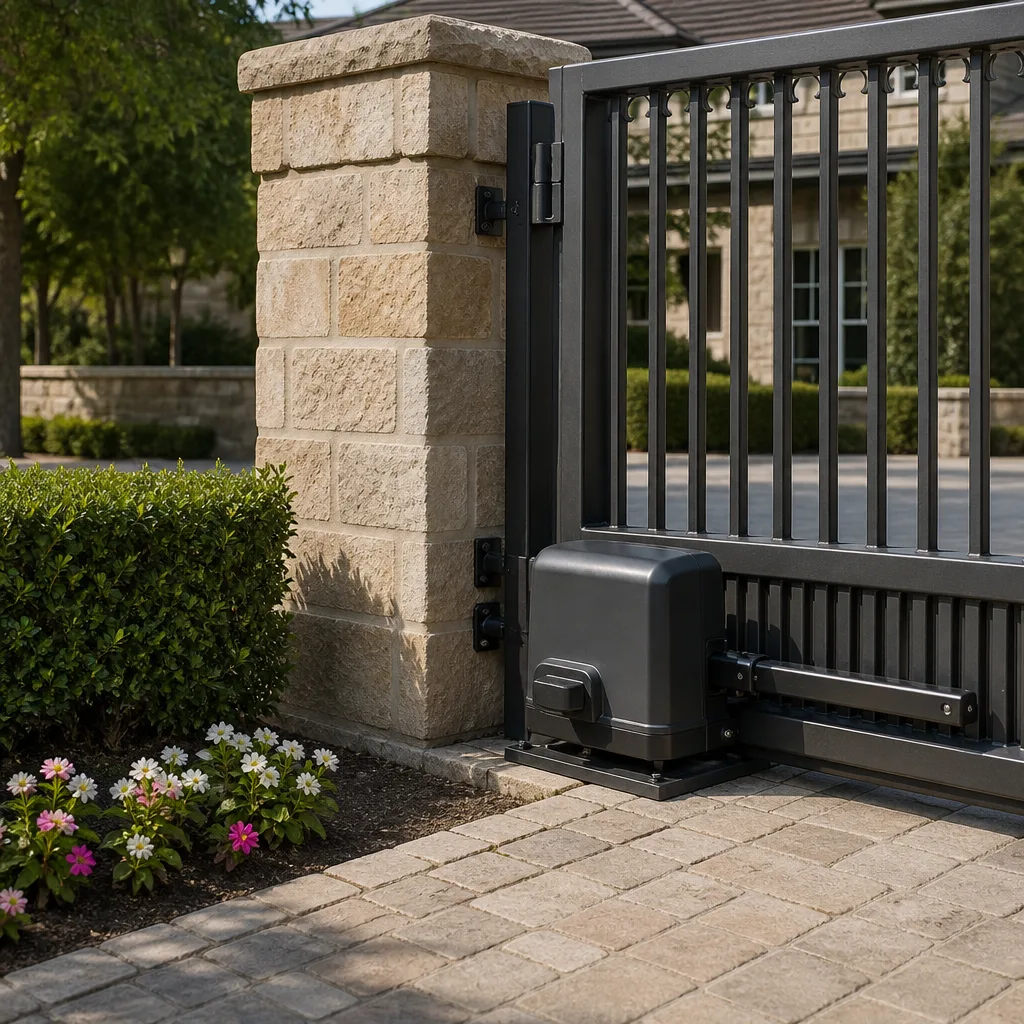 LiftMaster operators
Free on-site gate assessment - hinges, posts, and your LiftMaster or Nice gate operator checked before anything is quoted
The assessment is free and the quote is the invoice.
Get your free estimateGate Repair Troubleshooting in Pompano Beach: Common Problems and How to Fix Them
A gate that reverses before it closes isn’t necessarily a sensor problem. In South Florida’s humidity, corroded limit-switch contacts cause that symptom more often than a blocked photo-eye does, and owners who clean the sensor first spend an hour chasing the wrong fault before finding the real culprit. The same pattern shows up across almost every gate failure we diagnose: the visible symptom points one way, the actual cause sits somewhere else in the system. What follows is a branch-logic way to think about gate failures in Pompano Beach – sorting the symptom into the right category before touching anything – so you stop guessing and start narrowing.
Quick Answer
Most gate failures in Pompano Beach trace to one of five root-cause categories: the motor, the control board, the safety sensors, the mechanical hardware, or the power supply. To troubleshoot correctly, first sort your symptom into one of those five categories, then test within that category. Reversing gates, gates that open but won’t close, gates that move slowly, and gates that stop mid-travel each map to a specific branch of that fault tree – and the branch, not the symptom, tells you what to fix.
Styles & brands we work with
- Wrought iron
- Wood & steel frame
- Farm & ranch
- Sliding driveway gates
- LiftMaster operators
Table of Contents
- Start With the Fault Tree, Not the Symptom
- Why Your Gate Reverses Before Closing
- Slow Movement: What It Actually Signals
- Intermittent Failures and Heat-Cycle Wiring
- Corrosion vs. a Failed Control Board
- Safe Voltage Checks You Can Do Yourself
- Mechanical Faults: Hinges, Tracks, and Panel Weight
- When to Call a professional
Start With the Fault Tree, Not the Symptom
The single most useful troubleshooting habit is to stop describing the problem and start classifying it. “My gate won’t close” is a symptom. It’s not a diagnosis. Before you touch a thing, decide which of five root-cause categories your symptom most likely belongs to. That one step saves more time than any checklist.
Here’s how we’ve seen gate failures split across those five categories:
- Motor. The gate doesn’t move at all, moves in one direction only, or hums without travel. Motor faults are usually power-delivery or winding issues inside the unit.
- Control board. Erratic behavior, lost programming, gates that reverse at random, or an operator that ignores its remote. The board is the logic center, so board faults look like “personality” problems.
- Safety sensors. The gate reverses immediately, won’t close at all, or stops when something crosses the beam. Photo-eyes and safety edges live here.
- Mechanical hardware. Binding hinges, worn rollers, a sagging panel, a slide gate that jumps its track. The operator is trying to move something that physically resists.
- Power supply. No lights, no sound, no response. Before anything else, confirm the circuit and the transformer are delivering voltage.
Sort the symptom into one of those five bins and you’ve eliminated 80% of the wrong answers. In our experience across Pompano Beach properties, an owner who classifies the fault first finds the real issue in a fraction of the time. When the classification is genuinely unclear – and it sometimes is – that’s the moment to bring in a dedicated gate technician rather than swapping parts and hoping.
Why Your Gate Reverses Before Closing
A gate that reverses before closing is telling you one of its safety inputs is active when it shouldn’t be, or its limit-switch contacts have gone unreliable. The instinct is to blame the photo-eye sensor. It’s the easiest thing to see and the easiest thing to clean. But in Pompano Beach’s humidity, the more frequent cause is corrosion on the limit-switch contacts, which the board reads as “not yet at the close position” and reacts to by reversing.
Work the reversing branch in this order:
- Check the photo-eye alignment first. A beam that’s knocked slightly out of line, or a lens filmed with dust and moisture, reads as an obstruction. Look for a clear path and clean both lenses.
- Inspect the safety edge or obstacle sensor. On commercial systems, a pressure edge or loop detector can hold the gate open. A stuck edge reads as constant obstruction.
- Look at the limit switches. Corroded contacts here mimic sensor faults almost exactly. If cleaning the sensor didn’t change the behavior, the limit switches are your next stop.
- Check the board’s reversal setting. Some operators have a timed reversal window that drifts. A board set to reverse on the slightest resistance will reverse on a normal close.
If the gate reverses only in humid weather and closes fine on a dry day, corrosion is the leading suspect. That pattern is a strong tell, and it’s why we start with contacts before sensors on a South Florida gate. When the reversal is consistent and nothing above explains it, the wiring and board logic need a proper voltage-and-signal check – we cover that further down.
Slow Movement: What It Actually Signals
Slow movement is the most misdiagnosed symptom on a gate. Owners tend to assume low battery or a weak power supply. In practice, a gate that’s gradually slowed down over weeks is usually showing you one of three mechanical problems – and a worn gearbox is the most serious of them.
Here’s the branch:
- Worn gearbox. The motor turns at normal speed but the gate moves slowly and inconsistently. On a worm-drive or gearbox operator, this is a sign of tooth wear. Left alone, the gearbox fails and takes the motor with it.
- Binding hardware. Hinges, rollers, or a track picking up grit. The operator is working harder to push the same weight. Disconnect the operator and move the gate by hand – if it drags, the problem is mechanical.
- Voltage sag. A sagging supply or a failing transformer delivers less power, so the gate moves slowly under load. This is less common than gearbox wear but worth ruling out.
- Programming. Some operators have a slow-speed setting for the final approach. If the gate was always slow, that’s a setting, not a failure.
On LiftMaster and Elite operators we work with regularly, a slow slide gate is most often a gearbox or roller issue, not a battery. The other failure that hides behind “slow” is a slide gate that’s come slightly off track – the panel is dragging, and no amount of electrical troubleshooting fixes it. That’s the point where a mechanical inspection tells you what the voltage checks can’t.
Intermittent Failures and Heat-Cycle Wiring
Intermittent failures are almost always a wiring connection problem, not a component failure. Pompano Beach sits in a heat-cycle environment: warm days, cooling nights, and daily expansion and contraction on every terminal, connector, and wire nut in the system. Over months, that cycling loosens terminals and cracks solder joints. The gate works in the morning and fails in the afternoon, or works for weeks and then stops twice in a day.
The pattern to look for:
- The fault comes and goes with temperature or time of day.
- The gate works from one remote and not another, or one control input and not the other.
- Tapping the operator or wiggling a wire changes the behavior.
- The fault disappears after the gate power-cycles and reappears later.
Intermittent wiring faults are also the hardest to catch without test equipment, because each test tells you the connection is fine at that exact moment. A technician who understands heat-cycle behavior checks terminals for torque, looks for discolored wire, and traces the run rather than replacing a board and hoping. If your gate fails intermittently and a board swap didn’t fix it, the board was never the problem. We’ve seen this repeatedly on DoorKing commercial operators where a loose low-voltage terminal mimicked a board failure for months. Getting to the connection is the whole job.
Corrosion vs. a Failed Control Board
The line between “corroded connection” and “failed control board” is where a lot of money gets spent unnecessarily. They produce the same symptoms: erratic behavior, lost programming, gates that respond to nothing or everything. The difference is where the problem lives – and it matters, because a board is a costly part and a corroded terminal costs almost nothing to clean.
South Florida’s humidity accelerates corrosion on every exposed terminal in the system. What that looks like:
- Corrosion: green or white powdery buildup on terminals, dark pitting on connector pins, a board that behaves differently once it dries out, or a system that works after the terminals are wiggled. The board is usually fine – the connection is failing.
- Failed board: no change after the terminals are clean and tight, a visible burn or bulge on the board, a fuse that blows repeatedly, or lost programming that won’t re-take. This is a board that needs replacement.
In our experience, the sequence that saves the most money is: clean and retorque the terminals, check the low-voltage connections, check the battery backup, and then decide about the board. Do it in that order. Property managers who call us out on what looks like a board failure regularly get good news – it’s a corroded terminal, not a dead board. When it does turn out to be the board, we’ve already confirmed it, so the replacement is a fix, not a guess.
Safe Voltage Checks You Can Do Yourself
There are a few voltage checks a homeowner can safely perform with a multimeter that tell you a lot about which category your fault belongs to. These checks work on the low-voltage side of the system – the control inputs, the safety inputs, and the transformer output – and they don’t require opening the high-voltage operator housing.
What’s safe to check:
- The incoming supply at the dedicated circuit. Confirm the gate’s breaker isn’t tripped and the circuit is delivering power. This is the “no lights, no sound” check.
- The transformer output. On operators with an accessible low-voltage transformer, confirm it’s outputting its rated voltage. A dying transformer shows a sagging reading.
- Safety input continuity. With the gate powered down, check continuity across the photo-eye and safety-edge circuits. An open circuit on a safety input is why many gates won’t close.
- Control input voltage at the terminal strip. A command from a remote or keypad that isn’t reaching the board shows up here.
- Battery backup voltage. On operators with a backup battery, check the resting voltage. A failed backup battery shows a low reading and can cause the operator to fault.
What’s not safe: opening the operator housing to probe motor windings or high-voltage board components. That’s the boundaries test – stay on the low-voltage side, and stop at the housing. High-voltage gate operators can injure or kill, and probing the wrong terminals while the system is live is exactly the kind of mistake that ends badly. A trained gate technician with the right meter and the right procedure is the safe route for anything past the low-voltage checks.
Mechanical Faults: Hinges, Tracks, and Panel Weight
The operator gets blamed for a lot of mechanical problems. On a swing gate, a sagging hinge or a worn bushing makes the operator push harder than it should, which shows up as strain, slow travel, or a gate that reverses on resistance. On a slide gate, worn rollers, a track that’s collected grit, or a panel that’s jumped its guide all read as operator faults. The way to separate them is simple: disconnect the operator and move the gate by hand.
What to look at:
- Swing gate hinges. Wear at the hinge makes the gate drop and bind. Check for sag and movement at the post.
- Slide gate rollers and track. Rollers that don’t turn smoothly, a track with debris, or a panel riding high on one side all cause binding.
- Panel weight and alignment. A panel that’s come off plumb pushes against the operator constantly. This is a structural issue, not an electrical one.
- Latching hardware. A gate latch that’s out of adjustment makes the gate bind at the close point and can trip the reversal setting.
Pompano Beach’s heat and humidity wear mechanical parts faster than most owners expect. Grease thins in the heat and grit sticks in the humidity, which accelerates roller and hinge wear on a slide or swing gate. When the mechanical side is sound, the operator doesn’t have to work as hard, and most “operator failure” symptoms disappear. Fixing the hardware first is the cheapest repair on the list.
When to Call a Professional
Some gate faults are safe and sensible to troubleshoot yourself: a reversing gate, a remote that stopped working, a gate that’s binding on its track. A few scenarios call for a trained professional, and it’s worth knowing the line.
Call a gate specialist when: the fault involves the high-voltage side of the operator; the gate won’t move at all and voltage checks confirm the supply is good; the symptom keeps changing after every fix you try; the gate is on a commercial access-control system; or the mechanical side shows structural damage – a bent panel, a track that’s moved, a post that’s shifted. Those scenarios involve parts and procedures that can hurt you or make the problem worse. A dedicated gate technician works on the brand you already have, tests the actual fault, and fixes it without swapping parts blindly.
Gate Repair Pompano Beach offers free estimates in Pompano Beach – call (888) 399-8022. We work on DoorKing, Elite, Mighty Mule, LiftMaster, and the rest of the major gate brands, and we cover the motor, the board, the sensors, and the hardware on the same visit.
Common Mistakes to Avoid
- Cleaning the sensor before checking the limit switches. On a Pompano Beach gate that reverses in humid weather, the limit-switch contacts are the more likely culprit. Cleaning the photo-eye first burns time on the wrong branch.
- Replacing a control board before checking the terminals. Corroded connections mimic board failures. Clean and retorque the terminals first, then decide about the board, or you’ll pay for a board you never needed.
- Blaming the battery for a slow gate. Slow travel on a slide or swing gate is usually a worn gearbox, binding hardware, or voltage sag. A battery swap doesn’t fix a gearbox.
- Tightening the reversal setting to “fix” a reversing gate. If the gate reverses on real resistance, the resistance is the problem – not the setting. Masking it stresses the motor and wears the gearbox faster.
- Ignoring intermittent faults until the gate fails completely. Heat-cycle wiring problems get worse, not better. A gate that fails only in the afternoon is telling you a terminal is loosening.
- Forcing a bound slide gate. Pushing a gate that’s off its track can bend the panel or damage the operator. Disconnect the operator and diagnose the binding before anything else.
- Working on the high-voltage side without training. Gate operators carry dangerous voltage. Stay on the low-voltage checks and call a professional for anything inside the housing.
See the difference
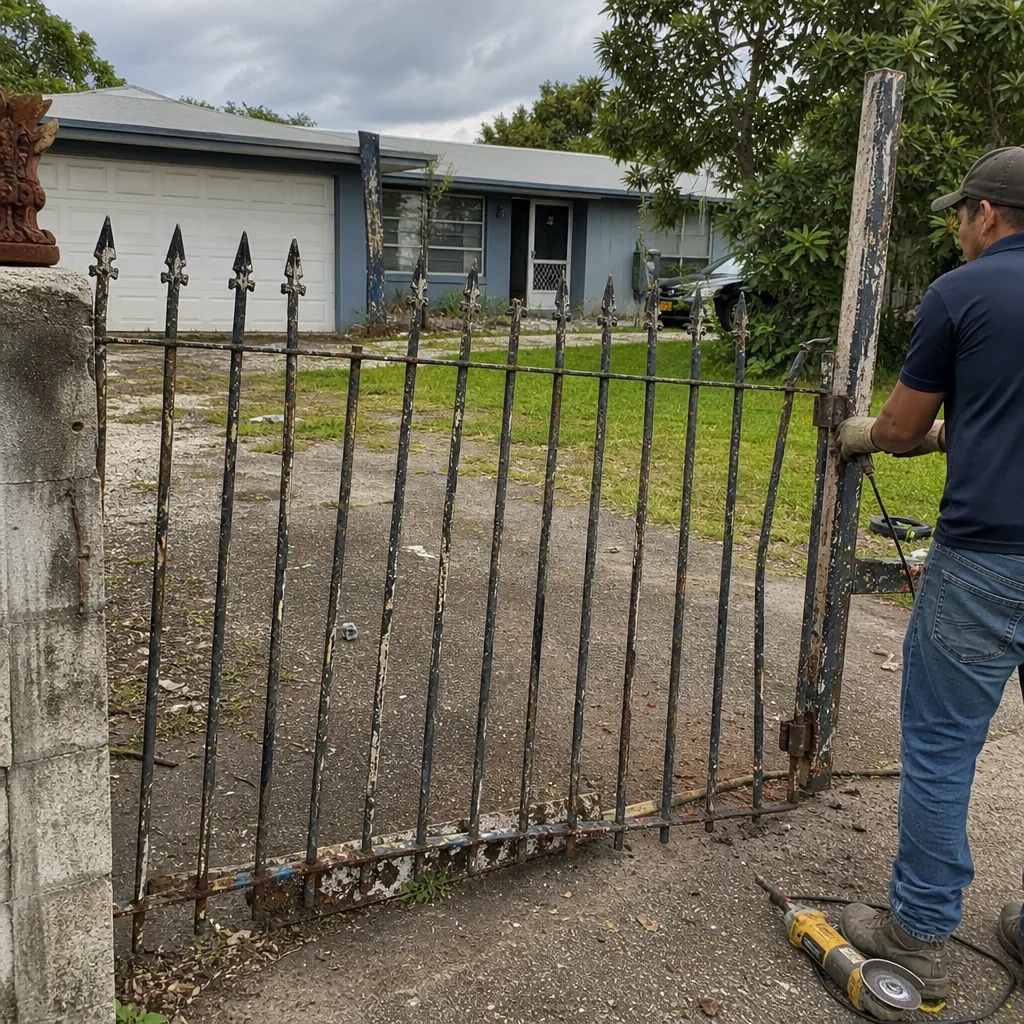 Before
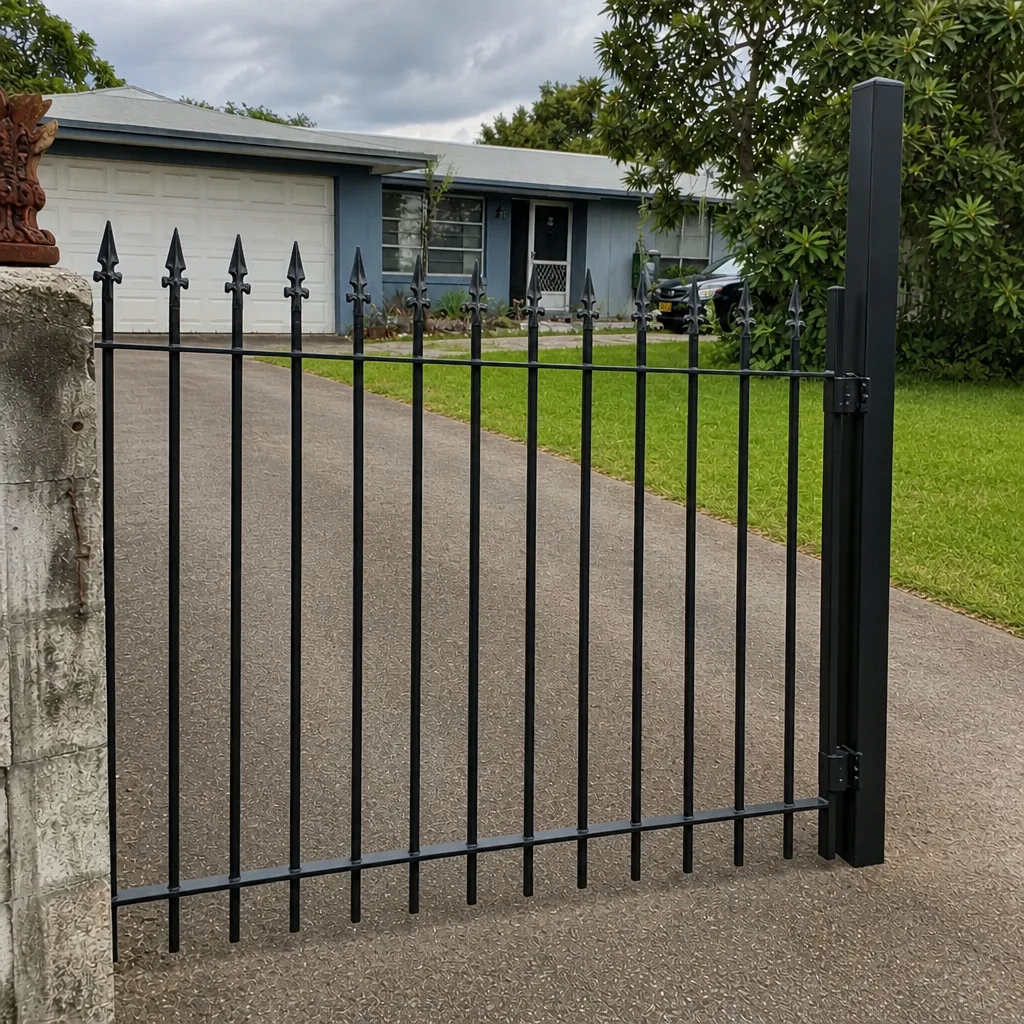 After
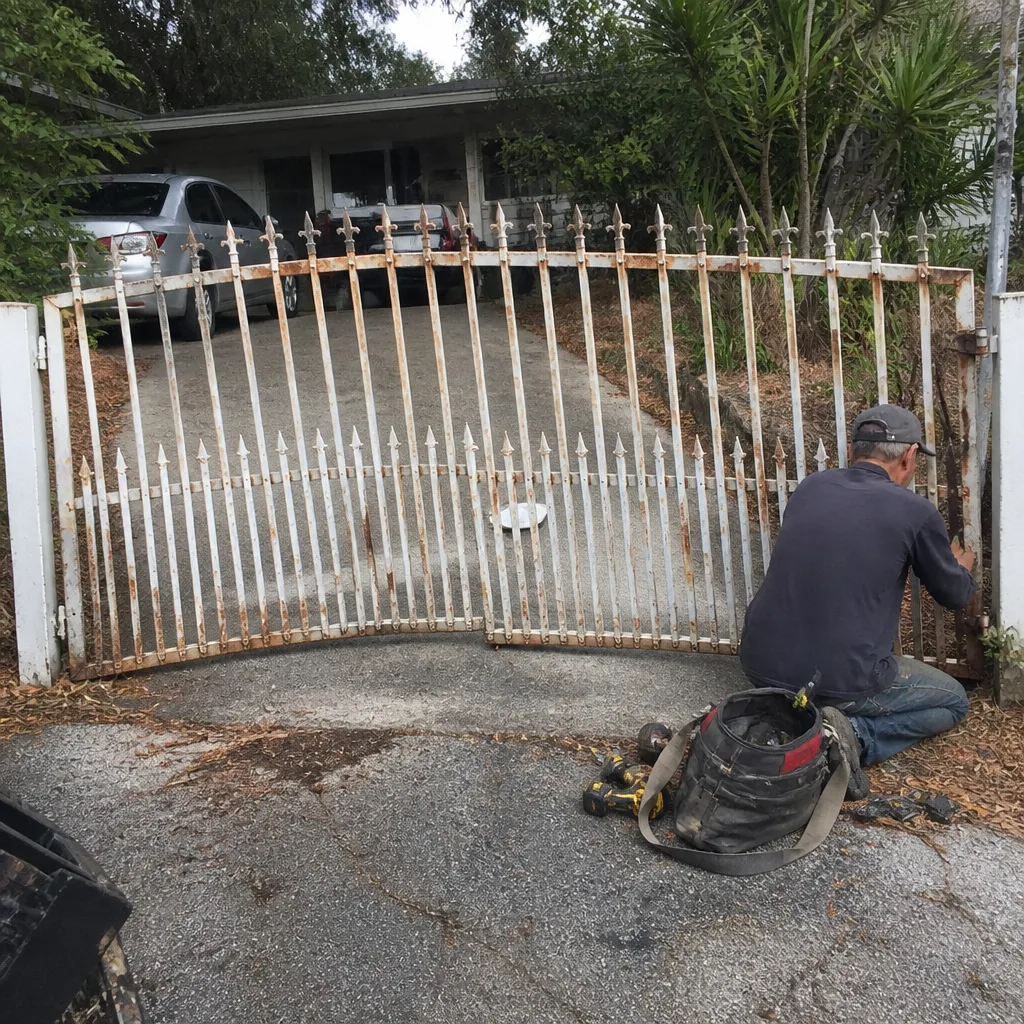 Before
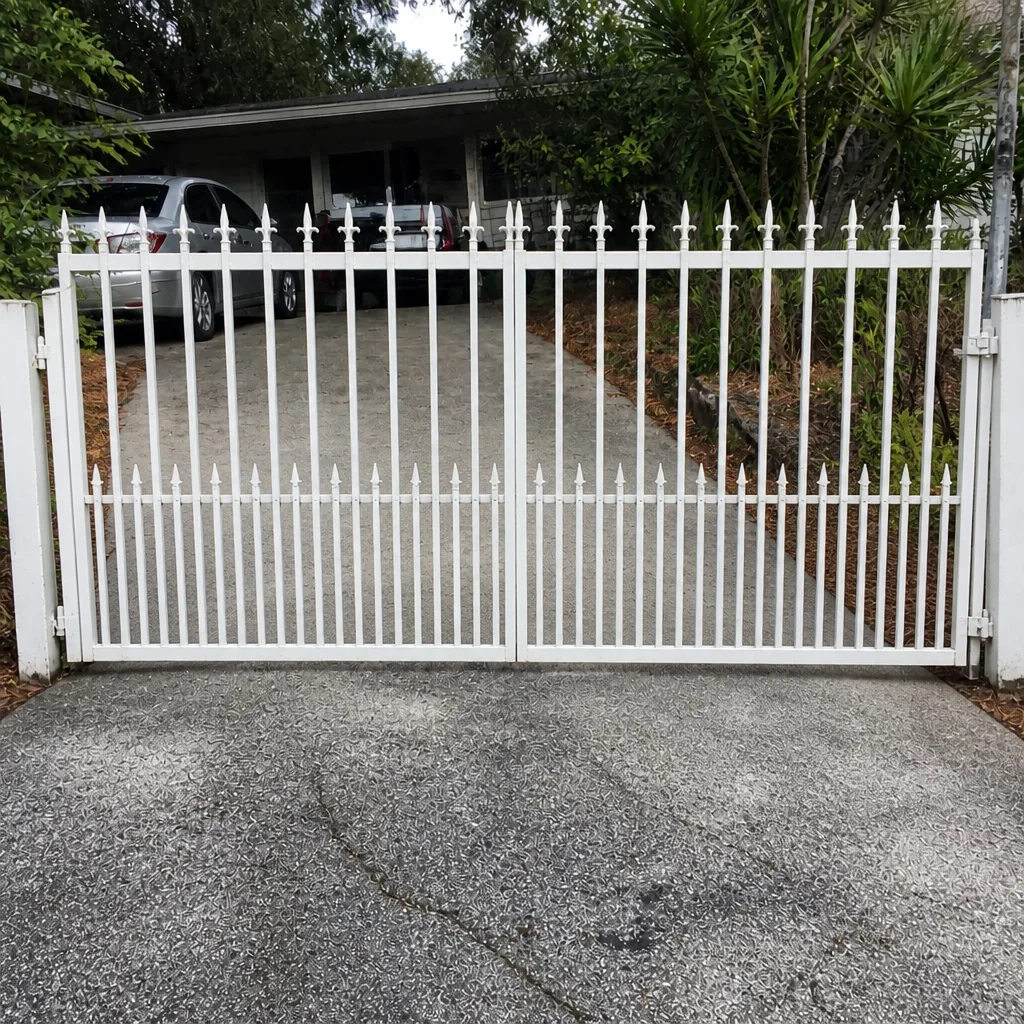 After
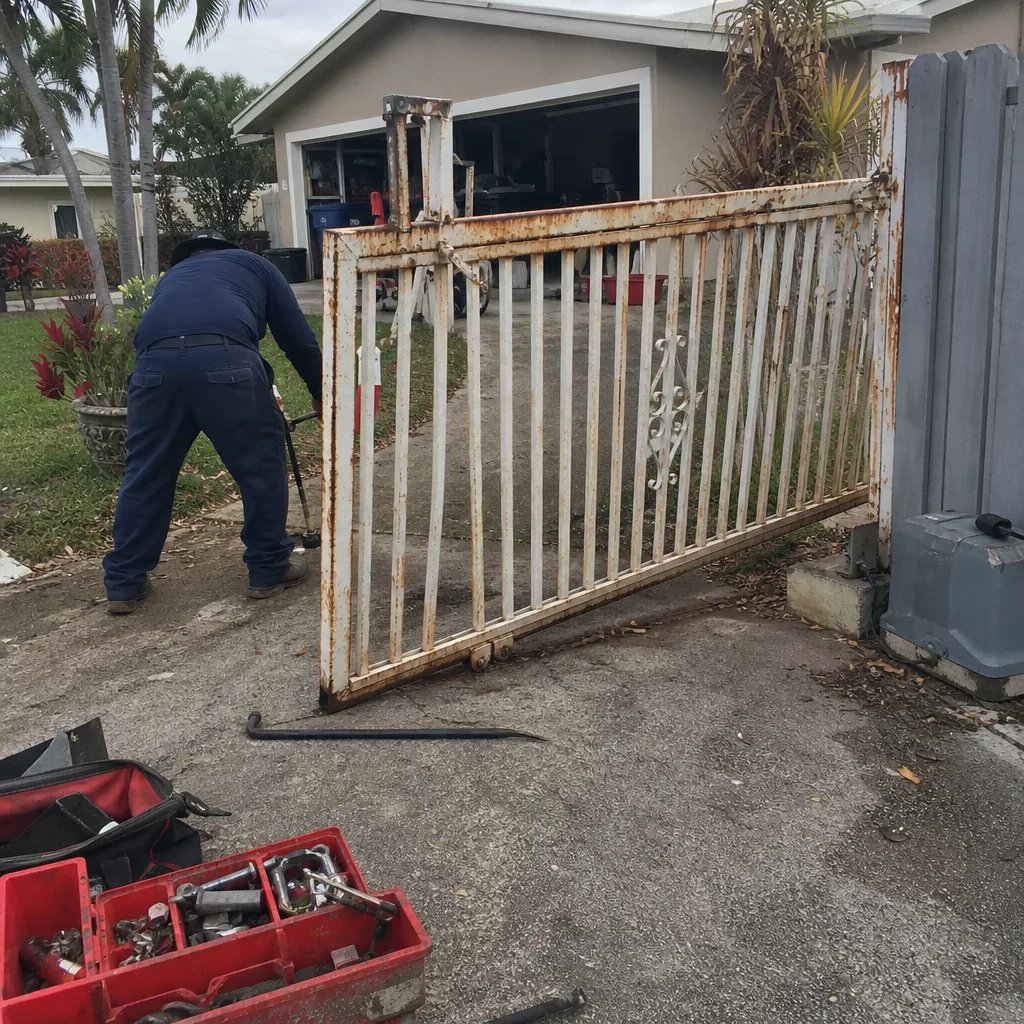 Before
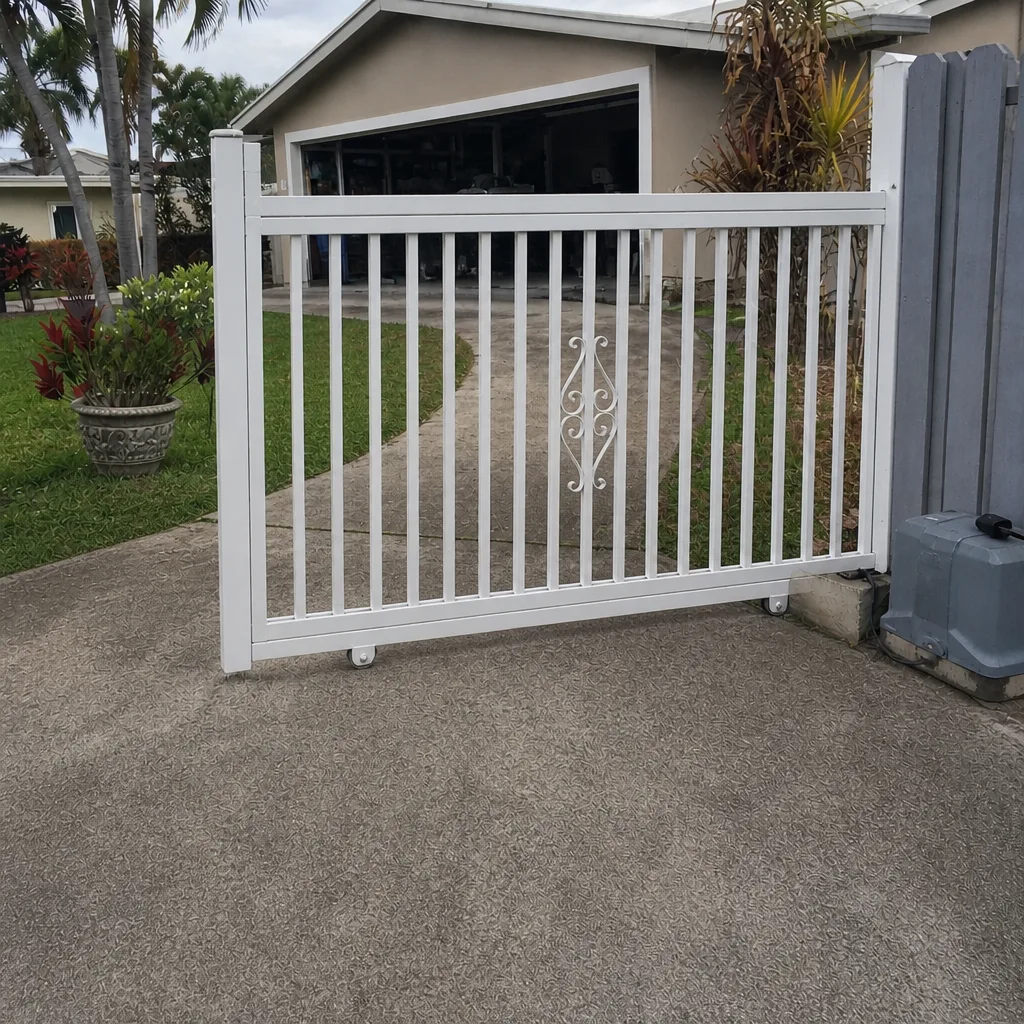 After
Frequently Asked Questions
A gate that reverses before closing usually has an active safety input or corroded limit-switch contacts. Check the photo-eye alignment and clean the lenses first, then inspect the limit switches for corrosion – in Pompano Beach’s humidity, corroded contacts cause this more often than a blocked sensor. Call (888) 399-8022 for a diagnosis if the reversal continues after those checks.
Gate repair cost in Pompano Beach depends on the fault – a sensor adjustment or terminal cleaning is far less than a gearbox or control-board replacement – and the written estimate sets the final price before any work starts. We provide a free estimate and quote it up front. Call (888) 399-8022 for an exact quote.
We can often get to a gate the same day. Fast dispatch runs 7am to 7pm, Sunday through Friday, and we’re closed Saturday. We answer 24/7, and a call outside dispatch hours is booked into the next opening. Call (888) 399-8022 and we’ll book it in.
Slow gate movement is usually mechanical, not electrical. A worn gearbox, binding hinges or rollers, or a slide gate dragging off its track all cause slow travel, and a weak power supply can too. Disconnect the operator and move the gate by hand – if it drags, the problem is hardware. Call (888) 399-8022 if the gate binds and we’ll diagnose it.
Intermittent gate failures are almost always a wiring connection problem. Pompano Beach’s daily heat cycle loosens terminals and cracks solder joints over time, so the gate works in the morning and falters in the afternoon. A technician checks terminal torque, discolored wire, and low-voltage connections rather than replacing boards. Call (888) 399-8022 to trace it.
We work on the brand you already have. Our gate technicians service LiftMaster, FAAC, BFT, Linear, Viking, Ghost Controls, DoorKing, Elite, and Mighty Mule – from budget residential openers to commercial access control – so most gates in Pompano Beach are covered in a single call. If your system is one of those, call (888) 399-8022. For everyday service across the area, see our gate repair and electric gate repair pages.
The Bottom Line
Most gate failures in Pompano Beach fall into one of five categories: motor, control board, sensors, mechanical hardware, or power supply. Sort your symptom into the right category before you touch anything. A reversing gate is more often a corroded limit switch than a blocked sensor. A slow gate is more often a worn gearbox than a battery. An intermittent gate is almost always a loose connection in our heat-cycle climate. And a suspected board failure is worth a terminal cleaning before a board replacement. Start with the safest checks, stay on the low-voltage side, and bring in a gate specialist when the fault involves high voltage or structural damage.
Contact Us
If your gate won’t close, won’t stay closed, or fails when you need it most, the team at Gate Repair Pompano Beach can help. We diagnose the actual fault rather than swapping parts, and we work on the brand you already have. Our technicians have up to 12 years of experience, and we service residential and commercial gates throughout Pompano Beach. Call (888) 399-8022 for a free estimate. We answer 24/7. Fast dispatch from 7am to 7pm, Sunday through Friday.
Written by the team at Gate Repair Pompano Beach.