
Last updated November 15, 2026
 Wrought iron
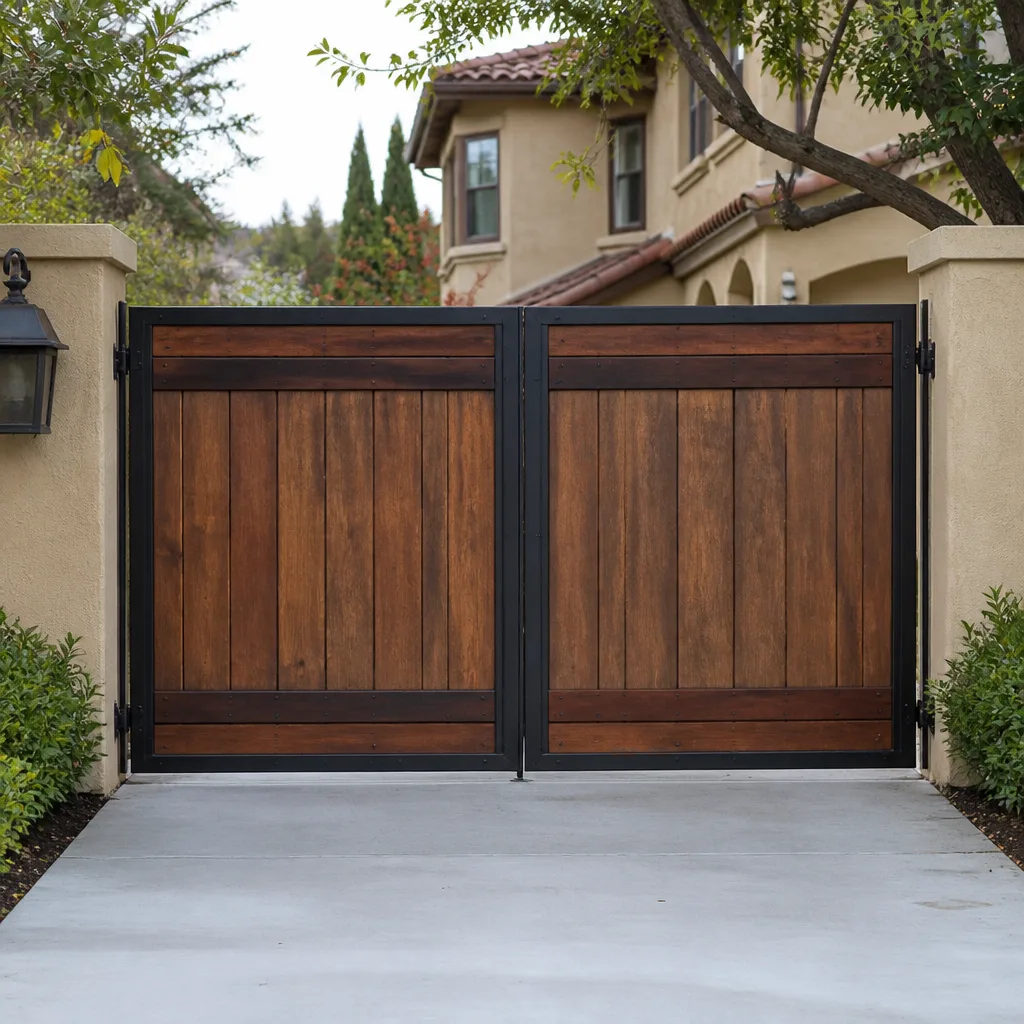 Wood & steel frame
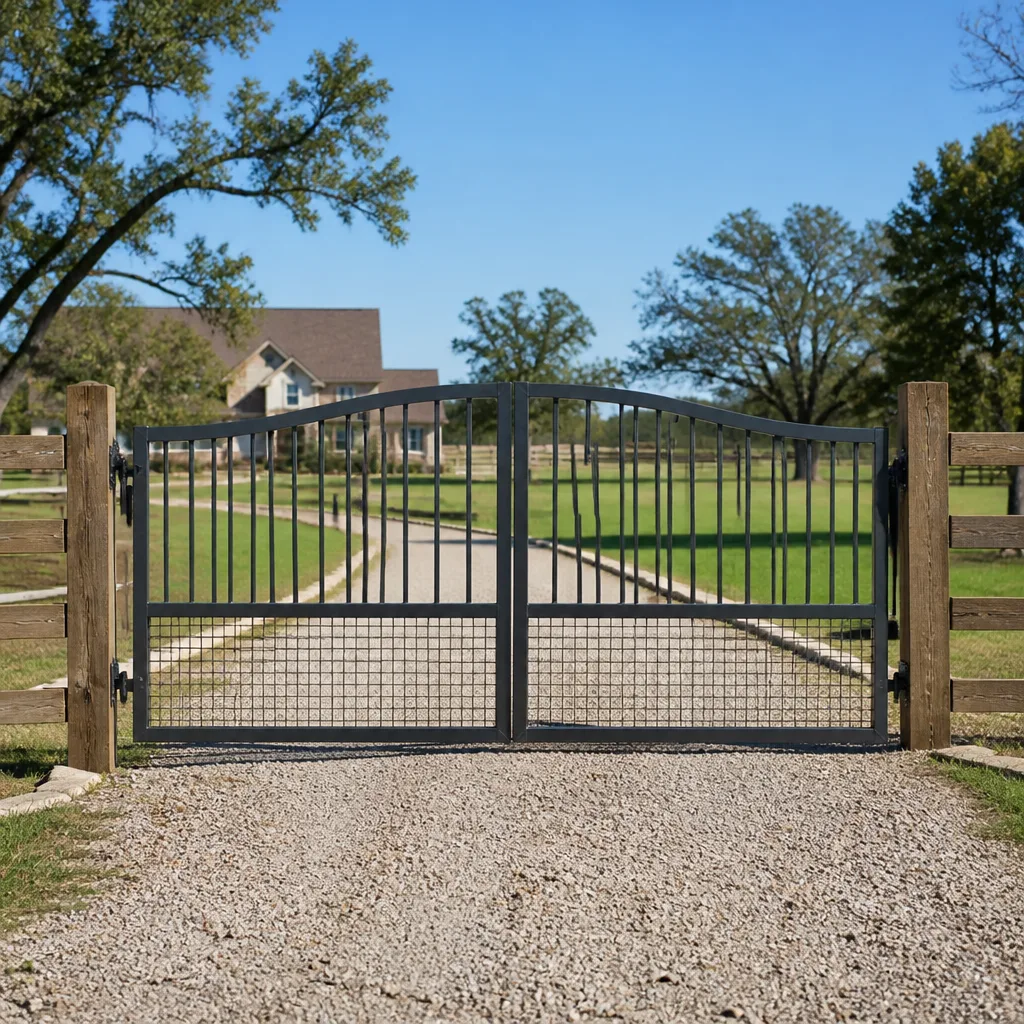 Farm & ranch
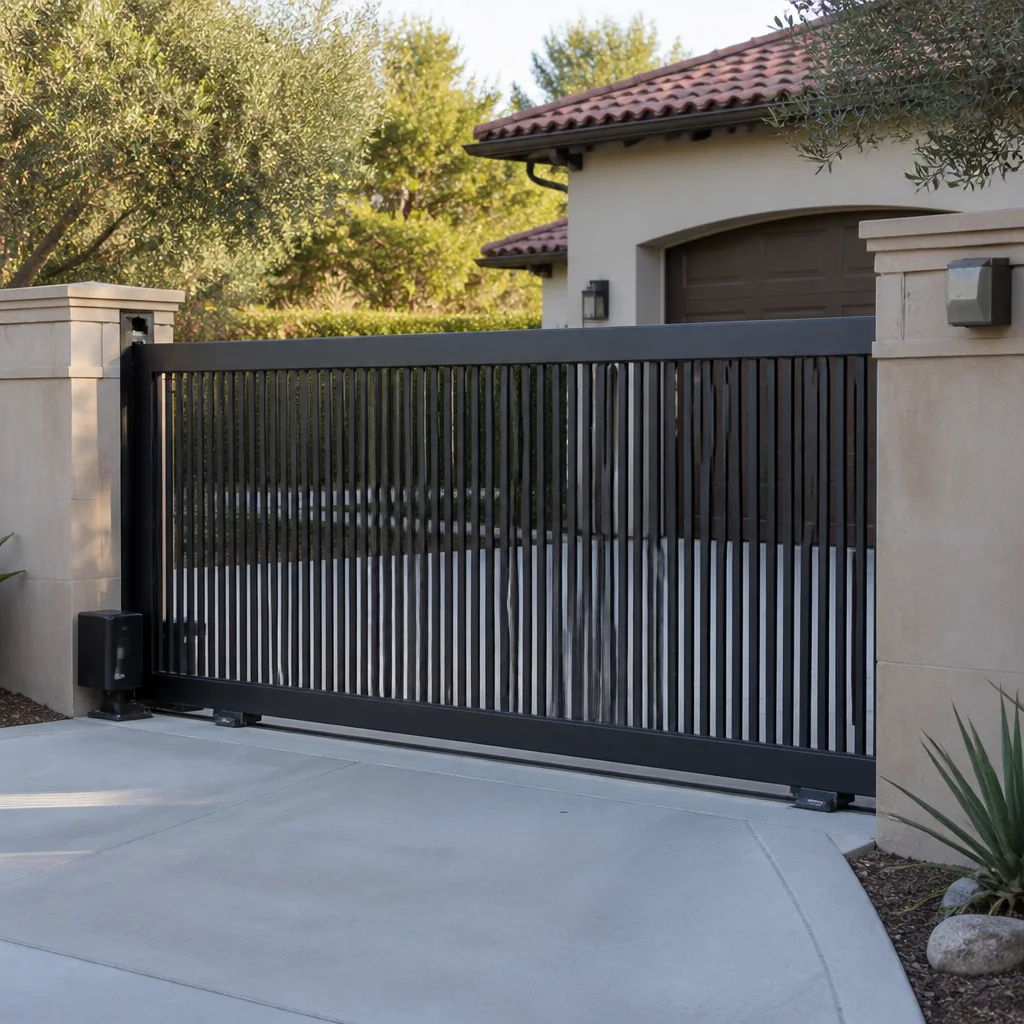 Sliding driveway gates
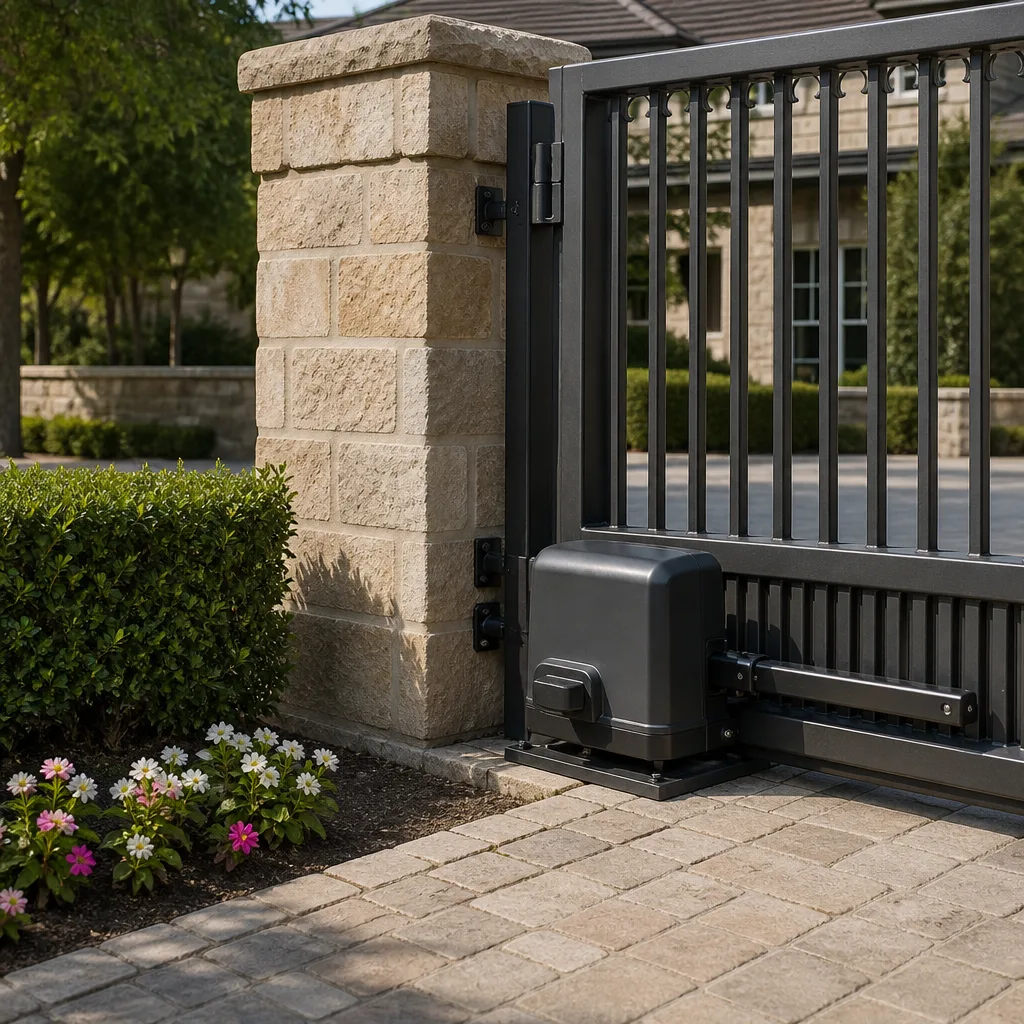 LiftMaster operators
Free on-site gate assessment - hinges, posts, and your LiftMaster or Nice gate operator checked before anything is quoted
The assessment is free and the quote is the invoice.
Get your free estimateSeasonal Gate Repair Care for Pompano Beach: Year-Round Homeowner’s Guide
Most gate care advice you’ll find online was written for a place with four real seasons, and it falls apart the moment you apply it here. Pompano Beach doesn’t give your gate a quiet winter to recover. It gives it a wet, wind-driven stretch and a dry, sun-blasted stretch, and each one attacks different parts of the system. Treat both the same and you end up replacing motors that failed for reasons a few checks would have caught. This guide splits the year into the seasons your gate actually lives through, tells you which tasks belong to each, and shows you what to watch so a gate that works today still works after the next storm. We’ll cover automation, hardware, batteries, wiring, and the operator itself.
Quick Answer
Gate care in Pompano Beach works best on a two-season calendar: heavy preparation before storm season (roughly April and May) and a UV-and-dust pass through the dry months (November through April). The tasks that prevent the most failures are surge protection checks, battery backup load tests, fastener torque checks, and clearing dust and sun damage from control housings, sensor lenses, and wiring insulation. Doing the right task in the right season matters more than doing more tasks.
Styles & brands we work with
- Wrought iron
- Wood & steel frame
- Farm & ranch
- Sliding driveway gates
- LiftMaster operators
Table of Contents
- Why Pompano Beach Gates Age Differently
- Pre-Storm-Season Checklist: April and May
- Locking Out and Restoring an Automated Gate Around a Storm
- Dry Season Care: UV, Heat, and Dust
- Winter Cold Snaps and Hydraulic Operators
- Battery Replacement Timing: Why October Beats Spring
- Hardware, Tracks, and Hinges Through the Year
- Common Mistakes to Avoid
Why Pompano Beach Gates Age Differently
A gate in Pompano Beach faces two kinds of stress that never overlap neatly. From roughly June through November, the system deals with wind gusts, horizontal rain, saturated ground around posts, and the power surges that come with lightning-heavy weather. From November through April, it deals with intense sun, dry air, and dust working its way into every housing and lens. The failure modes are completely different, so the preventive work should be too.
Wind and rain mostly stress the mechanical side and the electrical safety systems. Water finds its way into control boxes, into photo-eye housings, and into the seams of operator covers. Surges ride the power line and the low-voltage loop and take out control boards, which is the single most expensive part to replace. On the dry-season side, UV breaks down wire insulation and plastic sensor lenses until they crack or cloud over, and airborne dust settles on circuit boards and builds a conductive film that causes faults months later.
There’s a location layer too. Homes in Pompano Beach sit in a range of settings: canal-front properties in the western communities, older inland blocks where mature trees drop debris onto tracks, and newer gated communities where every operator is a brand-specific system. A Gate Repair Pompano Beach call is often the point where a homeowner discovers the difference between a general handyman and someone who actually knows the board. Our technicians have up to 12 years of experience, and that experience is gate-only. We work on swing gates, slide gates, and automated systems, and we work on the brand you already have: Linear, Viking, Ghost Controls, DoorKing, and the other major systems.
Pre-Storm-Season Checklist: April and May
The work you do in the weeks before storm season is the highest-value gate care of the year. The goal is simple: find and fix what wind, water, and surges will exploit before they get the chance. This is a mechanical and electrical inspection first, a repair visit only if something turns up.
- Test the surge protection. Locate the surge device feeding the gate operator and confirm it’s intact and properly grounded. A surge protector that’s already absorbed a hit can look fine and do nothing, so a visual check plus a ground connection check is the starting point. If there’s no surge protection on the operator circuit, that’s the first thing to add.
- Load-test the battery backup. Disconnect line power briefly with the gate in a safe, clear position and watch how the operator behaves on battery. A battery that’s weak won’t hold the gate through a multi-hour outage, and storm season is exactly when outages happen. Note how the gate slows or stalls, because that tells you whether the battery is failing or the operator is drawing too much.
- Check fastener torque on hinges, brackets, and post mounts. Wind load works loose every bolt that holds the gate together. Go through the hinge plates, the operator mounting bracket, and the post anchors. Loose hardware turns into misalignment, and misalignment turns into a burned-out motor.
- Clear the track and the travel path. Palm fronds, seed pods, and storm-blown debris jam slide gates and block swing arcs. Clear the full travel path and check the track for grit or bent sections.
- Inspect the safety devices. Photo-eyes, safety edges, and loop detectors are what stop a moving gate on a person or a vehicle. Clean the lenses, check alignment, and confirm each device actually triggers a stop or reversal.
- Look for water intrusion points. Check the control box gasket, the conduit entries, and the operator cover seams. Every gap that lets water in during a storm becomes a board failure later.
If any of this turns up something you’re not sure about, a free estimate is the cheapest way to find out whether it’s a real problem. Call (888) 399-8022.
Locking Out and Restoring an Automated Gate Around a Storm
When a hurricane watch goes up, an automated gate becomes a liability if it can’t be secured, and a trap if it’s restored carelessly afterward. The right sequence is to lock it out safely before the weather arrives and bring it back in a controlled way once it passes, so the control board doesn’t register a fault that leaves the gate stuck in a half-open state.
Before the storm
- Put the operator into manual release following the manufacturer’s procedure for your specific model. This is where brand matters: a Linear, a DoorKing, and a Ghost Controls each release differently, and forcing the wrong lever damages the gearbox.
- Move the gate to the closed and latched position by hand and secure the physical latch or drop bolt. Don’t rely on the operator to hold it.
- Switch off power to the operator at its dedicated breaker. An unattended automated gate cycling during an outage can run a battery flat or cook a board.
- Remove or tie down anything loose in the gate’s travel path, and check that the gate panels themselves aren’t going to catch wind and slam against their stops.
After the storm
- Walk the full travel path first and clear debris before restoring power. A gate that swings into a fallen branch can strip a gear or bend a hinge.
- Inspect the control box and photo-eye housings for water before you energize anything. Power into a wet board is how a repairable problem becomes a replacement.
- Restore power and watch the operator through one full open and close cycle. If it stops short, reverses without a trigger, or throws a fault code, don’t keep cycling it. That’s the moment to stop and get it diagnosed rather than reset it repeatedly.
- Re-engage the manual release exactly as the manufacturer specifies, then test the safety devices before you trust the gate for daily use.
If the gate won’t come back cleanly, the problem is usually a control board that took a surge or a photo-eye that’s full of water. Either way, an accurate diagnosis first saves you from buying parts you don’t need.
Dry Season Care: UV, Heat, and Dust
From November through April, the threats to a gate in Pompano Beach change character. The rain backs off and the sun takes over. UV exposure degrades the plastic and rubber parts of the system faster than most homeowners expect, and dry, dusty air pushes grit into places it shouldn’t be.
- Wiring insulation: Check the low-voltage wiring runs for cracked, brittle, or sun-bleached insulation, especially where cable is exposed on a post or along a fence line. Cracked insulation lets in moisture, and moisture plus voltage equals intermittent faults that are hard to trace later.
- Solar panels on the operator: If your system uses a solar-charged battery, inspect the panel for dust film, bird droppings, and clouded glazing. A dirty panel charges the battery more slowly, which shows up as shortened runtime in an outage. Clean it and check the mounting hardware hasn’t loosened.
- Control board housing: Dust settles on circuit boards and forms a film that can cause shorts and false faults. Clear the housing vents and check the gasket seal. A housing that’s not sealed is letting both dust in and cooling air out.
- Sensor lenses: Photo-eye and safety-sensor lenses cloud and scratch under UV. Clean them and check alignment. A lens that looks clear but has a fine haze can cause phantom reversals.
- Plastic and rubber parts: Check covers, grommets, and weather seals for cracking. UV ages these faster than anything else on the system.
Dry season is also the best window for a thorough gate repair evaluation because you’re not fighting weather to do it. A technician can look at the whole system calmly and catch the small failures before storm season turns them into expensive ones.
Winter Cold Snaps and Hydraulic Operators
Pompano Beach winters are mild, but “mild” isn’t “never cold,” and a short cold snap is enough to expose a hydraulic operator that’s already marginal. Hydraulic gate operators depend on fluid viscosity, and fluid that’s near the end of its life or the wrong weight for the temperature range thickens when the air turns cool. The result is a gate that moves sluggishly on a cold morning, strains the pump, and can trip a fault or refuse to complete its cycle.
What to watch for on the first cool mornings of the season:
- The gate moves noticeably slower than it does on a warm afternoon.
- The operator sounds labored or cycles on and off during a single opening.
- The gate stalls partway and needs a second command.
- There’s fluid weeping around seals or fittings.
Any of these is a sign the hydraulic side needs attention, not a sign to push the gate harder. A technician can check the fluid condition, the pump, and the seals, and tell you whether it’s a service issue or a component that’s failing. This is also the time to confirm your operator is rated for the temperature range it will actually see. Many residential hydraulic units are built for warmer climates, and a cold snap can push them past their comfort zone. The fix isn’t always a new operator; sometimes it’s the right fluid and a seal service. Getting that call right is what a gate specialist is for. If your operator is a hydraulic system and it’s behaving differently in cool weather, an electric gate repair visit will tell you what’s actually going on.
Battery Replacement Timing: Why October Beats Spring
The most common mistake with gate battery backup is replacing it in spring, when it’s convenient. October is the better choice, and the reason is simple: the battery’s job is to hold the gate through an outage, and outages cluster around storm season. If you install a fresh battery in spring, it’s already been through a summer of heat and use by the time the next storm hits. If you install it in October, it goes into the peak-risk months at full capacity, and it spends the quiet dry season staying charged instead of being drained.
Heat is the other reason. Battery capacity fades faster in sustained warm conditions, and a battery sitting in an outdoor operator housing through a Pompano Beach summer is working harder than one in a cooler climate. Replacing on an October schedule means the battery you’re relying on during storm season is at its strongest, not at the end of its service life.
How to know it’s time:
- Test the battery under load, not just at rest. A resting voltage that looks fine can collapse the moment the operator draws current.
- Watch runtime during a simulated outage. If the gate only completes a cycle or two before slowing, the battery is done.
- Check the terminals for corrosion and the housing for water. A corroded terminal acts like a weak battery.
- Replace on a schedule rather than waiting for failure. A backup battery that fails during a storm is one you can’t rely on precisely when you need it.
If you’re not sure how old your battery is or whether it will carry the gate through an outage, a free estimate will answer it. Call (888) 399-8022.
Hardware, Tracks, and Hinges Through the Year
Automation gets the attention, but the mechanical side is what determines whether your gate opens smoothly at all. Hinges, rollers, tracks, and posts carry the load every single day, and they fail in slow, predictable ways if nobody looks.
Swing gates live and die by their hinges. Worn hinge bushings let the gate sag, and a sagging gate drags on the operator, which then works harder and burns out sooner. Check the hinge play by hand and look for gaps at the top and bottom of the hinge. Slide gates live and die by their track. A track that’s out of level, grit-filled, or bent will bind the gate, and the operator will strain to push through it. On both types, check the post mounts. A post that’s shifted or a bracket that’s loosened throws off the whole alignment.
The seasonal angle here is that wind and rain accelerate mechanical wear, while dry season makes it easier to see and fix. A hardware check in late dry season catches the looseness before storm season loads it. The same check after storm season catches what the wind worked loose. We work on both the automated system and the standard gate hardware, so whether the problem is the motor, the board, or the hinge itself, it’s one call. If your gate is a commercial-grade system, a DoorKing access-control setup for example, the same hardware logic applies even though the electronics are more complex. And if you’re in a gated community around Pompano Beach, the shared gate hardware deserves the same seasonal attention your own does.
Common Mistakes to Avoid
- Replacing the battery in spring instead of fall. It feels convenient, but it puts a fresh battery through a summer before its hardest test. October replacement means full capacity going into storm season.
- Skipping the surge protection check. A surge device that’s already absorbed a hit can look intact and do nothing. If you don’t test it, you don’t know it’s working.
- Restoring power to a wet control box after a storm. Energizing a board with water in it is the fastest way to turn a repairable fault into a full replacement. Inspect and dry first.
- Resetting a fault code repeatedly instead of diagnosing it. A gate that stops or reverses without a trigger is telling you something. Cycling it again and again stresses the motor and hides the real cause.
- Ignoring slow cold-morning operation. A hydraulic operator that’s sluggish in cool weather is signaling fluid or seal trouble. Pushing it harder makes the eventual repair bigger.
- Letting dust build up in the housing and on sensor lenses. Dry-season dust forms a film that causes false faults and phantom reversals. A cleaning pass prevents a service call.
- Assuming a general handyman covers it. A gate is a system of motor, board, safety devices, and mechanical hardware. A technician who works on gates specifically diagnoses the actual problem instead of swapping parts.
See the difference
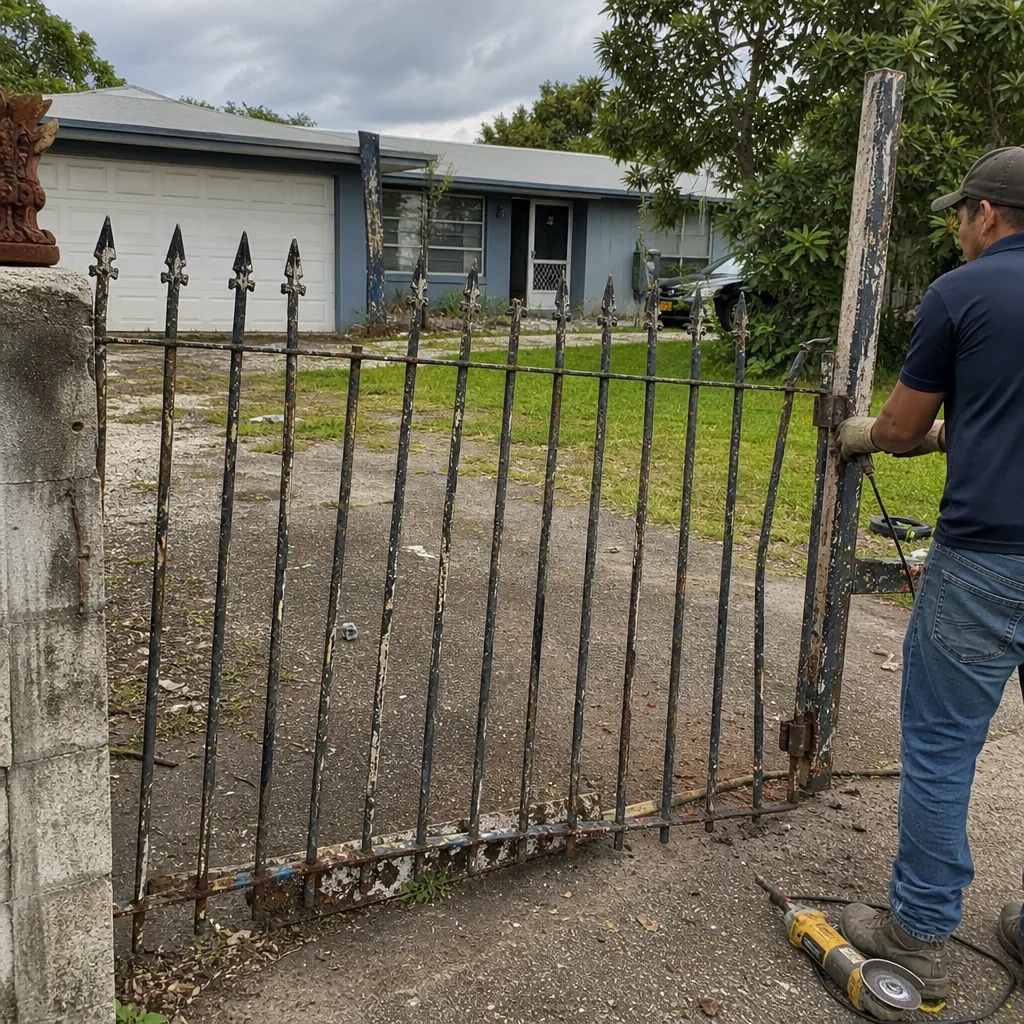 Before
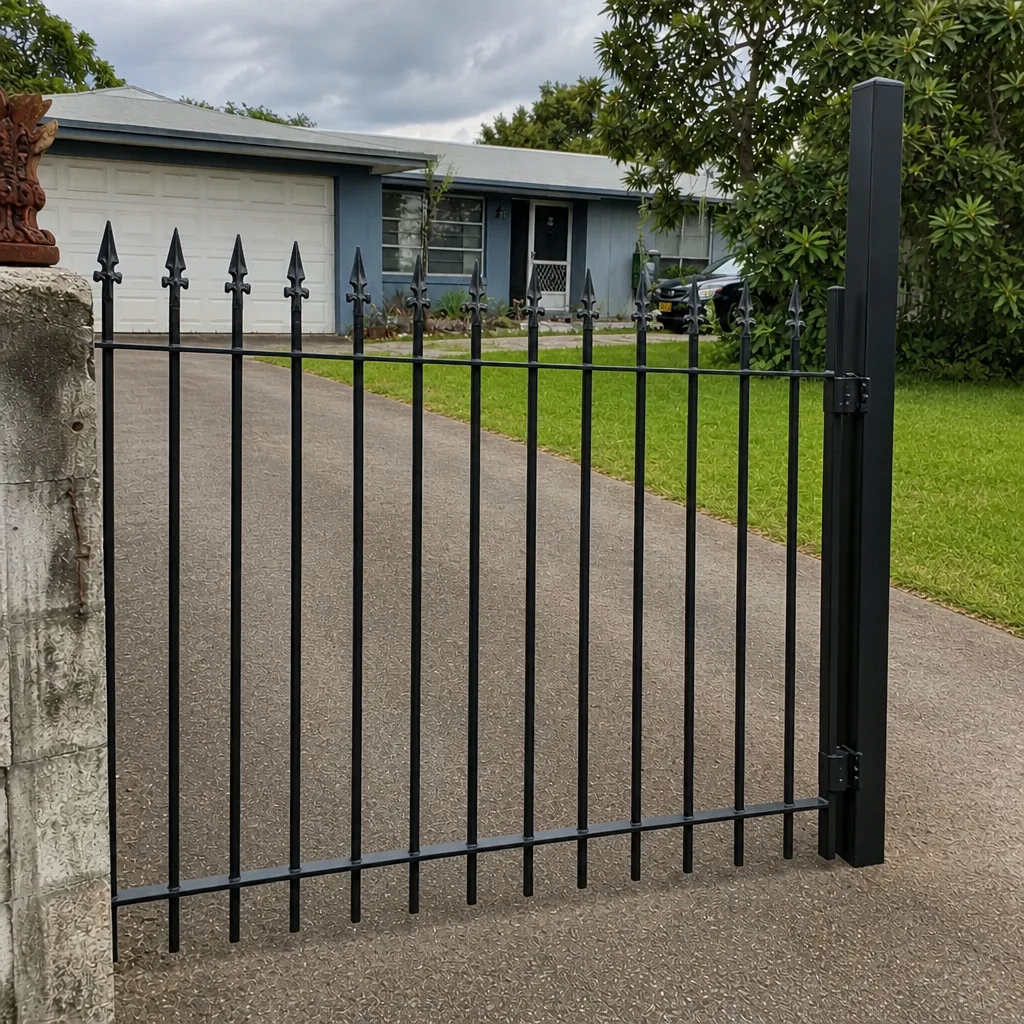 After
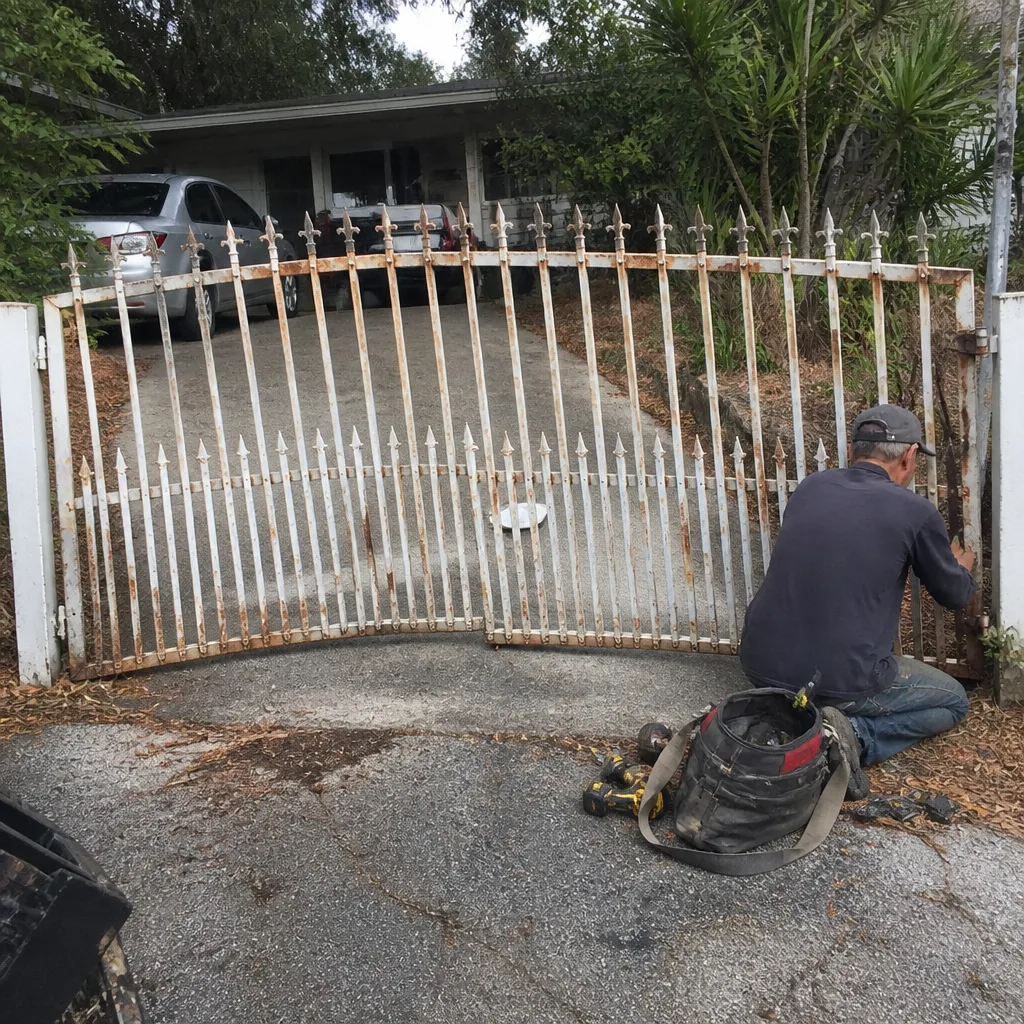 Before
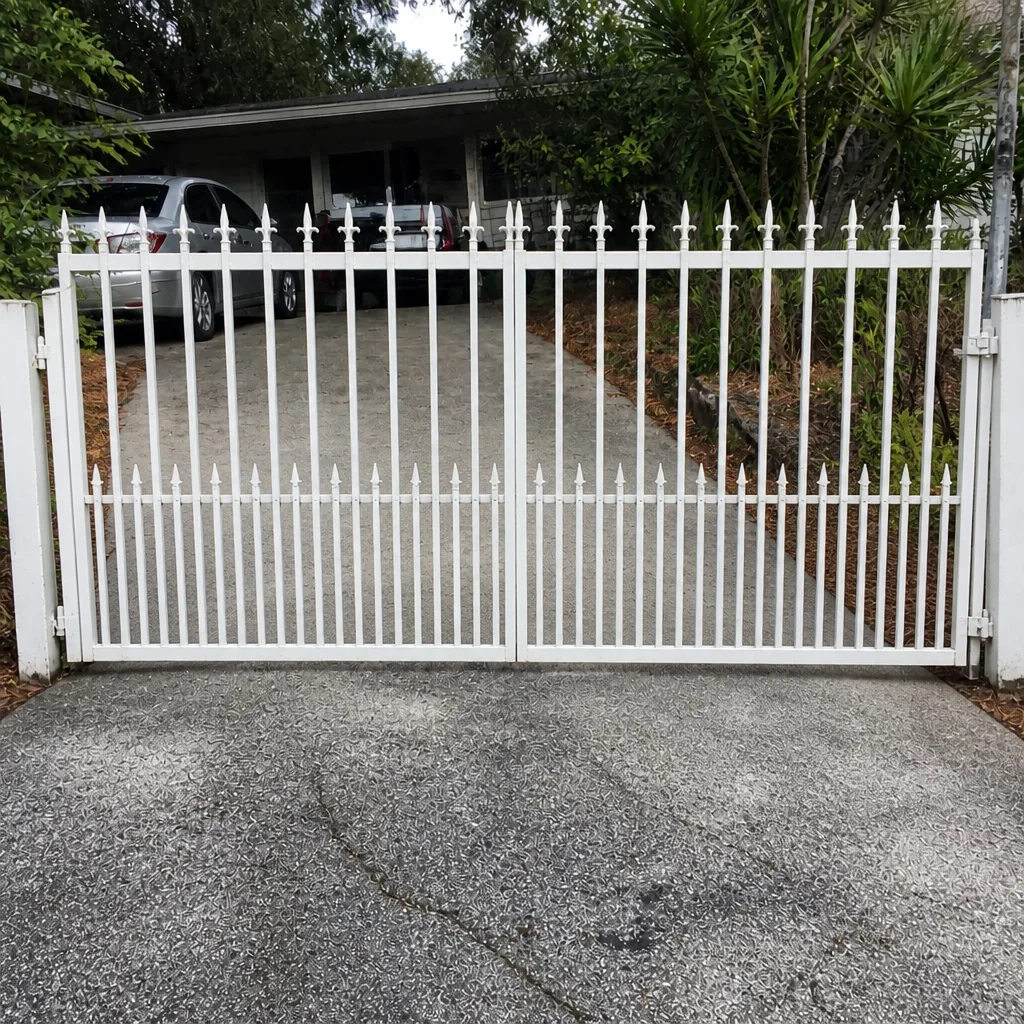 After
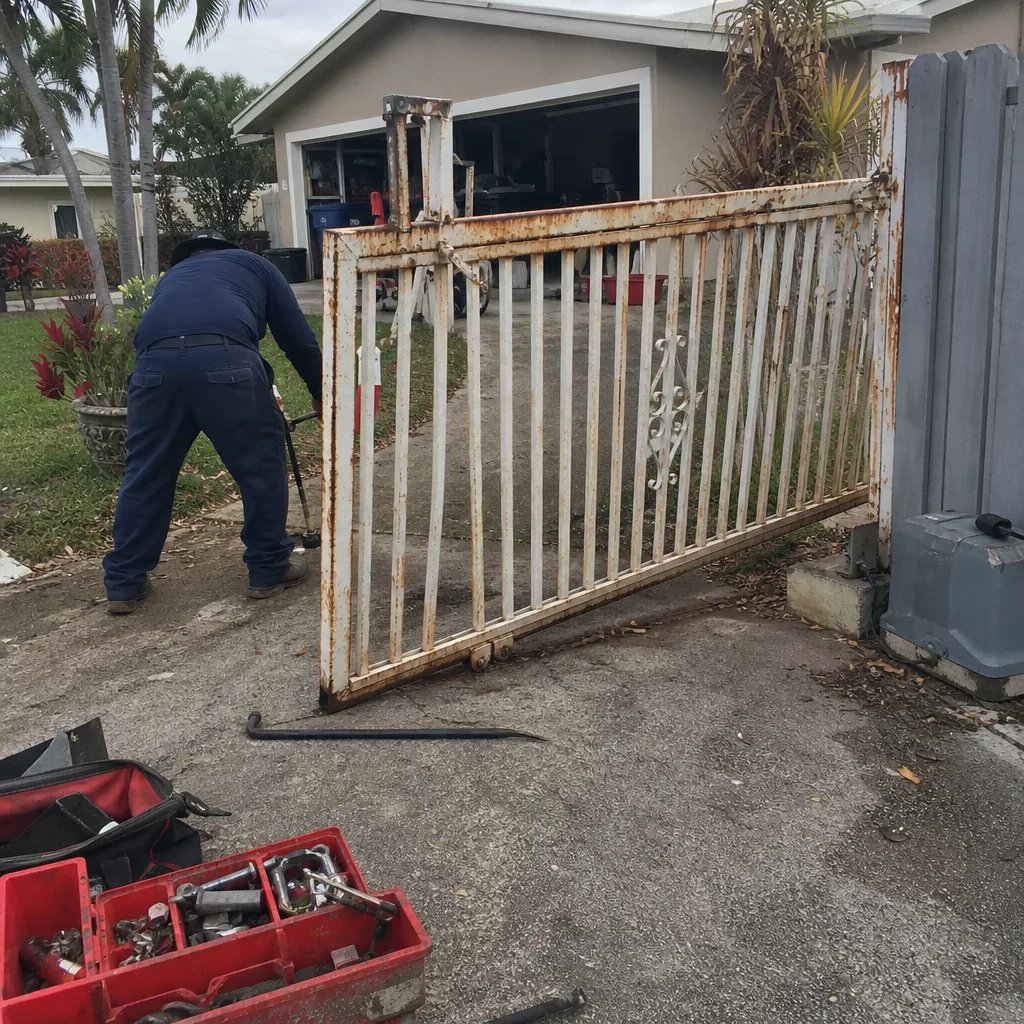 Before
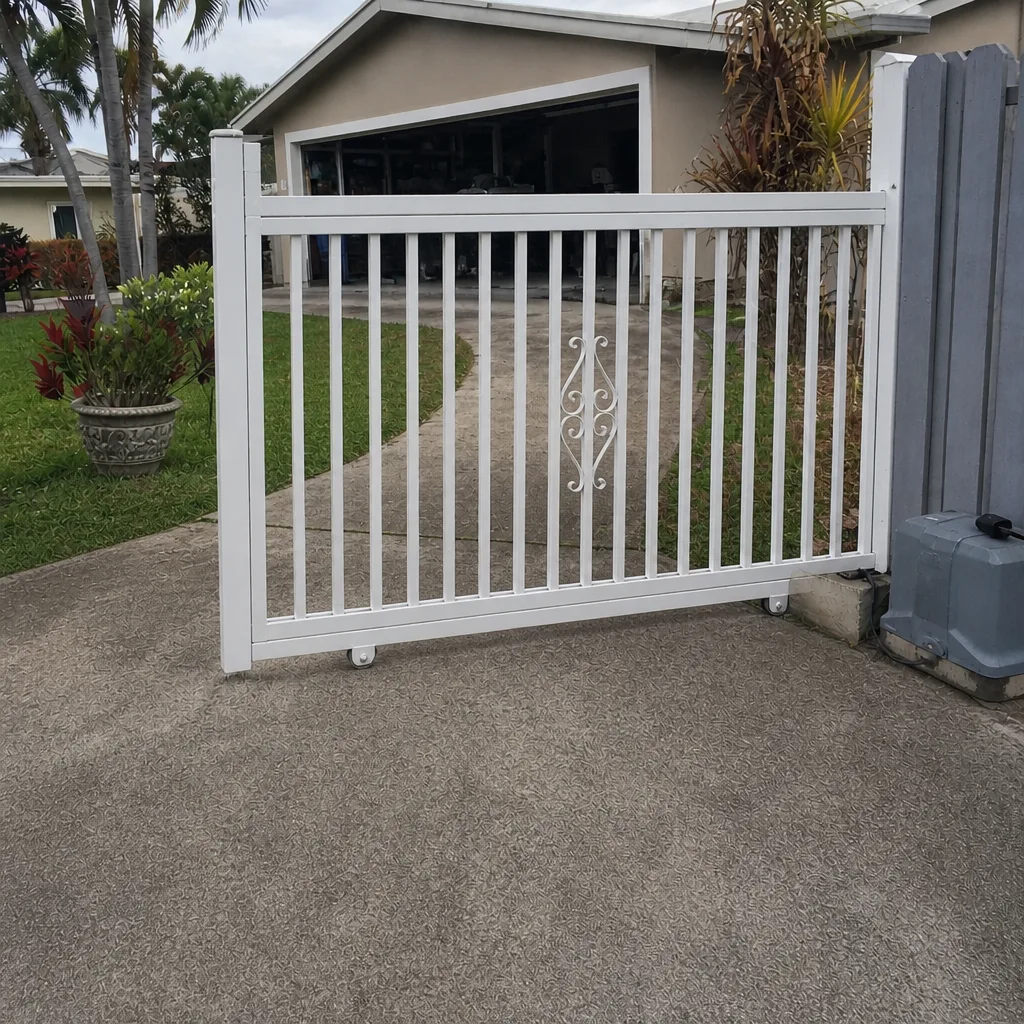 After
When to Call a Professional
Some seasonal tasks are homeowner work: clearing the travel path, cleaning sensor lenses, checking the battery at a high level. Others need a dedicated gate technician. Call a professional when the gate stops or reverses without a trigger, when the operator throws a fault code you can’t clear, when the gate sags or binds on its track, when a hydraulic unit runs slow or leaks, when a board or wiring has visible water damage, or when you’re not sure whether a cold-morning slowdown is normal. Those are the moments where a wrong guess costs more than a diagnosis. Gate Repair Pompano Beach offers free estimates in Pompano Beach, and we can work with your insurer if storm damage is involved. Call (888) 399-8022. We answer 24/7, with fast dispatch from 7am to 7pm, Sunday through Friday.
Frequently Asked Questions
The pre-storm-season surge protection check and battery load test in April and May. Most storm-related electrical failures are preventable with those two checks, and both can be done in one visit before the first named storm. Call (888) 399-8022 for an exact quote, and estimates are free.
Replace it in October, before storm season peaks, rather than in spring. A battery installed in October enters the highest-risk months at full capacity, while a spring-installed battery has already been through a summer before its hardest test. If you’re unsure of your battery’s condition, a free estimate will tell you.
Yes, if you follow your specific operator’s manual release procedure and then switch off power at the breaker. The release differs by brand, so check the manual for your Linear, DoorKing, or Ghost Controls system before you force anything. If you’re not confident, have a technician show you the procedure once. Call (888) 399-8022 to book a free estimate.
Cold thickens hydraulic fluid, so a hydraulic operator that’s marginal will run sluggish when temperatures dip. It usually signals fluid condition or seal wear rather than normal operation, and it’s worth a diagnosis before it strains the pump. Call (888) 399-8022 for an exact quote, and estimates are free.
Check the housing gasket and vents during dry season, clear any dust film from the board area, and confirm the cover seals properly. A sealed housing keeps dust out and keeps the board cooler. If you find water or corrosion inside, that’s a job for a technician. Call (888) 399-8022 for a free estimate.
Storm season produces more sudden electrical and mechanical failures from wind, rain, and surges, while dry season produces slower failures from UV and dust. Both are preventable with the right seasonal tasks. A seasonal inspection catches both. Call (888) 399-8022 for a free estimate.
The Bottom Line
The best gate care in Pompano Beach is seasonal, not generic. Preparation before storm season protects against the sudden failures: surge checks, battery load tests, fastener torque, and safety device inspection. Dry-season work protects against the slow ones: UV-damaged wiring, clouded sensor lenses, dust in the control housing, and brittle seals. Cold snaps expose hydraulic weaknesses, and October is the right time to install a fresh battery. Do the right tasks at the right time and you avoid most of the breakdowns a gate calendar can’t, and you keep your gate back to working order year-round. Call (888) 399-8022 for a free estimate.
Written by the team at Gate Repair Pompano Beach.