
Last updated November 15, 2026
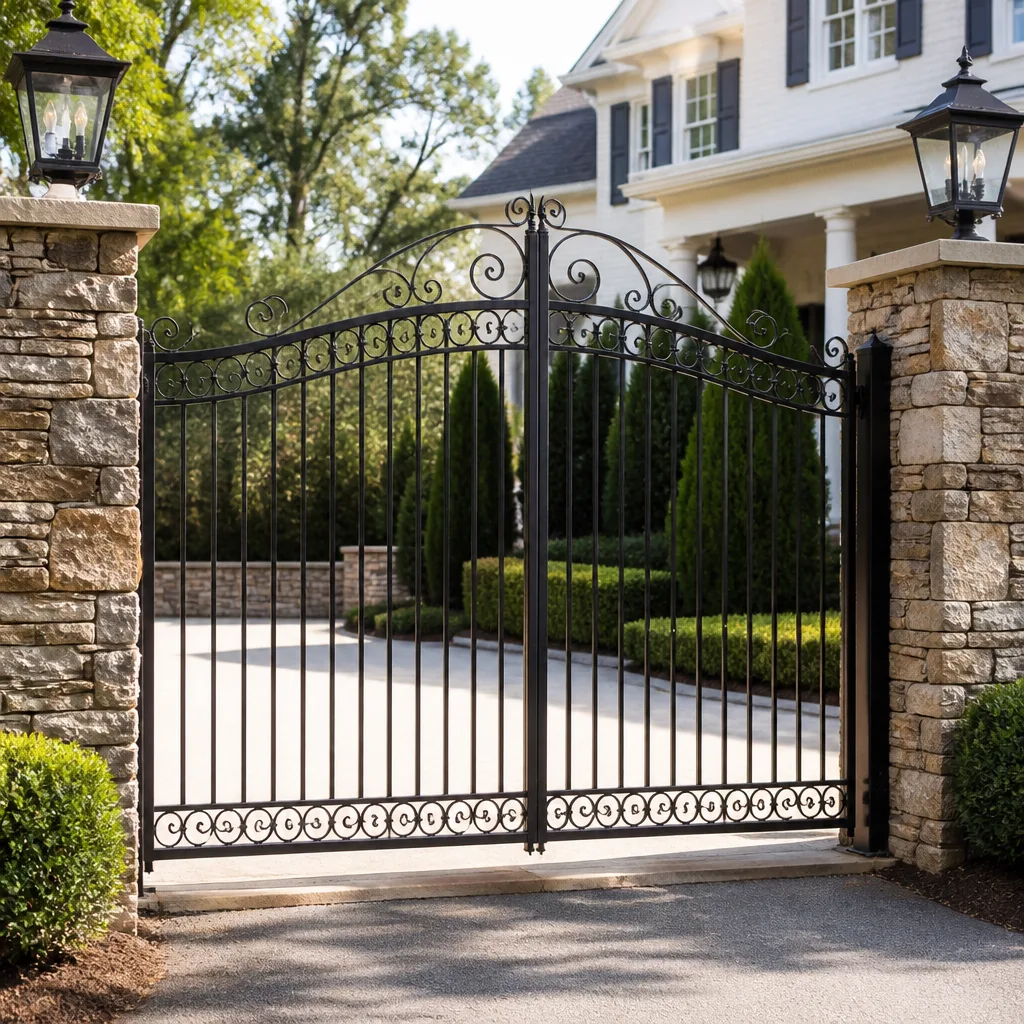 Wrought iron
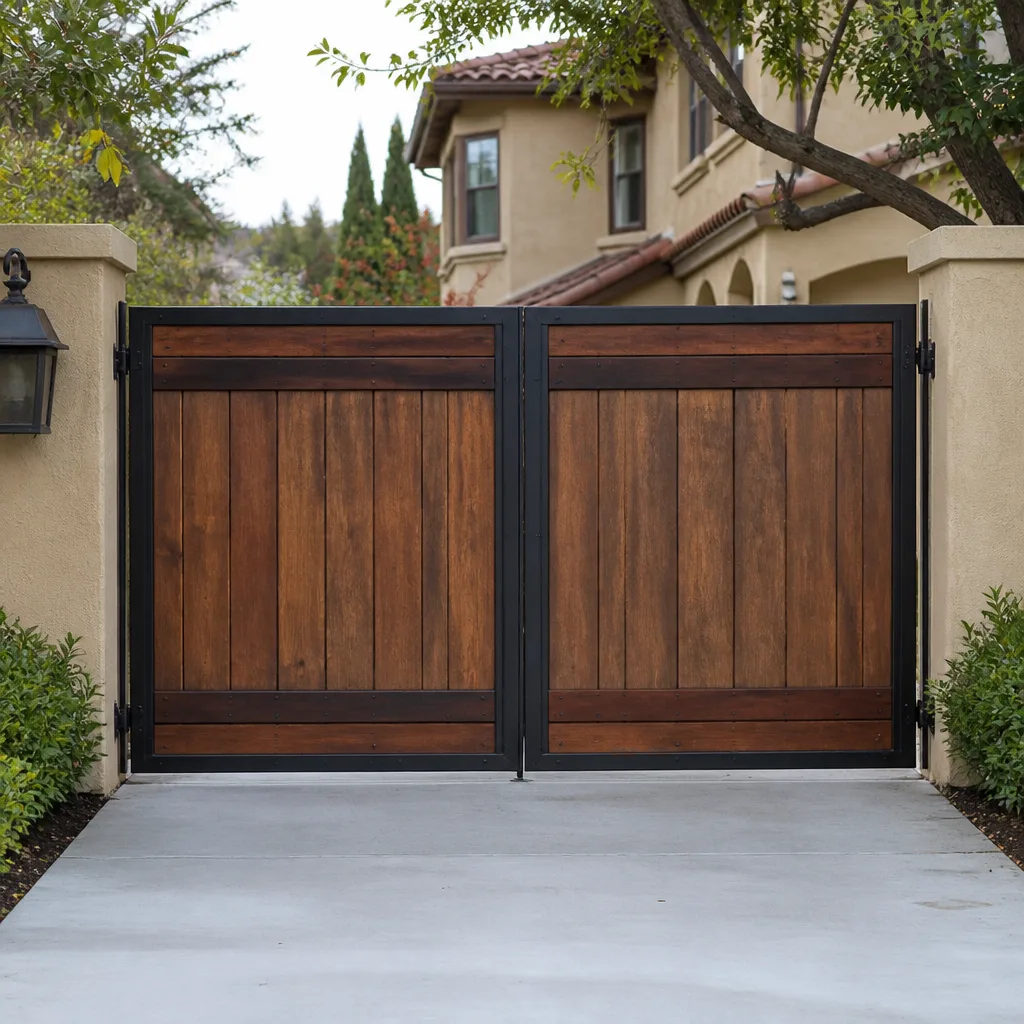 Wood & steel frame
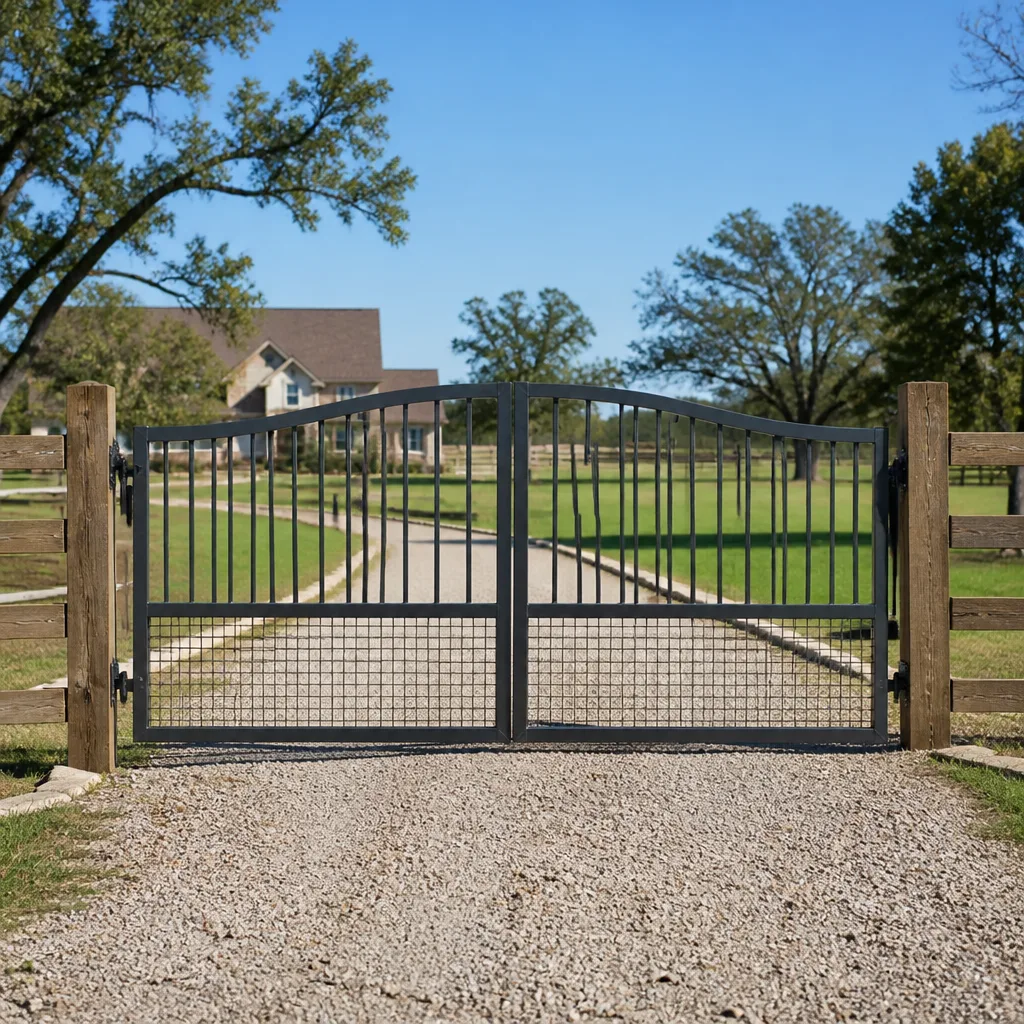 Farm & ranch
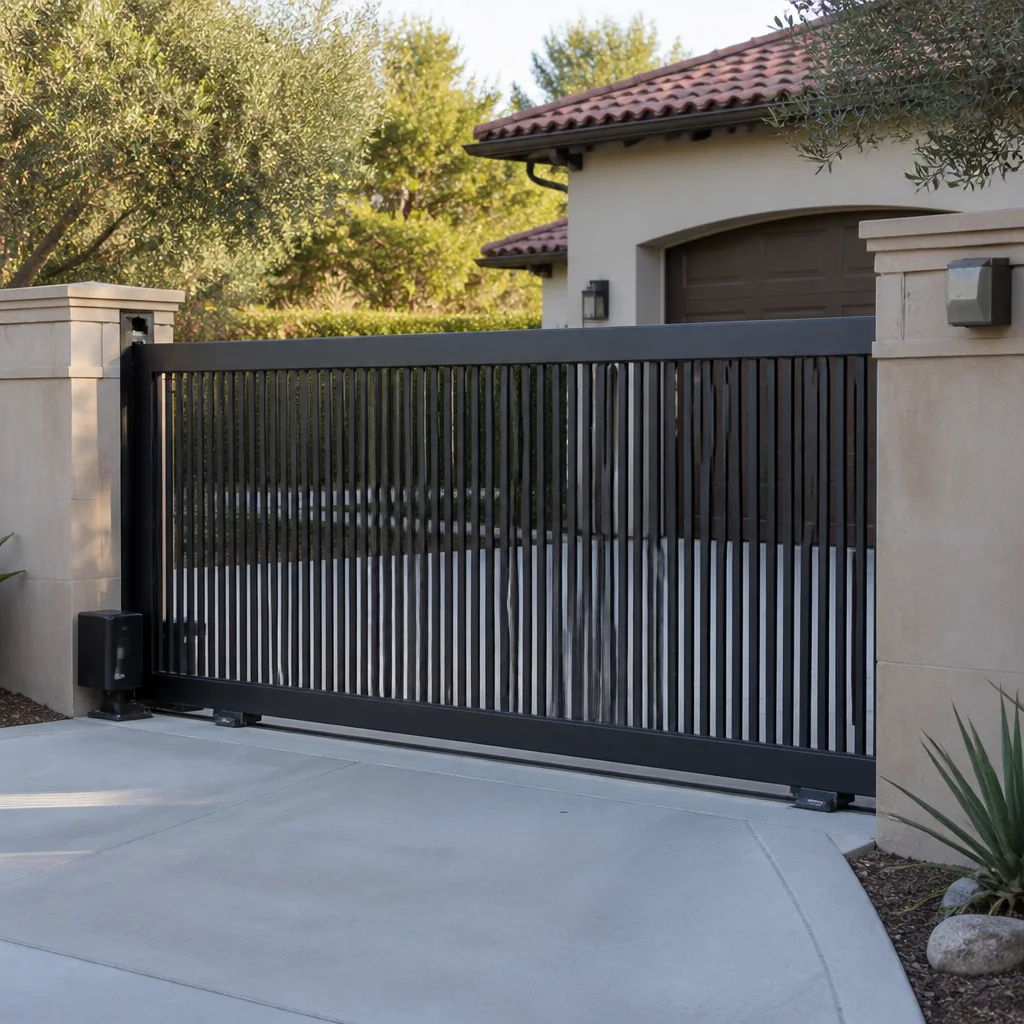 Sliding driveway gates
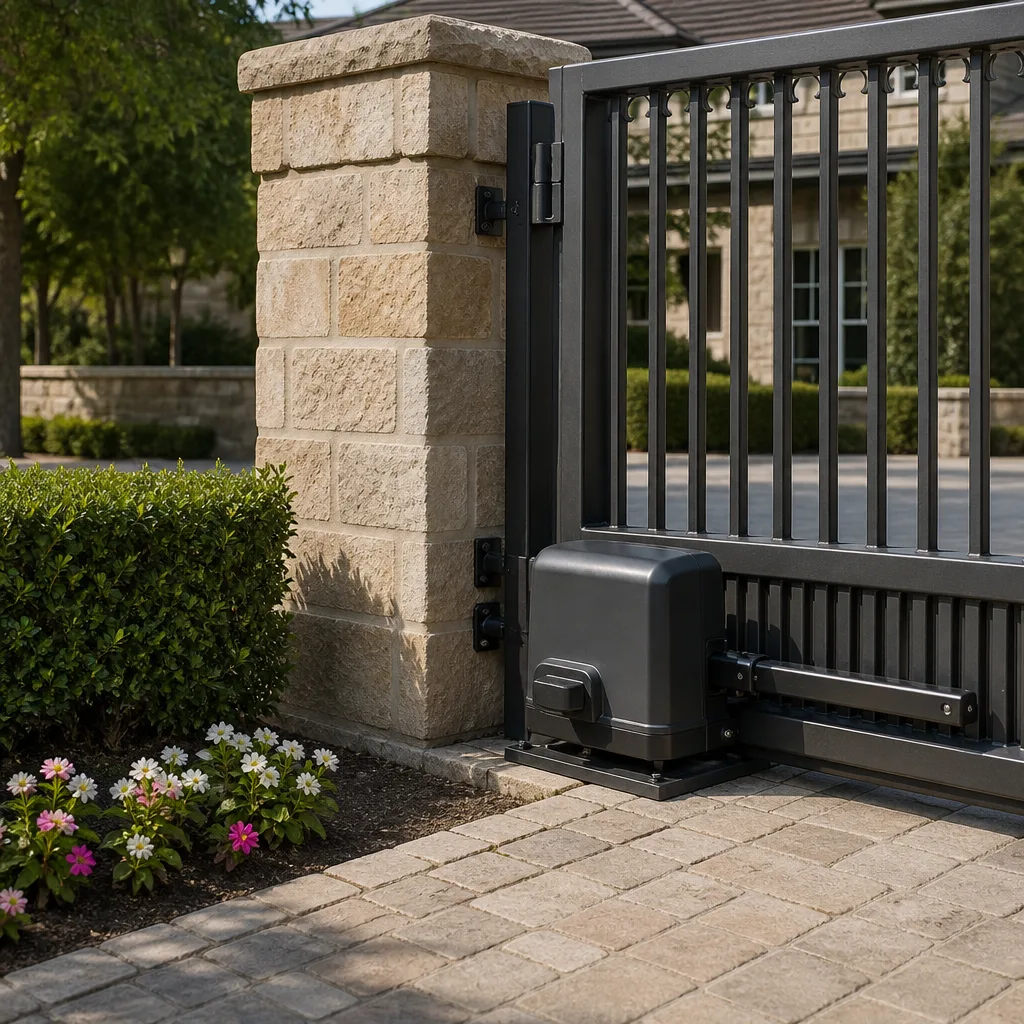 LiftMaster operators
Free on-site gate assessment - hinges, posts, and your LiftMaster or Nice gate operator checked before anything is quoted
The assessment is free and the quote is the invoice.
Get your free estimateGate Repair Permits, Codes & Inspections in Pompano Beach, FL: What You Need to Know
Most people assume a gate permit only matters when you build a brand-new gate from scratch. That’s the misconception we run into most, and it’s the one that costs property owners the most. In Pompano Beach, the trigger isn’t the gate panel itself – it’s often the operator. Swap out a failed motor or control board for a different make or a heavier duty unit, and you’ve crossed from repair into replacement, which is where the paperwork starts. This guide walks through the actual threshold between those two words, how permits are pulled here, what an inspector checks, and where HOA rules and city code can pull in opposite directions. By the end you’ll know when you’re fine to fix and when you need to file.
Quick Answer
A repair to an existing gate or operator – replacing a board, motor, hinge, or sensor – generally doesn’t require a permit in Pompano Beach. Replacing the operator with a different model, or installing a new gate or automation, typically does. Under Florida’s building code framework in Statute 553, automated gate operators are treated as regulated equipment, and the local building department decides what gets filed. When in doubt, ask the city before the work starts, not after.
Styles & brands we work with
- Wrought iron
- Wood & steel frame
- Farm & ranch
- Sliding driveway gates
- LiftMaster operators
Table of Contents
- Repair vs. Replacement: Where the Permit Line Falls
- How Florida Statute 553 Applies to Automated Gates
- How to Pull a Gate Permit in Pompano Beach
- When Your HOA and the City Disagree
- What a Code-Compliant Gate Inspection Checks
- Residential vs. Commercial Gate Classifications
- Common Mistakes to Avoid
- When to Call a Professional
Repair vs. Replacement: Where the Permit Line Falls
Here’s the working definition we use with customers, and it matches how most building departments read the code: a repair restores a gate or operator to the condition it was originally approved in; a replacement changes the equipment in a way that affects its performance, safety, or footprint. Putting the same control board back into a DoorKing operator is a repair. Dropping in a heavier opener with different force settings is a replacement, because the safety envelope the original approval covered no longer applies.
For automated gates in Pompano Beach, the questions a plans reviewer will ask usually come down to a short list:
- Same make and model? Keeping the exact operator model is the cleanest case and usually stays on the repair side.
- Same power source and wiring? Running a new circuit, upgrading voltage, or moving where the operator draws power signals replacement.
- Same gate leaf and travel path? If the new operator moves a heavier panel or a longer run, the entrapment protection calculations change.
- Same safety devices? Adding or changing photo eyes, safety edges, or loop detectors counts as a modification.
- Structural work? New posts, a new track, or rebuilding the frame means the gate itself is being altered, not just fixed.
What most escape the permit question entirely: a sticking hinge, a frayed low-voltage sensor wire, a worn roller, a bent arm on a swing gate, or a failed battery backup. Those are straight repairs. When we’re on a Pompano Beach property and the honest answer is “you need a new operator,” we tell you that before touching anything, because we’d rather you file the permit than discover the problem later.
How Florida Statute 553 Applies to Automated Gates
Florida Statute 553 is the state’s building code statute. In practice, this is the part that matters for a gate owner: the Florida Building Code is adopted under that statute, and automated gate operators are regulated equipment under the code. That means the operator, the entrapment protection, and the installation have standards to meet – it isn’t the wild west where a general handyman can bolt any motor to any gate and call it done.
What that translates to for a Pompano Beach property owner:
- The code sets the safety standard, not just the electrical one. Entrapment protection, obstruction sensing, and the way the gate responds to an obstruction are part of what a compliant install looks like.
- The local authority has jurisdiction. The City of Pompano Beach building department interprets and enforces the code locally, which is why the permit process matters more than the statute on its own.
- Commercial and residential installations aren’t held to identical expectations. Public and commercial access points – think a DoorKing system at a shared driveway serving multiple units – face stricter requirements around entrapment, signage, and pedestrian access than a residential driveway with a single household.
- Unpermitted work is the exposure. If an inspection later finds the operator was swapped without a permit, the correction is on the property owner, and it can complicate insurance claims if the gate was involved in an injury.
We say this without drama: an unpermitted but perfectly working gate is a quiet risk until it isn’t. The fix is almost always easier than the problem.
How to Pull a Gate Permit in Pompano Beach
You can pull a gate permit through the City of Pompano Beach’s online permitting portal, which is where most residential and commercial applications now start. The exact documents the city wants can change, and the fastest way to know is to call the building department before you file so you’re not chasing revisions.
The realistic sequence looks like this:
- Confirm whether a permit is required. Call the building department, describe the job in plain language, and ask. A two-minute call saves weeks later.
- Gather the documentation. Typically you’ll need the operator’s spec sheet and installation manual, a site plan showing the gate’s location and the driveway, photos of the existing gate if it’s being reused, and a description of the safety devices. For commercial and shared-access gates, expect to show signage placement and pedestrian access too.
- Submit the application. Upload to the portal. Residential owner-builder applications and contractor-filed applications follow slightly different paths, so be clear about which one you’re doing.
- Wait for review. Straightforward residential replacements clear review faster than commercial installations, which get a closer look at entrapment and signage. Plan for more time than you think you need, especially if the gate is your only way in.
- Get the permit issued before work begins. Then schedule the inspection after the install, which is the step that actually closes the file.
- Keep the final inspection record. That document is your defense if an insurer or a future buyer ever asks about the gate.
For real emergencies – a gate stuck open on a property you secure at night – a temporary fix to get it closed is a different conversation from the permanent repair. Talk to the city about what’s acceptable as a stopgap and get it on record; that’s how you protect yourself.
When Your HOA and the City Disagree
In Pompano Beach, gate work in HOA communities is where things get interesting. The city sets a floor – the minimum for safety and code compliance. Your HOA sets the ceiling on what’s allowed aesthetically, and sometimes the two don’t line up cleanly.
The most common conflicts we see:
- Signage. Code-compliant automated gates usually need warning signage near the travel path. An HOA with strict sign restrictions may object. The code requirement normally wins on the safety side, but you’ll want to choose the least visually intrusive compliant sign and get it approved in writing.
- Pedestrian access. Commercial and multi-unit gates often need a pedestrian path or a way for someone on foot to get through safely. HOAs sometimes don’t want a pedestrian gate because of the crime or traffic concern. This is where you ask the city what’s required and negotiate the HOA side around that requirement, not the other way around.
- Operator noise and speed. An HOA may want a slower, quieter operator than what the code-compliant model calls for, or a heavier gate than the existing operator can safely move. If the new operator can’t handle the gate, the gate gets lighter, not the operator.
- Color and finish. Purely cosmetic. Take it to the HOA first, because the city doesn’t care and the HOA does.
Our approach when we’re working in a Pompano Beach HOA: get the city’s requirement in writing, get the HOA’s requirement in writing, and put both in front of the installer before ordering a single part. That way nobody is discovering a conflict at final inspection.
What a Code-Compliant Gate Inspection Checks
An inspector isn’t evaluating whether the gate looks good. They’re looking for evidence that the installation performs safely under expected conditions. Here’s what actually gets checked, in the order we usually see it walked:
- Entrapment protection. Photo eyes or safety edges are functioning and positioned correctly – not taped over, not knocked out of alignment.
- Obstruction response. The gate reverses or stops when it meets an obstruction, at force levels that are set correctly for the gate weight.
- Operator and model match the approval. The make and model on the machine match the paperwork filed with the city.
- Power and wiring. The electrical connection is safe and matches what was described on the application.
- Warning signage. Where required, signage is visible from both the inside and outside of the gate travel path.
- Manual release. There’s a working manual override in case of power loss.
- Gate structure. Hinges, rollers, track, and posts are intact and the gate moves freely without binding.
- Pedestrian access (commercial and multi-unit). Where required, a safe way for a pedestrian to get through.
The pre-inspection items we see corrected most often: photo eyes that have drifted out of alignment, force settings that were bumped up so the gate “would just close already,” missing or faded signage, and an operator model that doesn’t match what was filed. Fix those before the inspector arrives and you save yourself a re-inspection fee and a longer wait.
In our experience, most of these checks are things a trained gate technician can verify in minutes. That’s why we walk the inspection list with every customer before they schedule: it’s cheaper than a failed inspection.
Residential vs. Commercial Gate Classifications
Pompano Beach sits in a part of Broward County where a single street can hold a private home, a duplex, a small commercial lot, and a shared-access driveway. That mix is why the residential vs. commercial question comes up on virtually every permit we touch.
The rough rule: the classification follows the use, not the gate hardware.
- Residential is a gate serving a single household or private drive. The requirements are lighter, and a straightforward operator replacement on the same model often moves through the process quickly. Brands like Ghost Controls and Mighty Mule live mostly at this end of the market.
- Commercial and shared-access is a gate serving multiple units, a business, or public access. Expect stricter requirements for entrapment protection, pedestrian access, signage, and how the operator handles power loss. DoorKing systems show up here constantly, because they’re designed for call boxes, vehicle loops, and multi-user access control.
Why the distinction matters for permits: the same physical repair to the same operator may require a permit in one classification and not the other. A small commercial lot in Pompano Beach with a Viking swing gate being brought up to spec may need public-safety signage that the identical gate on a private drive wouldn’t. If your property has any shared access at all, don’t assume it’s residential for permitting purposes – ask.
Common Mistakes to Avoid
- Assuming “repair” always means no permit. If you’re replacing an operator with a different model, most building departments will treat it as a replacement. Ask the Pompano Beach building department before you buy the new operator, not after it’s installed.
- Letting a general handyman install or replace an operator. Unpermitted work belongs to the property owner to fix, and a handyman’s insurance doesn’t cover your claim. Hire a gate specialist with the experience to know what the permit requires.
- Ignoring the HOA until after the install. An HOA can force a compliant gate back into the shop for aesthetics. Get HOA approval and city approval in the same conversation, in writing, before ordering equipment.
- Skipping the final inspection. A permit that’s been issued but not finaled is still an open file. Get the inspector out, get it signed off, keep the paperwork.
- Cranking up the force setting to make a sticky gate close. A gate that needs more force than the operator’s original settings has a hardware problem – a bad hinge, a bound roller, a sagging post. Fix the cause, don’t override the safety.
- Forgetting to document the original approval. Keep a photo of the existing operator’s spec plate and any original permit paperwork. If you ever need to prove the replacement is like-for-like, that photo is your evidence.
- Treating the inspection like a formality. The inspection is where pre-existing safety issues surface. Walk the list before the inspector arrives so the file closes clean.
When to Call a Professional
Some situations just aren’t a DIY call. If the operator model, wiring, or safety device setup is going to be evaluated for a permit, or if you’ve already had a gate stuck half-open for a day, you’re past the point of a hardware-store fix. If the gate has ever failed to reverse on an obstruction, that’s an immediate safety concern – stop using it and get a technician out. If you’re an HOA board or property manager sorting out a shared-access gate, and both the city and the HOA have opinions in play, a licensed gate specialist with permit experience will save you weeks of back-and-forth. We work on the brand you already have – LiftMaster, FAAC, BFT, Linear, Viking, Ghost Controls, DoorKing, Elite, and Mighty Mule – so you don’t need to chase down a specialist for a less-common system. Gate Repair Pompano Beach offers free estimates in Pompano Beach – call (888) 399-8022. Our technicians have up to 12 years of experience, and we answer 24/7 with fast dispatch from 7am to 7pm.
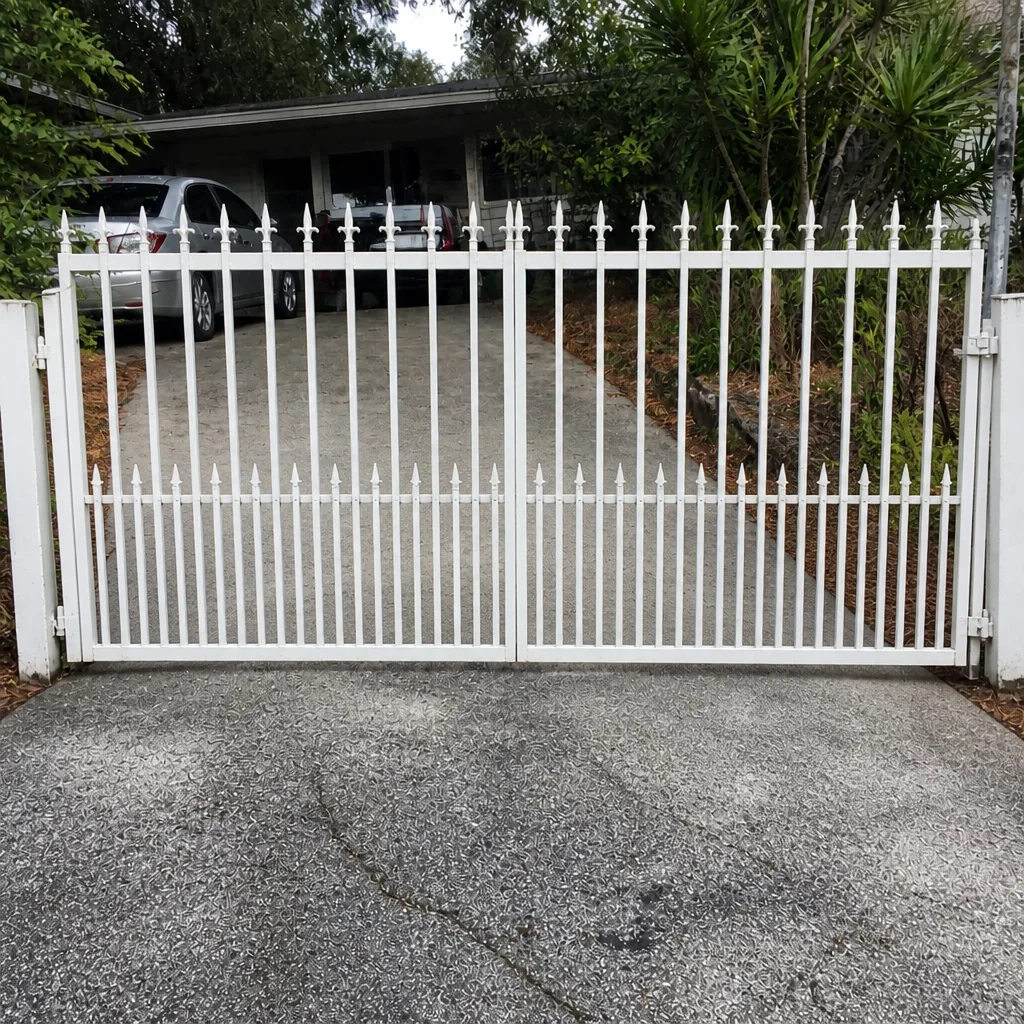
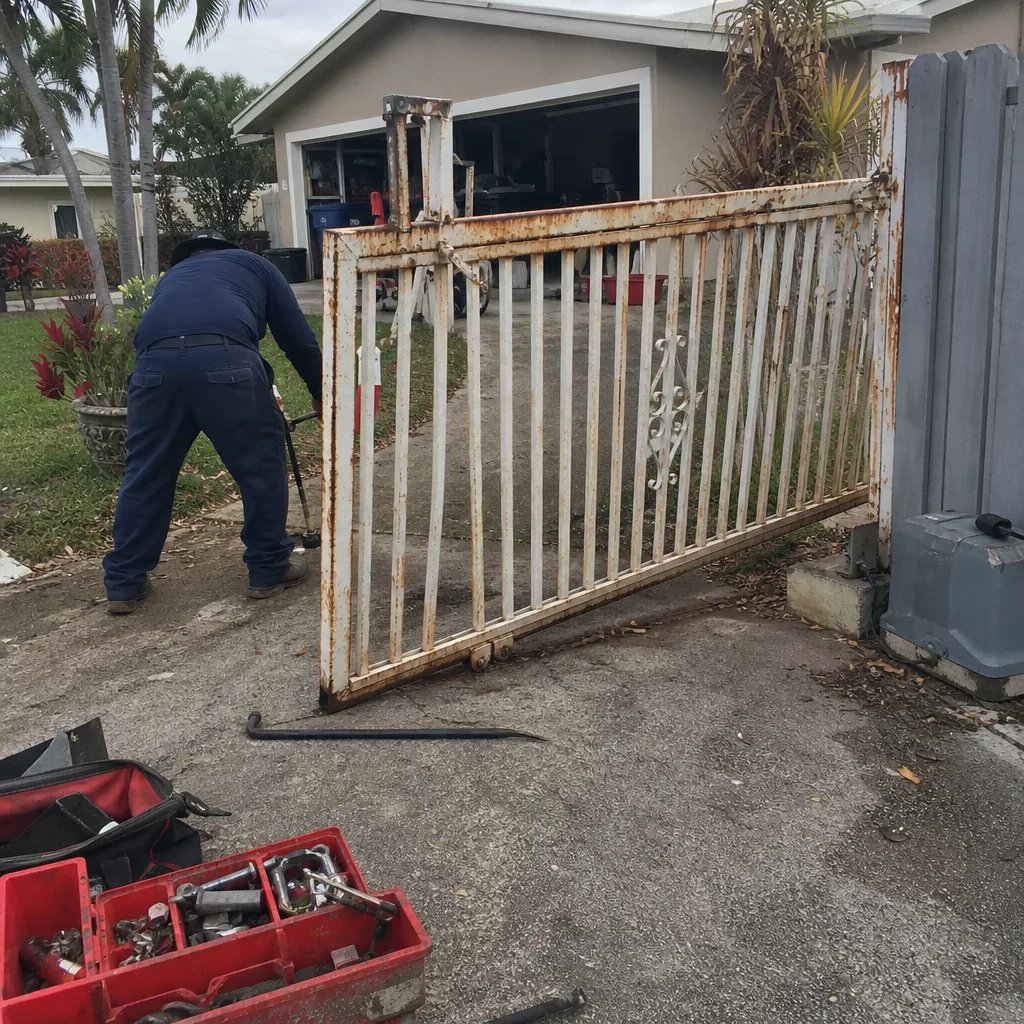
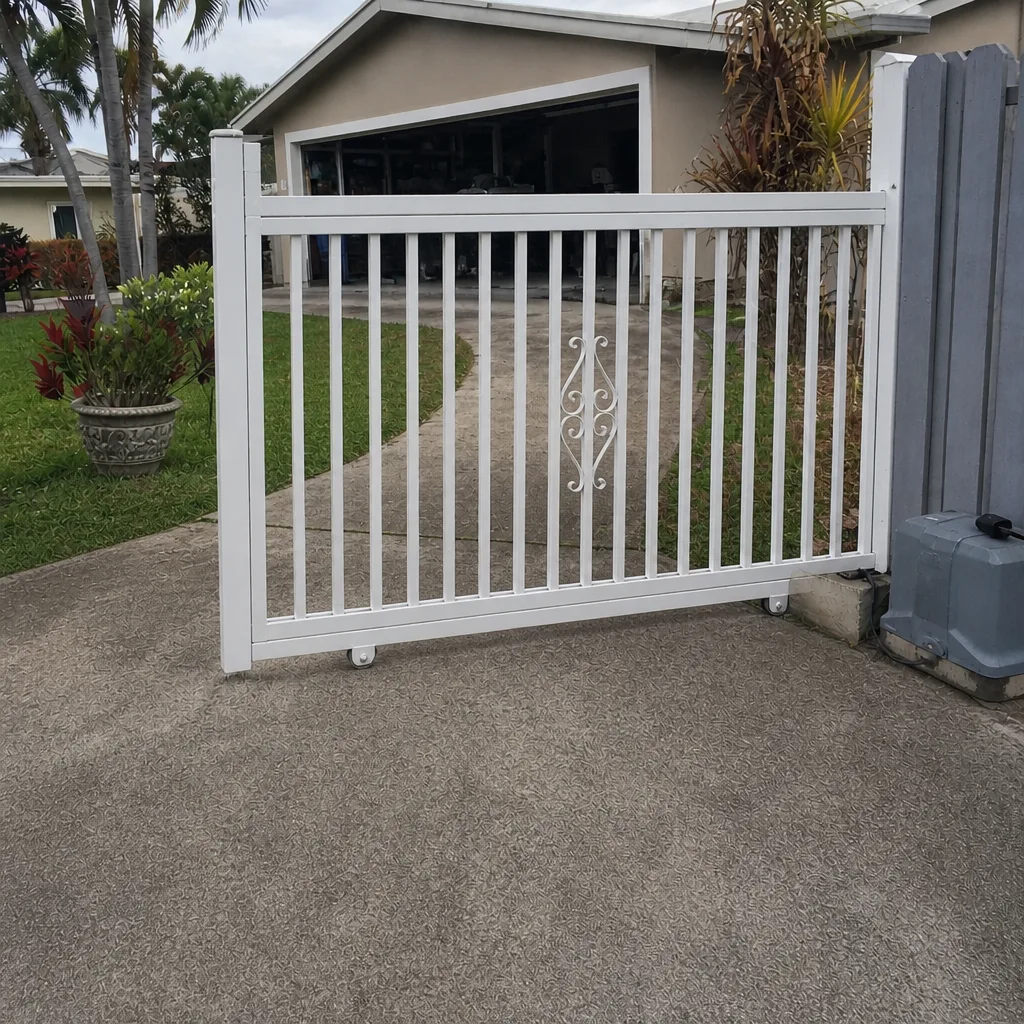
See the difference
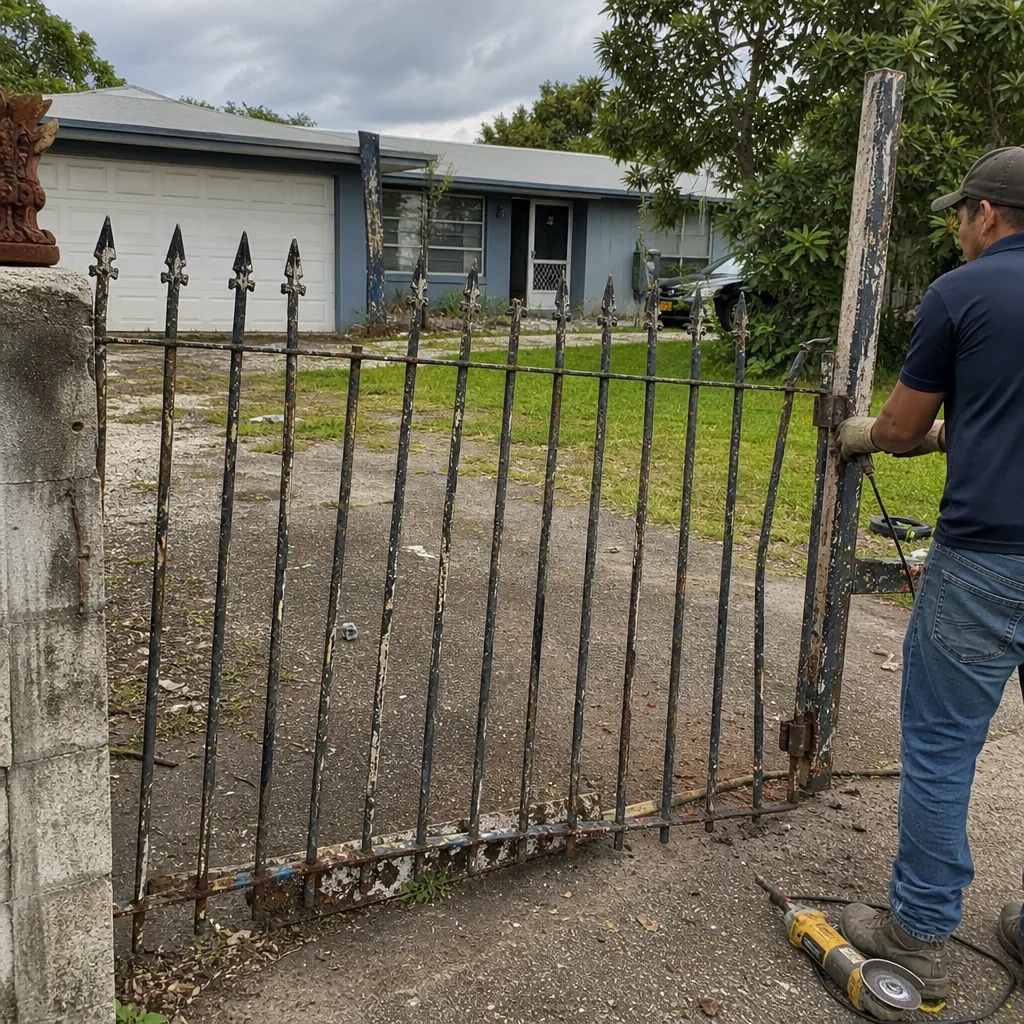 Before
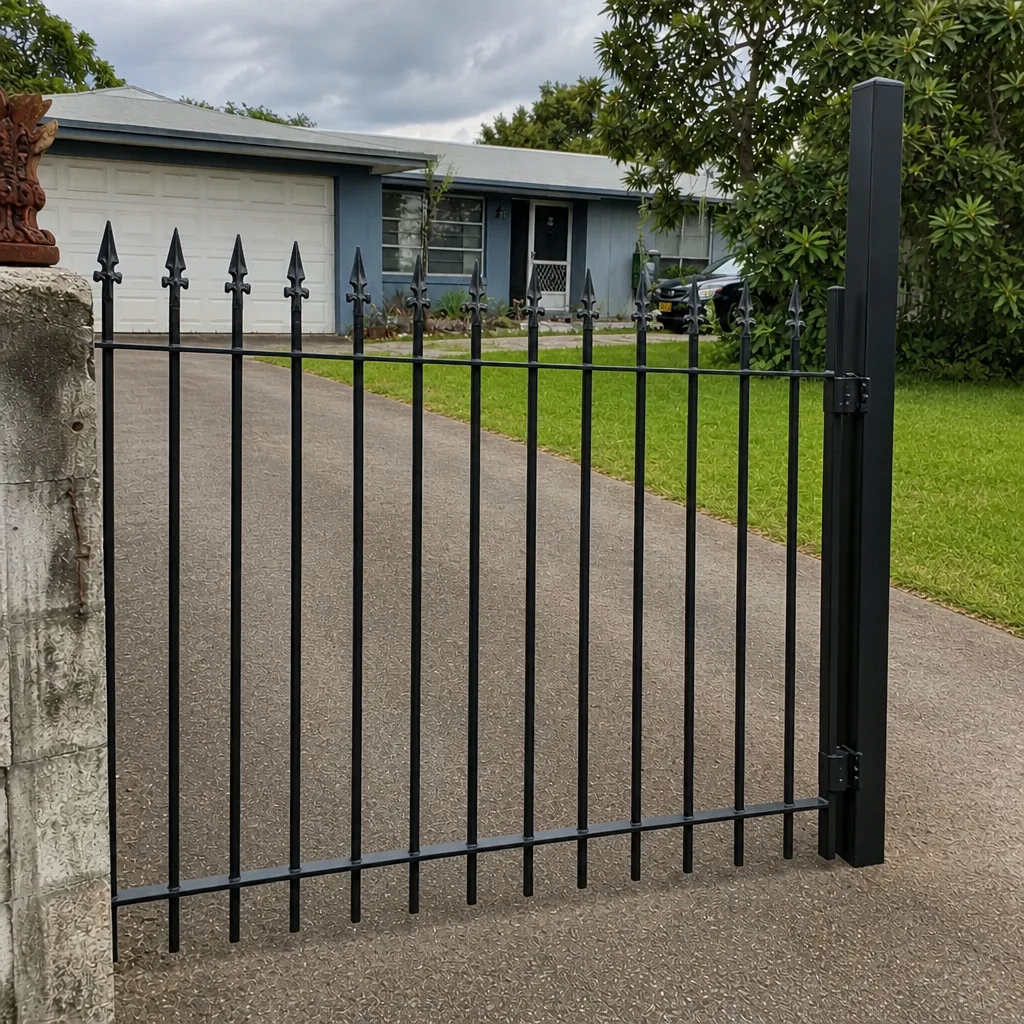 After
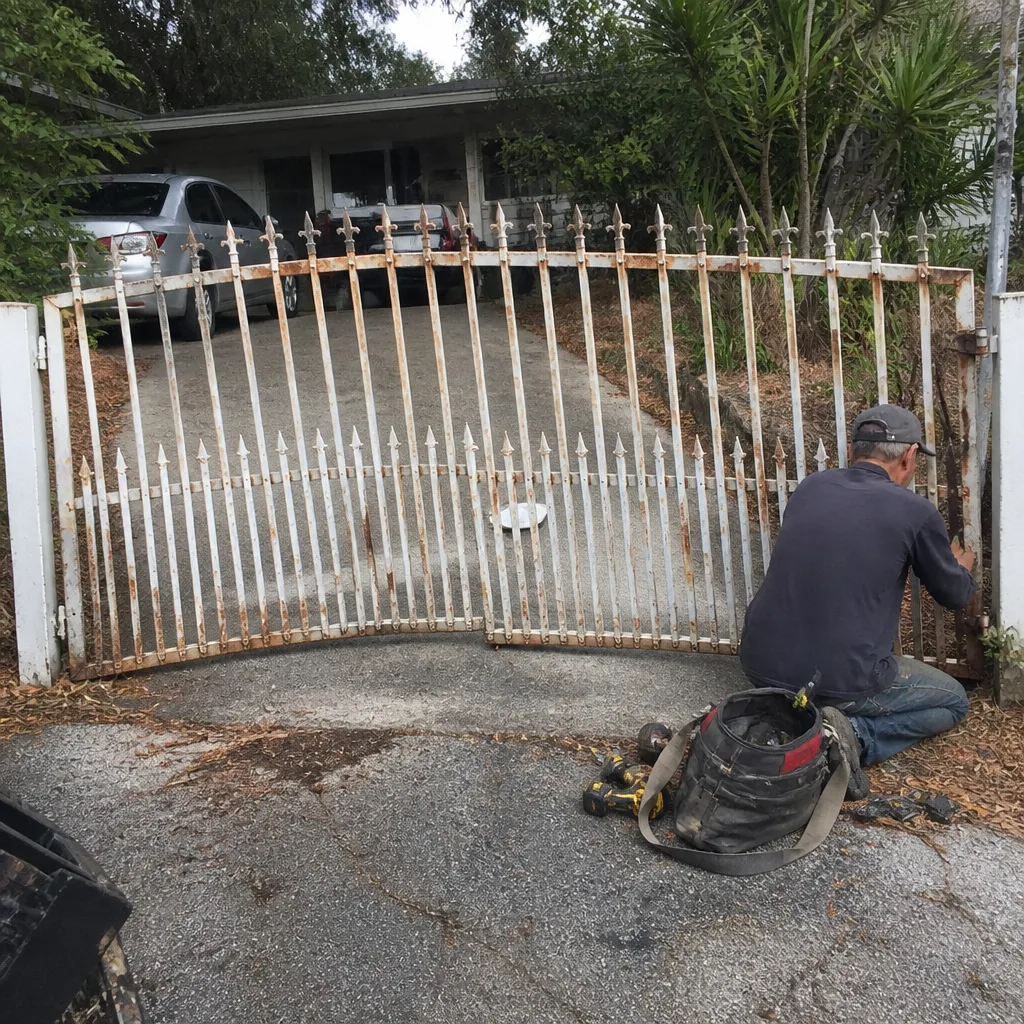 Before
 After
 Before
 After
Frequently Asked Questions
Usually not, as long as you’re replacing parts with the same model and leaving the operator, wiring, and safety setup as they were. If the repair involves a different operator model, a new power run, or a change to the entrapment protection, treat it as a replacement and check with the Pompano Beach building department before starting. Call (888) 399-8022 for an exact quote on the diagnostic visit – estimates are free.
A repair restores the gate or operator to the condition it was approved in; a replacement changes the equipment in a way that affects its performance, footprint, or safety envelope. Same board, same motor, same settings – repair. New model, heavier operator, different travel path, new wiring – replacement, and in most cases that’s a permit job. If you’re unsure which side of the line you’re on, describe the job to us and we’ll tell you honestly.
It can. If your gate is later found to have been installed or replaced without a permit and causes an injury or property damage, your insurer may question the liability claim, and the correction is yours to make. That’s why the written record matters more than the paperwork itself. If you’re worried about a prior install, book a diagnostic visit so we can tell you what was actually done and whether you’re exposed. Call (888) 399-8022.
You file through the City of Pompano Beach’s online permitting portal, and you’ll typically need the operator spec sheet, installation manual, a site plan showing the driveway and gate location, and a description of the safety devices. Residential replacements usually clear review faster than commercial or shared-access installs, which get a closer look at entrapment and signage. Plan for the review to take longer than the actual install, and get the permit issued before any work starts.
Get both sets of requirements in writing and resolve them before ordering parts. The city sets the safety floor and the HOA sets the aesthetic ceiling, and those are usually compatible once you see them side by side. Where they conflict – signage is the common one – the code requirement normally wins, so choose the least visually intrusive compliant option and get the HOA to approve it in writing. We deal with this in Pompano Beach regularly and can help you put both requirements in front of the installer before a dollar is spent.
An inspector confirms the operator model matches the filed paperwork, checks that photo eyes and safety edges are working and aligned, verifies the gate reverses or stops on obstruction at correct force levels, and reviews signage, manual release, power and wiring, and where required, pedestrian access. Before the inspector arrives, check that your photo eyes aren’t misaligned, your force settings haven’t been cranked up, your signage is intact, and the operator model matches what was filed. Call (888) 399-8022 if you’d rather have a technician walk the list with you first.
The Bottom Line
The permit question for gate work in Pompano Beach comes down to a single distinction: are you restoring what was already approved, or changing it? Restoring is usually fine unpermitted. Changing – a different operator, new wiring, new safety devices – typically needs a filing, and the exposure if you skip it sits with the property owner, not the installer. The good news is the process is short when you know what to bring to the portal and what the inspector will look at. For an honest diagnostic before you commit to anything, our gate repair Pompano Beach team is a call away, and for automated systems specifically, our electric gate repair service covers the operator, board, and safety devices in one visit. If your gate fails on a Saturday, call anyway – we’ll book you for Sunday. Call (888) 399-8022 for a free estimate, and if you’re weighing repair against a full replacement, our gate repair team can walk the inspection list with you before the city does. We answer 24/7. Fast dispatch, 7am-7pm.
Contact
If you’re ready to sort out your gate – whether it’s a repair, a permit-related diagnostic, or a full install – Pompano Beach gate work runs best on a clear plan and a written estimate. Call (888) 399-8022 for a free estimate. We answer 24/7. Fast dispatch from 7am to 7pm, Sunday through Friday.
Written by the team at Gate Repair Pompano Beach.